
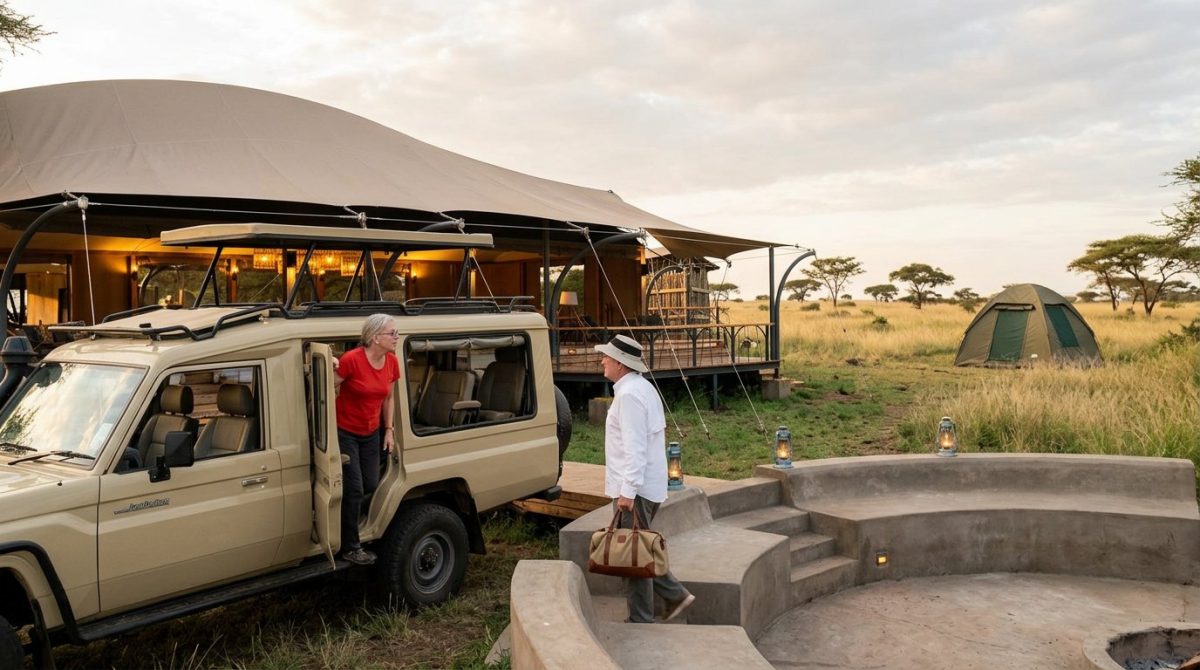
A higher price does not automatically mean better value. With a luxury versus midrange safari, an upgrade may be worthwhile if you value greater comfort, attentive service, or a more secluded wildlife experience. Midrange may suit you better if you want to prioritize time in the parks and a well-planned route. The itinerary can shape value as much as the lodge category.
Accommodation is an obvious place to start comparing the two styles, but a beautiful camp adds less to your trip if long transfers leave you with less time to explore.
Compare how accommodation, service, vehicle arrangements, privacy, itinerary length, and park time affect the experience. This can help you decide where extra comfort is worthwhile and where a thoughtfully planned midrange journey may suit you better.
Key Takeaways
- Choose where extra comfort matters most, then consider mixing accommodation styles to balance the experience.
- Compare service, vehicle arrangements, and seclusion alongside the lodge itself to understand what an upgrade changes.
- Assess sample itineraries by their route and time in the parks, not just by the number of nights.
- Look closely at transfers and accommodation location: a well-positioned stay can leave more time for wildlife viewing.
Luxury vs Mid-Range Safari: Is Upgrading Worth It?
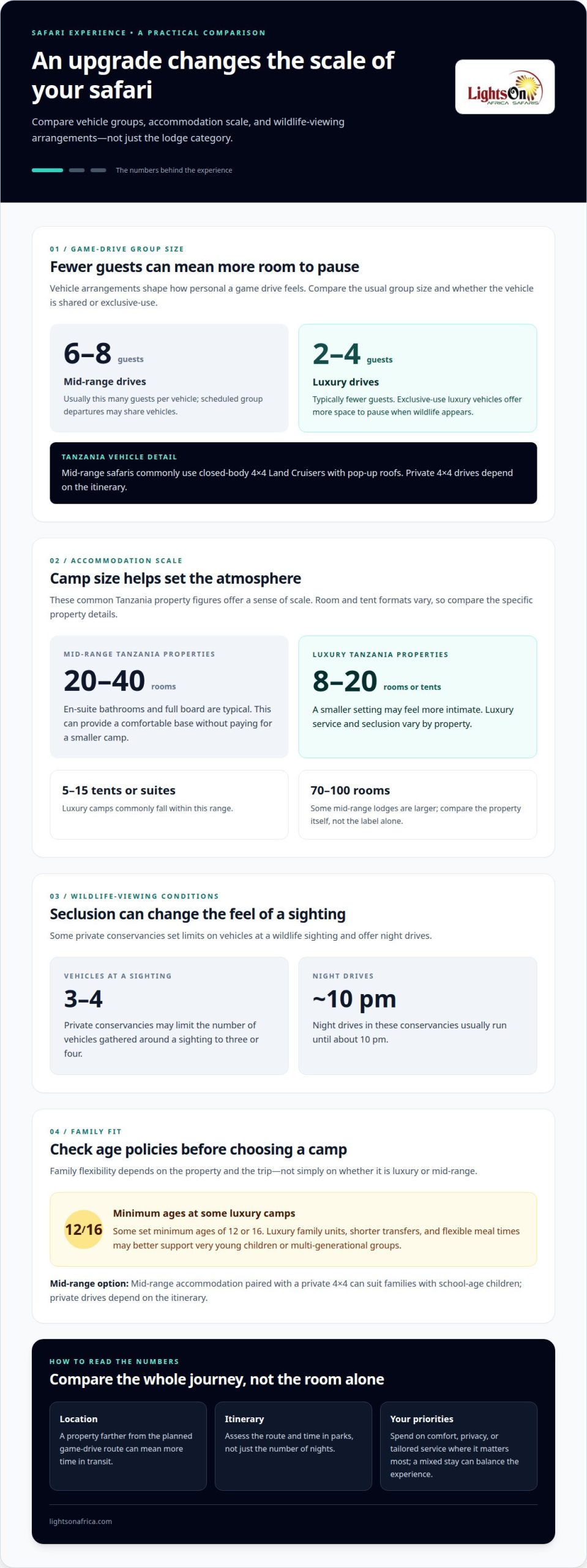
A luxury versus midrange safari comparison starts with your priorities: privacy and tailored service, or practical comfort and flexibility. For families, mid-range accommodation paired with a private 4×4 can suit school-age children; luxury family units, shorter transfers, and flexible meal times may better support very young children or multi-generational groups. Some luxury camps set minimum ages of 12 or 16.
Combining Mid-Range and Luxury Stays
Mixing accommodation styles lets you save an upgrade for the part of your trip where it matters most. On a honeymoon, for example, you might choose midrange stays along the route, then finish at a secluded luxury camp for a more intimate change of pace. Compare each property’s location and transfer times so the added comfort fits the itinerary, not just the room.
Transport and Group Size Differences
Vehicle arrangements shape how personal a game drive feels. Mid-range drives usually carry 6-8 guests per vehicle; luxury drives typically have 2-4. In Tanzania, mid-range safaris commonly use closed-body 4×4 Land Cruisers with pop-up roofs, and scheduled group departures may share vehicles. Exclusive-use luxury vehicles offer more space to pause when wildlife appears.
Mid-Range Accommodation and Inclusions
Mid-range Tanzania lodges and permanent tented camps commonly have 20-40 rooms. En-suite bathrooms and full board are typical; private 4×4 drives depend on the itinerary. This can provide a comfortable base without paying for a smaller camp. Luxury Tanzania camps and lodges may offer a more intimate setting, which can matter if privacy is central to your choice.
| Option | Accommodation | Vehicle group | Best fit |
|---|---|---|---|
| Mid-range | 20-40 rooms at common Tanzania properties | Usually 6-8 guests | Practical comfort and shared departures |
| Luxury | Commonly 8-20 rooms or tents | Typically 2-4 guests | Privacy and tailored drives |
When choosing a luxury versus midrange safari, weigh family flexibility, privacy during drives, and how many nights merit upgraded accommodation.
Luxury accommodation, service, and seclusion
The difference between luxury and mid-range lodges often comes down to scale and service: luxury camps commonly have 5 to 15 tents or suites, while some mid-range lodges have 70 to 100 rooms. Neither category alone determines safety; comfort also depends on the accommodation, transport, and trip logistics.
Luxury Accommodation and Service
Luxury service often comes with a smaller camp, creating a more intimate stay than a larger lodge. For value, look beyond the room: consider what the accommodation includes and how it is positioned in relation to wildlife areas. A property farther from your planned game-drive route can mean more time in transit, so weigh location and itinerary alongside service.
Camp Size and Amenities
Camp size shapes the atmosphere as well as exclusivity. Luxury Tanzania camps and lodges commonly have 8-20 rooms or tents; one small-camp example accommodates eight guests. Decide which setting you prefer: a compact base with fewer fellow travelers or a larger lodge with a busier shared rhythm. Compare the room arrangement, location, and stated amenities instead of assuming a category label guarantees a particular feature.
Room Quality, Safety, and Comfort
Room comfort varies by property, so compare the accommodation details rather than relying on “luxury” or “mid-range” alone. For wildlife viewing, seclusion can make a tangible difference: private conservancies may limit vehicles at a sighting to three or four. Night drives there usually run until about 10pm, offering another way to experience animals. These features affect privacy and itinerary choices, but don’t by themselves establish that one accommodation category is safer.
Compare camp location, room details, and drive arrangements as one practical step. For help shaping that balance, explore tailored safari planning.
Sample safari itineraries and prices
For classic wildlife circuits, compare Tanzania and Kenya; consider Botswana if fewer visitors and greater seclusion are priorities. The right fit depends on the route, season, accommodation, flights, park fees, and time available for game drives.
Tanzania Safari Price Differences
Tanzania’s itinerary length and camp positioning shape the overall cost. A sample first safari runs 7 nights through Tarangire, Ngorongoro, and central Serengeti by road; a honeymoon example lasts 8 nights, combining Tarangire, a flight to the Serengeti, and Zanzibar. Compare how many nights are spent in tented camps, how transfers work, and whether flights replace long road journeys. Those choices change both logistics and the balance of time spent exploring.
Destination Value for Luxury and Mid-Range Trips
Kenya and Tanzania can suit travelers seeking varied wildlife routes, while Botswana may appeal if quieter surroundings are a priority. Botswana receives fewer than 350,000 tourist arrivals annually, compared with more than 1.5 million in Kenya. That difference helps frame seclusion, but it doesn’t establish which destination costs less. Match the destination to your preferred animals, route, and accommodation style, then compare the itinerary details.
Use the same checklist for each safari quote: route, number of nights, camp location, flights, park fees, and planned drives. A 9-night Tanzania photographic itinerary, for example, should be assessed by its time in wildlife areas as well as its tented camps. A safari quote depends on those trip choices; the price is given after a quote request.
- Compare like with like: Match the destination, travel season, and itinerary length.
- Check what shapes the route: Separate flight time and road transfers from park time.
- Assess the accommodation: Compare camp positioning and the number of nights at each stay.
Put your budget toward what matters most to you: more time among wildlife, a more secluded camp, or fewer transfers across Tanzania, Kenya, or Botswana.
How route length and park time affect safari value
A safari’s value depends on more than the number of nights or the accommodation category. In Tanzania, compare each stay’s location, transfer times, and the daylight left for wildlife viewing. A lower-cost lodge outside a reserve may mean extra road time before game drives begin.
National parks and reserves generally limit driving to about 6am to 6pm. That makes positioning especially important: some mid-range Tanzania lodges sit on park boundaries, adding an hour or more to the morning drive. In-park and concession properties can cut 60-120 minutes of driving off many safari days. Compare those minutes across your itinerary, not just one transfer.
Use this practical route check when comparing midrange and luxury options:
- Mark each camp on the route and note whether it is inside, near, or farther from the reserve.
- Separate transfer time from time available for game drives and wildlife sightings.
- Compare the time saved by better positioning with the value of another night or a more comfortable camp.
For example, an itinerary with several stays near reserve boundaries may involve more morning travel before you reach wildlife areas. An in-park stay may leave more time to explore, even if both options include the same number of nights. Consider the route as a whole: frequent camp changes can add transfers, while a longer stay in one area can leave more time for unhurried drives.
More time in a park creates more opportunities, but does not guarantee sightings. Wildlife movements, weather, and road conditions in Tanzania remain natural variables, whatever the itinerary. Judge value by the time and positioning your plan provides, rather than expecting a particular animal encounter.
Choose your preferred balance of camp comfort, route length, and time near the reserve, then plan a Tanzania safari route around those priorities.
Lights on Africa Destinations & Safaris: 16 Days- The Great Migration Luxury Safari & Zanzibar Retreat
Lights on Africa Destinations & Safaris offers the 16 Days- The Great Migration Luxury Safari & Zanzibar Retreat for travelers drawn to a luxury wildlife journey followed by time in Zanzibar. It’s a relevant option if you’re weighing camp comfort against route variety and want a safari that pairs the Great Migration with a coastal retreat.
For a Tanzania-focused itinerary, consider the 8-Day Luxury All Inclusive Tanzania Safari. Families comparing comfort and logistics can explore the 8Days Tanzania Private Guided Family Safari, while the Serengeti Migration Safari keeps the focus on migration viewing. Each gives you a different starting point for matching your travel priorities to a safari style.
Contact Lights on Africa Destinations & Safaris or visit lightsonafrica.com to discuss your safari plans.
Shape a Safari Around What Matters Most
Let your priorities guide your choice. Before settling on a luxury versus midrange safari, decide what you want each day to feel like: more time immersed in the landscape, extra privacy, a gentler pace, or a balance of comfort and exploration. This gives your itinerary a purpose beyond choosing a category.
Next, shape a route around those priorities. Consider which moments deserve more time, where you would welcome a quieter stay, and how much travel feels right between destinations. A thoughtful plan can reflect your style without treating every night or stop the same. For a honeymoon, family journey, or long-awaited wildlife adventure, choose an itinerary that feels personal from the first drive to the final day.
Lights on Africa Destinations & Safaris can help you explore safari options around the experience you have in mind. Contact Lights on Africa Destinations & Safaris to begin shaping your journey. Start with a clear sense of what matters, and let the landscape become part of a trip that feels truly yours.
Frequently Asked Questions
What Defines a Safari Experience?
Your safari experience depends on the places you visit, how you travel between them, and the time you spend observing wildlife. One guided journey might focus on game drives; another could add cultural encounters or a Zanzibar retreat. Before choosing a camp, decide which moments matter most, then find an itinerary that gives them room.
Does Luxury Mean Better Wildlife Viewing?
No. A luxury label alone does not determine which wildlife you’ll see. The reserve, season, camp location, and time available for drives all affect viewing opportunities. A well-positioned midrange stay, for example, may put you close to an area you want to explore, while a luxury camp may offer a quieter setting. Compare location and daily plans alongside accommodation.
What Are the Biggest Differences Between Mid-Range and Luxury Game Drives?
The vehicle design and seating arrangement can distinguish the drive experience. Mid-range Tanzania safaris commonly use closed-body 4×4 Land Cruisers with pop-up roofs; luxury camp vehicles may be open-sided, with tiered seating and fewer guests per row. Consider how you like to view and photograph wildlife, and whether you value an exclusive vehicle or prefer a shared drive with other travelers.
What Is a Luxury Safari and What Justifies the Higher Price?
A luxury safari combines upscale accommodation and service with a more private, tailored travel experience. Its higher cost may reflect smaller camps, exclusive-use vehicles, and the service included in the itinerary. To decide whether the added comfort suits you, compare the properties, transport arrangements, and inclusions for each night instead of relying on the “luxury” label.
What should I compare first when using this budget vs luxury Tanzania safari guide?
Start by comparing the route and accommodation locations, then check what each day includes. List transfers, park-visit time, vehicle arrangements, flights, and park fees separately. This helps you see whether a lower-cost option involves more time travelling or whether an upgrade changes your access and comfort. Compare trips of the same length to the same destination for a meaningful comparison.
When Is a Mid-Range Safari the Right Choice for Your Trip?
A mid-range safari can suit travelers who value comfortable lodging and wildlife time over extra seclusion or service. For school-age children, a mid-range stay paired with a private 4×4 can make it easier to shorten drives. Timing can also matter: East African green-season safari rates can be 20-35% lower than peak-season rates, making that period worth considering when it fits your travel plans.
One thought on “Luxury Versus Midrange Safari: Compare Prices and Value”