
Two weeks can bring Tanzania’s northern safari circuit and Zanzibar’s Indian Ocean coast together in one journey. A two week Tanzania safari itinerary can combine wildlife-rich parks, time at Lake Manyara and a relaxed island stay, with the season shaping the route and what you may experience.
Tanzania appeals to wildlife lovers for its variety: the Serengeti’s open plains and Ngorongoro Crater offer distinct safari landscapes, while Zanzibar brings a slower pace after days in the bush. Choosing when to travel matters, but so does allowing enough time for transfers instead of packing every day too tightly.
Use this guide to understand the seasons and plan a practical 14-day route through Northern Tanzania, including Lake Manyara, the Serengeti, Ngorongoro and Zanzibar. You’ll see how to shape the journey around your priorities, balance safari days with transfers and make room for a memorable coastal pause.
Key Takeaways
- Match your travel dates to Tanzania’s seasonal rhythms and the kind of wildlife experience you hope to have.
- Give Lake Manyara a place in your northern circuit, then plan the onward journey so driving time doesn’t crowd out safari moments.
- Shape two weeks around a balanced route through Northern Tanzania and Zanzibar, with time for both wildlife and the coast.
- Review the entry requirements and visa details that apply to your trip before setting out.
Why Go on Safari in Tanzania?
- Start with the Ngorongoro Conservation Area, where volcanic scenery, wildlife and human history meet. The crater formed when a volcano collapsed about 2.5 million years ago. It is the world’s largest inactive, intact and unfilled volcanic crater, with more than 20,000 animals. Allow time to look beyond the crater floor, too: the surrounding highlands bring a striking change of landscape.
- Plan game drives in both Ngorongoro Crater and the Serengeti rather than treating them as interchangeable stops. The crater’s enclosed setting can make wildlife viewing feel different from the Serengeti’s open plains. Give each area time for more than a quick pass through; varied habitats and changing views make the contrast part of the experience.
- Make room for a highlands hike between drives. Choose a walk that suits your pace and leaves time to take in the Ngorongoro landscape on foot. The Conservation Area is a multi-use landscape established in 1959, and about 40,000 Maasai people live around the crater. Include a Maasai-run camp in your plan to make space for a community-rooted stay alongside wildlife viewing.
- Pack for the different activities on a two-week trip: comfortable walking shoes for hikes, practical clothing for game drives, sun protection, and a light layer for cool mornings. Keep essentials in a day bag so they’re easy to reach during transfers. A thoughtful packing plan makes transitions between parks and landscapes simpler.
- Sort your entry paperwork before travelling. At the time of writing in February 2026, a Tanzania single-entry tourist visa costs US$50 and is valid for 90 days, according to Tanzania Immigration Services Department. If you arrive through Kilimanjaro International Airport, plan the first stretch around the journey onward to the northern circuit. That leaves more of your trip for the crater, Serengeti and highlands.
Lake Manyara National Park
Budget, midrange and luxury safaris differ mainly in accommodation, comfort and trip arrangements. The route, park choices, travel dates and group size also affect the overall cost.
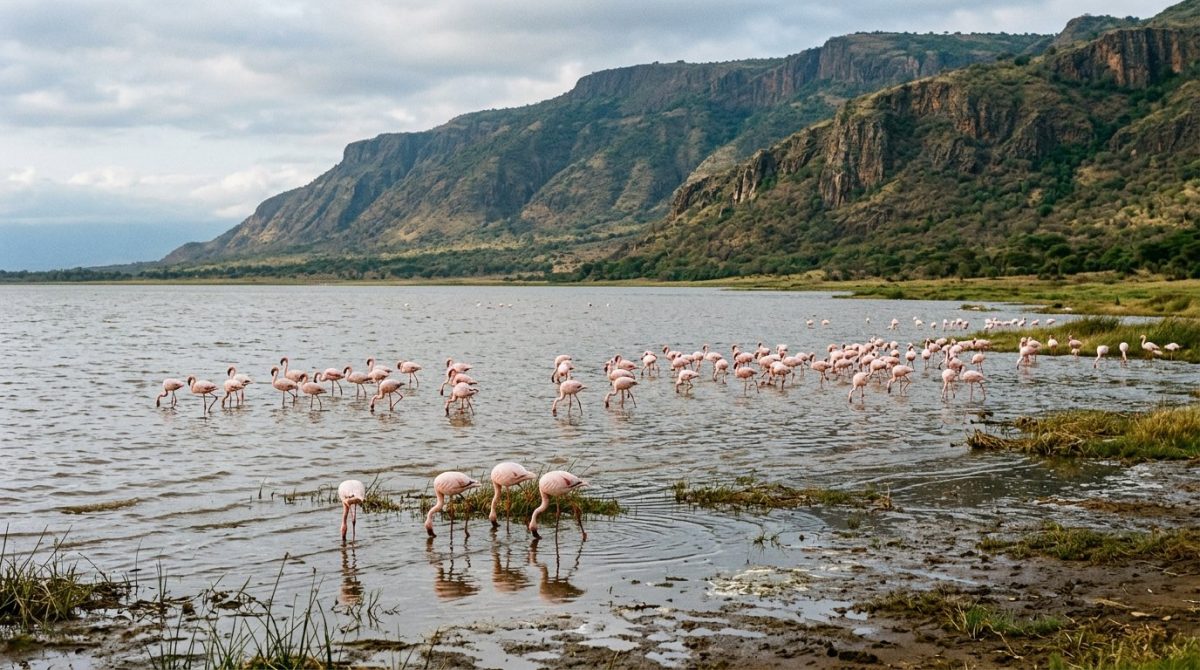
- Set aside a full day for Lake Manyara National Park, a rewarding stop on the northern circuit. Lake Manyara covers 75 percent of the park, while the Great Rift Valley escarpment rises 400 meters nearby. Use the day for a game drive through changing habitats, rather than treating the park as only a roadside pause.
- Plan your arrival through Kilimanjaro International Airport, then allow time to settle in around Arusha. If you have an extra outing before continuing to other national parks, Arusha National Park is about 45 minutes by car from Arusha city. Its two-hour canoe trip offers a quieter way to take in the park’s scenery.
- Allow two days for Tarangire National Park if wildlife viewing is a priority. A longer stay gives you time to watch wildlife at a measured pace rather than rushing between sightings. Plan the park into your route before deciding what comes next, since the order of stops affects how much time you have for each experience.
- Compare accommodation by the experience you want between drives. Budget stays focus on practical essentials, midrange options balance comfort and value, while luxury stays emphasize a more elevated setting and service. Park fees and lodging are separate parts of trip planning; the total price depends on parks, dates, accommodation and group arrangements, and is provided after a quote request.
- Choose the style that supports your priorities, not just the label. For example, families may value space and a flexible pace, while travelers focused on wildlife may prefer to direct more of their time toward Tarangire and Lake Manyara. To shape a northern route around your preferences, explore Tanzania safari journeys.
When is the best time to visit Tanzania?
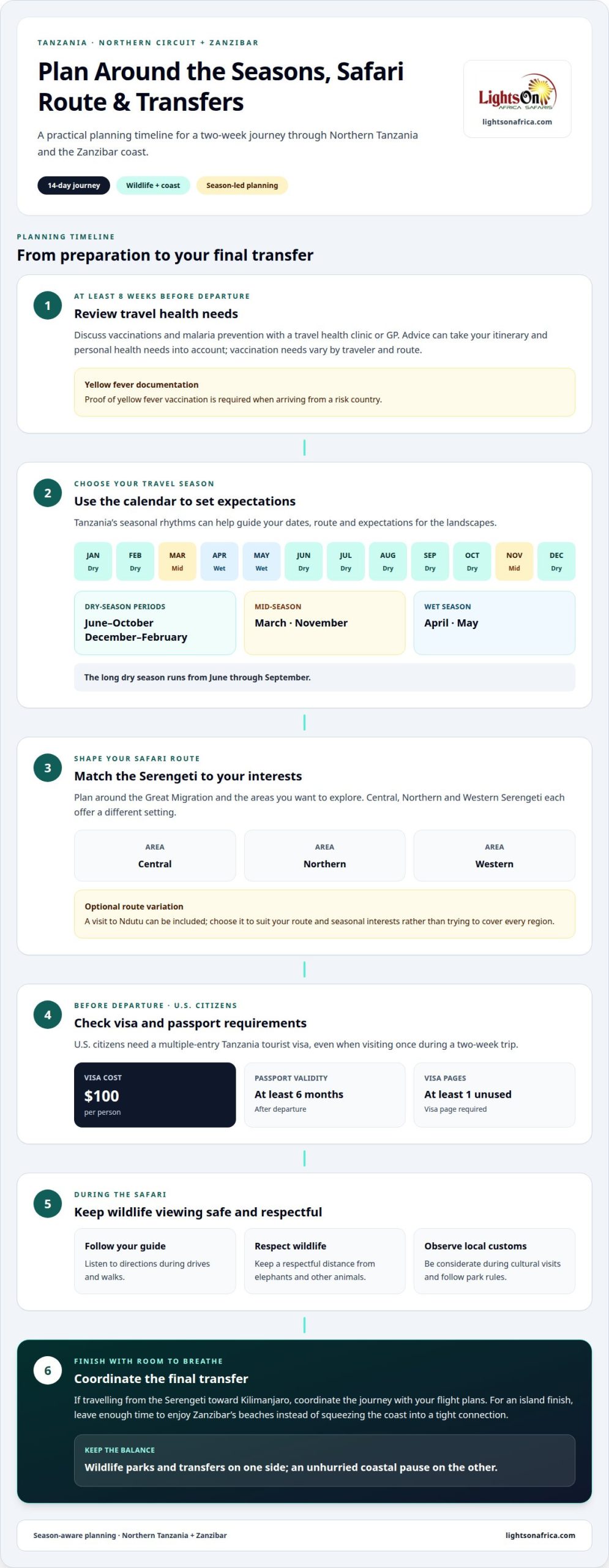
- Choose travel dates with the seasons in mind. Tanzania’s dry-season periods include June through October and December through February. March and November are mid-season, while April and May are wet-season months. The long dry season runs from June through September. Use these patterns to guide your route and expectations for the landscapes.
- Plan your Serengeti visit around the Great Migration and the areas you want to explore. Central, Northern and Western Serengeti each offer a different setting. A two week Tanzania safari itinerary can include an optional visit to Ndutu; choose it to match your route and seasonal interests rather than trying to cover every region. For a different perspective on the plains, consider a Tanzania balloon safari over the Serengeti.
- Prepare your US entry documents before departure. US citizens need a multiple-entry Tanzania tourist visa costing $100 per person. Your passport must be valid for at least six months after departure and have at least one unused visa page. A two week Tanzania safari itinerary still requires these documents for entry, even if you’re visiting once.
- Discuss vaccinations and malaria prevention with a travel health clinic or GP at least 8 weeks before departure. The review can account for your itinerary and personal health needs. Vaccination needs can vary by traveler and itinerary, so discuss which ones may be appropriate for you before departure. Proof of yellow fever vaccination is required when arriving from a risk country.
- Tanzania is safe for tourists as long as you practice common sense. Follow your guide’s directions, keep a respectful distance from elephants and other wildlife, and observe local customs during cultural visits. Follow park rules on game drives and walks.
- Plan the final transfer around your departure or stay in Zanzibar. If travelling from the Serengeti toward Kilimanjaro, coordinate the journey with your flight plans. For an island finish, leave enough time to enjoy Zanzibar’s beaches instead of squeezing the coast into a tight connection.
Two-week Northern Tanzania and Zanzibar itinerary
A two week Tanzania safari itinerary works best when both the wildlife parks and Zanzibar have room in the plan. Choose stops according to the season and your priorities, and allow time for transfers.
-
Choose Parks for the Safari
Build your route around Tarangire, Lake Manyara, the Serengeti and Ngorongoro Crater. Together, these destinations bring varied landscapes and wildlife into one Northern Tanzania adventure. Treat them as the core of a two week Tanzania safari itinerary, and add other stops only if they won’t cut into game drives or your island stay. If the Great Migration is a priority, let the season guide where you focus in the Serengeti.
-
Allocate Days Across the Parks
Set aside two days for Tarangire, one for Lake Manyara and three for Serengeti National Park. Allow another day for the Ngorongoro Conservation Area and crater, then make room for arrival, transfers and Zanzibar within the 14-day plan. This gives the Serengeti time for repeated drives and wildlife viewing. Adjust the balance to your priorities, but don’t count transfer days as full safari days.
- Plan your island stay before filling every day with parks. Zanzibar offers a change of pace after time among wildlife, and its beaches make a natural end to a safari. Leave enough time to enjoy the coast rather than using every remaining day for road travel. That balance helps the journey feel complete, from mainland wilderness to the Indian Ocean.
- Plan the route in sequence: arrive through Kilimanjaro International Airport, travel through the northern parks, then continue to Zanzibar. The Serengeti-to-Zanzibar flight takes around 2 hours, while another listed transfer duration is 3 hours and 15 minutes. Fit transfers around overnight stays and park time. Shape your two week Tanzania safari itinerary around the season and wildlife you most want to see.
Lights on Africa Destinations & Safaris
Lights on Africa Destinations & Safaris can bring the season, Northern Tanzania parks and Zanzibar together in a tailored safari plan. The team can help balance time in the Serengeti and Ngorongoro with transfers, accommodation style and a coastal stay. Tanzania journeys include Great Migration experiences, all-inclusive safaris and private family trips, giving you options to consider based on your priorities.
Share your preferred travel season, wildlife interests and how you’d like to divide your time between safari and the island. These choices shape an itinerary focused on the landscapes and experiences that matter most to you.
Contact Lights on Africa Destinations & Safaris to plan your Tanzania trip.
Shape Your Tanzania Journey Around What Matters Most
Let your interests guide the final choices. A two week Tanzania safari itinerary can focus on wildlife, a family-friendly pace or a combination of safari and a coastal retreat. Decide which experiences matter most, then let those priorities shape the plan.
Lights on Africa Destinations & Safaris offers the 16 Days- The Great Migration Luxury Safari & Zanzibar Retreat, the 8-Day Luxury All Inclusive Tanzania Safari, and the 8Days Tanzania Private Guided Family Safari. These options provide different starting points for considering the style of journey that suits you. Choose the direction that feels right, and start a conversation about your Tanzania plans.
Contact Lights on Africa Destinations & Safaris to discuss your journey. Your next adventure can begin with a thoughtful plan and a sense of possibility.
Frequently Asked Questions
Where To Stay in Ngorongoro?
Choose accommodation in the Ngorongoro Conservation Area or nearby Karatu according to your route and preferred pace. Staying within the conservation area can put you closer to crater activities, while Karatu can suit a route continuing to other northern parks. Consider how each location fits your arrival and departure plans, and whether you’d rather spend more time near the crater or keep transfers straightforward.
What is a recommended 14-day Tanzania safari itinerary?
A balanced route can start with arrival near Arusha, then continue to Lake Manyara, Tarangire, the Serengeti and Ngorongoro before ending in Zanzibar. Allow several days for the Serengeti, include a full crater visit, and reserve time for transfers and the island stay. This sequence combines northern parks with a slower coastal finish without making every day a long drive.
When is the best time for a two-week Tanzania safari and the Great Migration?
Choose dates based on the migration experience you want and the Serengeti areas you plan to visit, as the herds move across the ecosystem. If you prefer a quieter park experience, the first half of December is one option. Make the Serengeti a central part of your plan, and arrange the other stops around your priorities rather than assuming a particular month guarantees a sighting.
What is the cost of a 14-day Tanzania safari, including park fees and lodging?
The total depends on accommodation style, park selection, travel dates, group arrangements and transfer plans. Account for park fees and lodging as well as transport and any island stay. Share your preferred route and comfort level with Lights on Africa Destinations & Safaris to discuss an itinerary tailored to your choices.
How do you travel between Tanzania safari parks, and should you fly or drive?
Driving works well for connecting northern parks along a planned route, while flights can reduce long transfers between distant stops. For example, the drive from Isoitok Camp Manyara to Serengeti National Park gates takes about 6 hours. Small-plane flights from the Serengeti to Zanzibar may have a baggage allowance of only 15 kg, so pack with that possibility in mind when choosing your transfer.
What vaccinations, malaria prevention, and travel insurance are recommended for Tanzania?
Discuss vaccinations and malaria prevention with a travel health clinic or GP at least 8 weeks before departure. Recommended vaccinations include hepatitis A and B, typhoid, cholera, yellow fever, polio and MMR; proof of yellow fever vaccination is required when arriving from a risk country.
One thought on “Plan a Two Week Tanzania Safari Around the Seasons”