
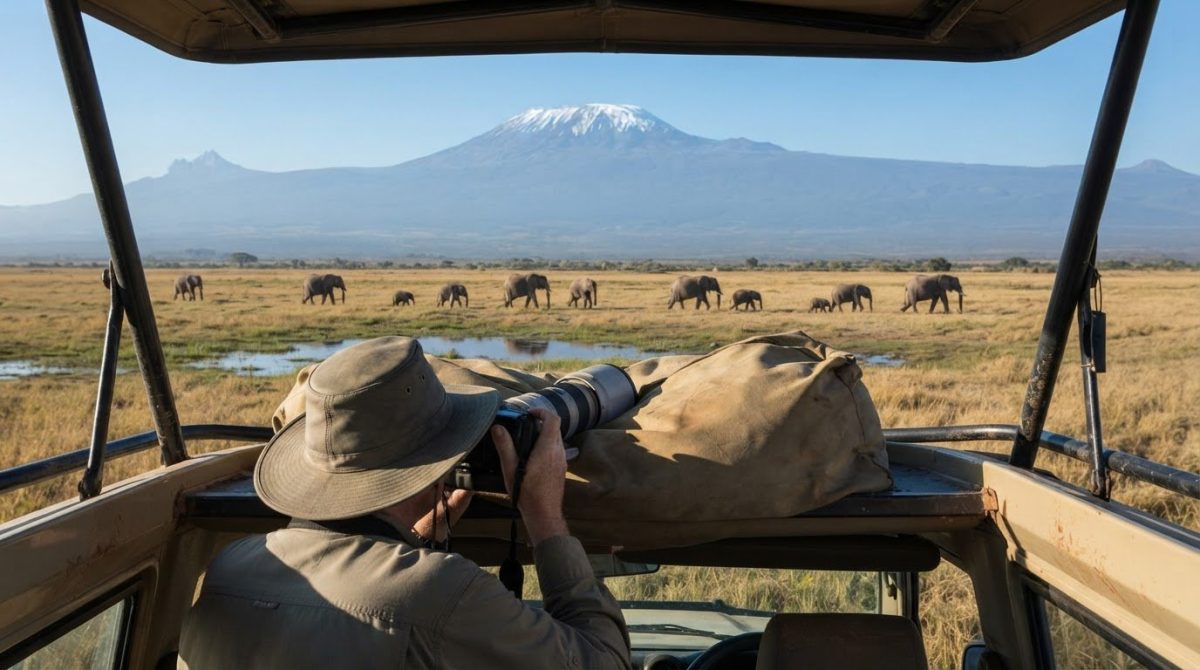
A memorable African wildlife photography tour isn’t only about getting close to animals; it’s about having time and thoughtful guidance to capture how wildlife, landscape, and daily life belong together. A photographic safari is a guided journey shaped around observing and photographing those moments, with the route and pace supporting opportunities to make images in the field.
It’s natural to picture striking wildlife portraits first, but the setting can be just as compelling: the open Serengeti plains, changing light across Tanzania, or elephants moving beneath Mount Kilimanjaro in Amboseli. Each destination offers its own mix of wildlife, scenery, and cultural experiences.
Here, you’ll learn what an African wildlife photography tour involves and how expert guidance can shape the experience, from choosing destinations and timing to making room for wildlife, landscapes, and cultural encounters. We’ll look at Tanzania and the Serengeti alongside Amboseli, so you can compare what each brings to a carefully planned journey.
Key Takeaways
- Learn how a photographic safari differs from a standard wildlife trip, including how vehicle space and photography equipment shape the experience.
- See how the Serengeti’s landscapes and Great Migration can influence the timing and focus of photography.
- Explore ways to balance wildlife portraits with landscape scenes and respectful cultural photography in Tanzania.
- Discover what makes Amboseli distinctive for photographing elephants against the changing views of Mount Kilimanjaro.
What is a photographic safari?
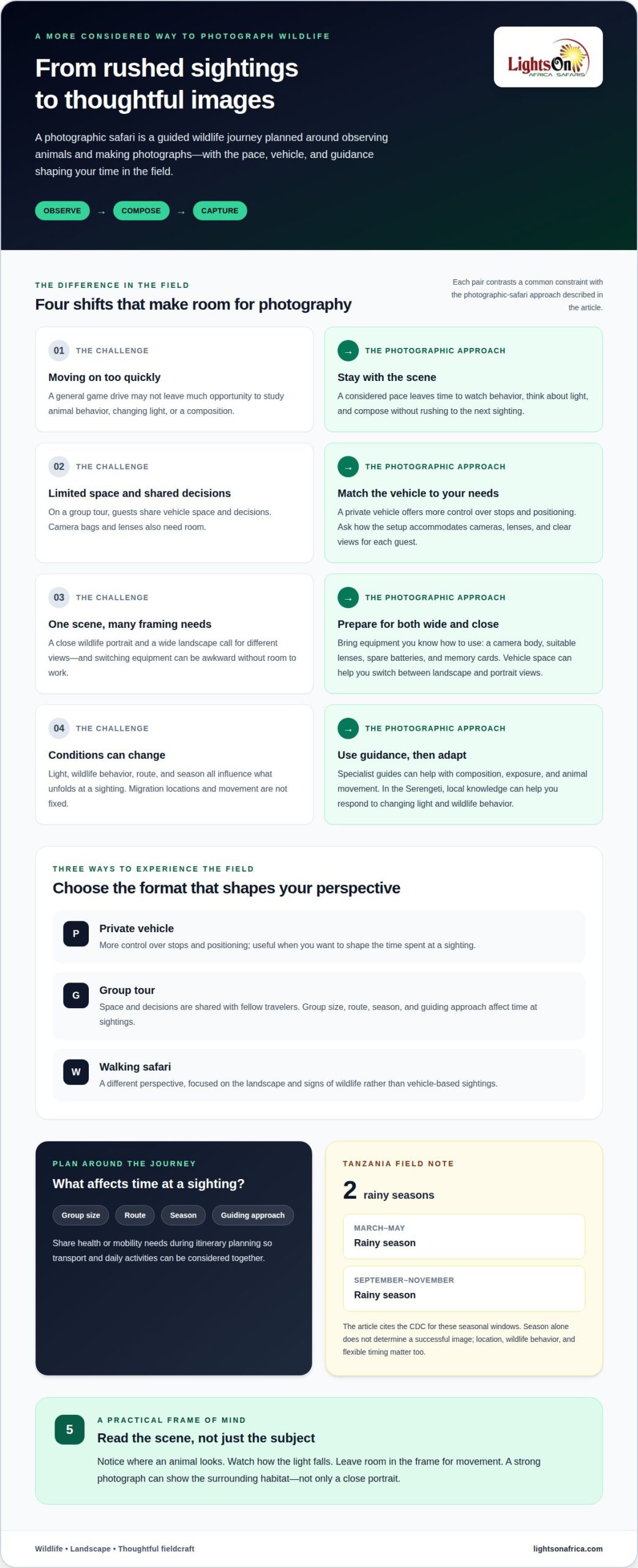
A photographic safari is a guided wildlife journey planned around observing animals and taking photographs. Unlike a general game drive, its pace can leave time to watch animal behavior, consider the light, and compose images without rushing to the next sighting. Tanzania’s Serengeti, Kenya’s Masai Mara, and South Africa’s Kruger National Park each offer distinct wilderness settings. Kruger is renowned for Big Five sightings, while the Serengeti and Masai Mara are known for open plains and seasonal wildlife movement.
Choose a private vehicle if you want more control over stops and positioning; on a group tour, you share space and decisions with fellow travelers. A walking safari offers a different perspective, focused on the landscape and signs of wildlife rather than vehicle-based sightings. For a small-group African wildlife photography safari, ask how the vehicle setup accommodates cameras, lenses, and clear views for each guest. Group size, route, season, and guiding approach all affect how much time you can spend at a sighting.
The vehicle is part of your photographic setup. Space for camera bags and room to work comfortably can make it easier to switch between a wide landscape view and a close wildlife portrait. Bring equipment you know how to use, such as a camera body, suitable lenses, spare batteries, and memory cards. Specialist guides can help you consider composition, exposure, and animal movement. In the Serengeti, for example, their local knowledge can help you respond to changing light and wildlife behavior.
Visa, vaccination, and permit requirements aren’t identical across African destinations. Tanzania, Kenya, and South Africa each require planning based on a traveler’s passport, route, and activities, so no single country list answers every traveler’s needs. Health and safety planning should account for remote travel, outdoor conditions, wildlife viewing, and the demands of long drives. Share relevant health or mobility needs during itinerary planning, so transport and daily activities can be considered together. A clear plan also helps set expectations for time in the vehicle and movement around wildlife.
Tanzania Serengeti and Great Migration photography
The Serengeti offers photographers a broad canvas of grassland, dramatic skies, and wildlife encounters. An itinerary can balance patient big-cat observation with wider scenes of animals moving across open plains. Early mornings and late afternoons often bring dramatic light that shapes the mood and detail of an image. Rather than rushing between sightings, a thoughtful schedule leaves room to watch animal behavior and adjust compositions as conditions change.
The Great Migration offers another photographic focus: herds of wildebeest, zebras, and gazelles crossing the plains. Their location and movement influence where a safari spends time, so migration photography calls for planning around the scenes you hope to capture, rather than expecting one fixed viewpoint. Dust, distance, and the scale of a herd can all affect how a moment appears in a photograph. Guides help position the vehicle while respecting the animals and their space.
For big-cat photography, the Serengeti calls for patience and close attention to behavior. A private Big Cats of the Serengeti photographic safari can last up to 10 days, allowing an itinerary to focus on observing cats and responding to sightings. The strongest photographs often come from reading a scene: watch where an animal looks, notice how the light falls, and leave space in the frame for movement. This approach also captures the surrounding habitat, not only a close portrait.
The best time depends on the photographs you hope to make, the migration’s movement, and the light you want. According to the Centers for Disease Control and Prevention, Tanzania’s rainy seasons are March-May and September-November, a useful factor when planning field conditions. Season alone doesn’t determine a successful image; location, wildlife behavior, and flexible timing matter too. Botswana offers different photographic settings, while Tanzania’s Serengeti itinerary centers on its own landscapes and wildlife. Explore a Serengeti Migration Safari as a way to shape a journey around migration and wildlife photography.
Wildlife, landscape, and cultural photography
A varied photography itinerary can move between wildlife, wide landscapes, and human stories. In Kenya’s Masai Mara, you can frame an animal within the open plains rather than isolate it against a plain background. Chobe National Park in Botswana is described as having Africa’s largest concentration of elephants, offering a distinctive setting for observing herds. Make time for both close encounters and broader scenes, so your images convey the place as well as its wildlife.
Landscape photography rewards attention to scale, light, and foreground. Namibia’s desert landscapes contrast strikingly with greener safari country; shape compositions around dunes, open horizons, and wildlife in the scene. A guide can help position the vehicle to include landforms without disturbing animals. To give a landscape image a stronger sense of scale, consider how a small subject, such as a distant animal, changes the viewer’s perception of space.
Cultural photography in Angola calls for a different kind of care. Make portraits only with permission and respect, not as spontaneous souvenirs. A guide can explain the context of a visit and help establish whether photography is welcome. Give people room to decline, and avoid directing a portrait in ways that misrepresent their daily lives. Images can feel more meaningful when they show the person, setting, and moment with dignity.
Match your camera approach to the scene. Wildlife may call for a tighter frame, while a landscape needs space around its main subject. During a cultural visit in Angola, prioritize conversation and consent before raising your camera. These choices help connect photographs to real encounters rather than reduce them to a checklist of images.
Plan for variety, not just a single headline sighting. A day that pairs wildlife viewing with changing landscapes can create a more complete visual story. In Botswana’s Chobe, elephant herds can anchor that story; in Namibia, desert forms offer a quieter counterpoint. Across the Masai Mara and Angola, thoughtful timing and respectful guidance help make each photograph feel rooted in its setting.
Amboseli elephants and Mount Kilimanjaro
Amboseli offers a distinctive setting for photographing elephants with Mount Kilimanjaro rising beyond the landscape. The scene can shift from a close view of an elephant to a wider frame that includes the mountain and open country. Leave space around your subject, then adjust the composition as the animals move. This approach gives images a stronger sense of place than a tight portrait alone.
June through October is identified as Amboseli’s dry season and a good time for wildlife photography. That seasonal window can help shape an itinerary, but each outing still depends on light, animal movement, and visibility. Plan time for different kinds of images, including elephant portraits, family groups, and wider scenes that show their surroundings. A flexible schedule lets you respond as an encounter develops.
Mount Kilimanjaro is a striking backdrop, but it needn’t overwhelm the wildlife in every frame. Consider viewing angles and distance with your guide, then decide whether the mountain or the elephants should lead the composition. A wide image can place a small elephant herd within the landscape; a closer frame can reveal behavior and detail. Changing your framing during a sighting can create a more varied record of the same moment.
Amboseli also rewards patience between headline encounters. Watch the light change across the scenery, and keep your camera ready for shifts in animal behavior. Respectful viewing gives elephants room to move naturally, while a knowledgeable guide helps manage positioning without turning the moment into a chase. Compared with the Serengeti’s open plains and migration-focused photography, Amboseli offers a memorable pairing of elephants and the distant presence of Kilimanjaro.
For an adventure that brings East African landscapes and wildlife into one journey, explore guided East Africa adventures.
Lights on Africa Destinations & Safaris: 9 Days Tanzania Agriculture Tour and Safaris
Lights on Africa Destinations & Safaris can help connect a Tanzania wildlife journey with a closer look at agriculture and rural landscapes through its 9 Days Tanzania Agriculture Tour and Safaris. It may suit travelers who want their experience to include more than wildlife photography. For a journey focused on wildlife across Tanzania and Kenya, Best Tanzania & Kenya Safari Tours for Wildlife Lovers offers a closer fit. Tailor-Made African Journeys. Unforgettable Experiences is another option for travelers seeking a journey shaped around their interests.
Share the scenes you hope to photograph, such as wildlife, open landscapes, or cultural encounters, along with the destinations that interest you. This gives your itinerary planning a clear starting point for matching the journey to your priorities.
Contact Lights on Africa Destinations & Safaris to discuss the journey you have in mind.
Shape your next journey around the images you hope to bring home
Before choosing a route, decide what story you want your photographs to tell. You might focus on wildlife behavior, the character of a landscape, or the connections between people and place. That choice can guide the pace and priorities of an African wildlife photography tour, helping the journey feel personal rather than like a checklist of sightings.
Lights on Africa Destinations & Safaris offers different journeys to consider. The 16 Days- The Great Migration Luxury Safari & Zanzibar Retreat combines a migration-focused safari with time in Zanzibar. The 8-Day Luxury All Inclusive Tanzania Safari and 8Days Tanzania Private Guided Family Safari provide other Tanzania options, depending on the kind of trip you have in mind. Share your interests and preferred travel style to start shaping a suitable direction.
Take the next step and contact Lights on Africa Destinations & Safaris to discuss your journey. Your next adventure can begin with the scenes you most want to experience.
Frequently Asked Questions
Can non-photographers go on photo tours?
Yes, non-photographers can enjoy wildlife, scenery, and cultural experiences on safari, even if they don’t take photographs. A photography-focused itinerary may give more attention to image-making, so consider whether that pace suits everyone travelling together. If interests differ, discuss how to balance photography with general safari experiences as you plan your journey.
How experienced do I have to be in photography?
You don’t need a polished portfolio to enjoy a photography-focused safari. Beginners can arrive with a simple goal, such as learning to frame animal behavior or capture a sense of place. More experienced photographers may want to refine a particular style. Specialist guides lead thematic photographic tours, creating opportunities to learn through observation and field experience.
Looking for some safari inspiration?
Start with the kind of experience you want to remember: wildlife encounters, cultural exchange, or time among Tanzania’s rural landscapes. The 11 Days Tanzania Photographic Safari is one option for travelers drawn to image-making. For broader inspiration, think about how a journey might balance time in the wilderness with opportunities to experience local life, then shape your priorities into an itinerary.
Will there be a professional photographer on the tour?
Photographic tours are led by specialist guides, but that doesn’t necessarily mean a professional photographer accompanies every tour. The guide’s role is to lead the thematic experience and support opportunities for photography. If hands-on tuition is important to you, make it a priority in your planning conversation so the itinerary’s guidance can be matched to your learning goals.
What destinations are best for an African wildlife photography tour?
The best destination depends on the images and experiences you value most. Tanzania and Kenya offer wildlife-rich safari settings, while South Africa, Botswana, and Namibia bring different landscapes and wildlife encounters. For an African wildlife photography tour, consider whether your priority is animal behavior, varied scenery, or cultural context. Your preferred subjects can guide your destination choice.
What camera gear and lenses should I bring on an African safari?
Choose gear based on the photographs you hope to make. A telephoto lens helps frame distant animals, while a wider lens can include more of a landscape or group scene. A comfortable camera strap and padded bag make gear easier to carry between outings. Keep your setup manageable so you can respond readily as a scene changes.