
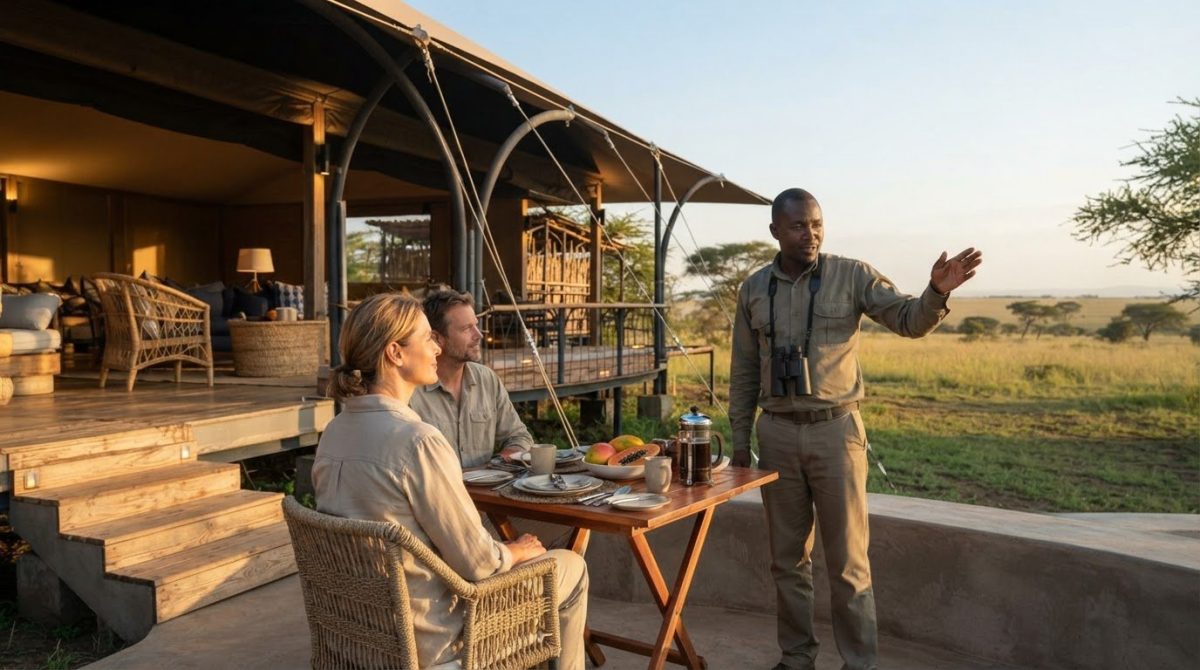
The best Tanzania safari isn’t automatically the most private or luxurious. The right choice depends on how you want to travel: whether you value flexibility and a tailored pace or enjoy sharing the journey with other wildlife enthusiasts.
It’s understandable to focus first on the animals you hope to see. But knowing how to plan a Tanzania safari also means matching the season, route, accommodation, and meals to your priorities, whether you’re traveling with family, celebrating a honeymoon, or seeking an immersive wildlife experience.
This guide will help you compare a private safari with a group trip, consider where to stay and how meals fit into the experience, and choose travel dates with wildlife viewing in mind. You’ll also find ways to shape the journey around your pace and preferences, so your safari feels rewarding and comfortable, not rushed or overly structured.
Key Takeaways
- Choose a private or group safari based on how much flexibility, shared experience, and personal pacing you want.
- Plan accommodation and meals around your comfort preferences and the rhythm of your itinerary.
- Time your journey around the wildlife experiences you most want to see, including seasonal migration activity.
- Shape the trip for your travel style, whether you’re focused on wildlife, traveling with family, celebrating a honeymoon, or seeking luxury.
1. Safari accommodation and meals
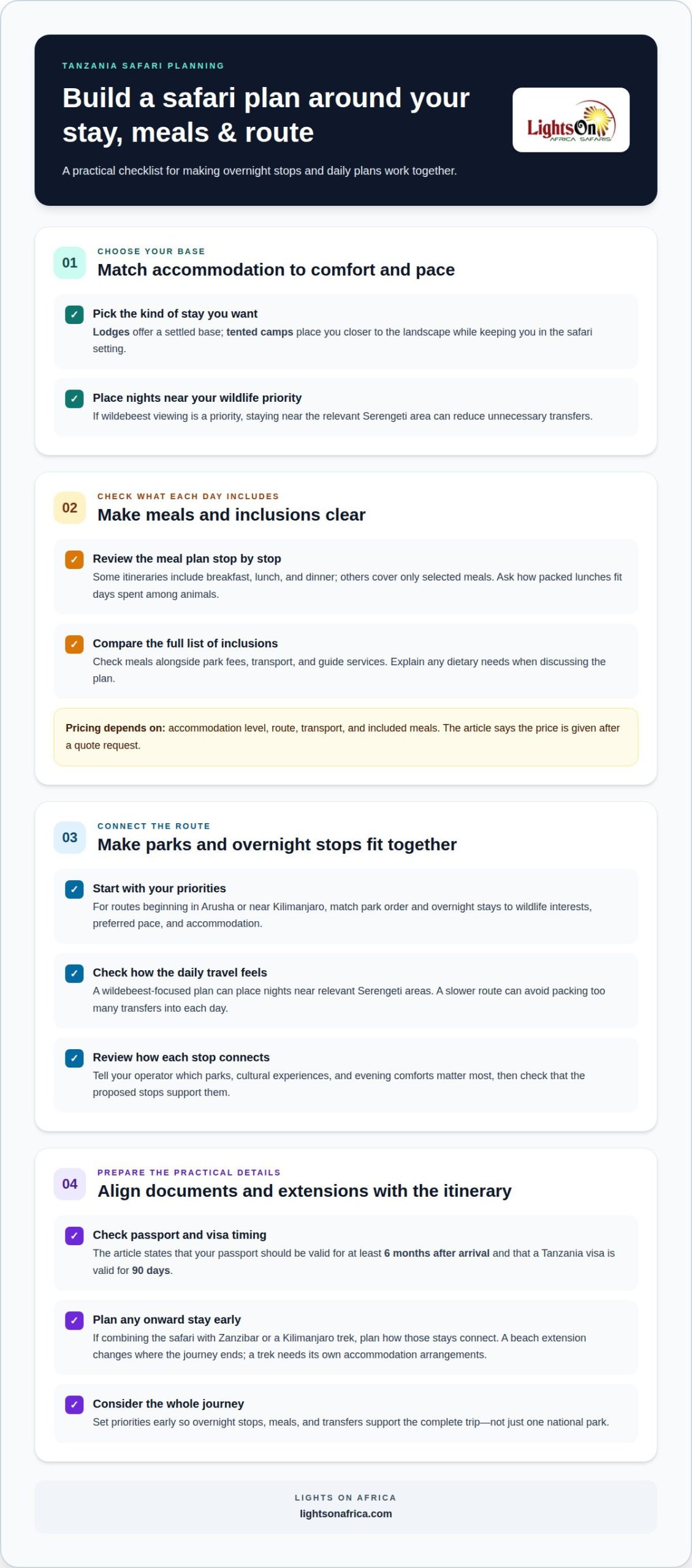
Choose accommodation to suit your comfort, daily pace, and route through Tanzania’s national parks. Lodges offer a settled base, while tented camps bring you closer to the landscape while keeping you in the safari setting. Staying near the Serengeti, for example, can reduce unnecessary transfers when wildebeest viewing is a priority. Compare what each itinerary includes, especially meals, park fees, transport, and guide services.
Meal arrangements shape each day. Some itineraries include breakfast, lunch, and dinner, while others cover only selected meals. Ask your operator to explain the meal plan alongside each overnight stop, including how packed lunches fit days spent among animals. This makes it easier to understand what is covered and plan around dietary needs. Safari pricing depends on accommodation level, route, transport, and included meals; the price is given after a quote request.
For routes beginning in Arusha or near Kilimanjaro, an operator can match park order and overnight stays to your wildlife priorities, travel pace, and chosen accommodation. For example, a wildebeest-focused itinerary can place nights near relevant Serengeti areas, while a slower route can avoid packing too many transfers into each day. Tell the operator which parks, cultural experiences, and evening comforts matter most, then review how the proposed stops connect.
Build practical travel requirements into the plan. According to Tanzania Immigration Services Department, your passport should be valid for at least 6 months after arrival in Tanzania. Tanzania Immigration Services Department states that a Tanzania visa is valid for 90 days. A practical part of how to plan a Tanzania safari is aligning those documents with your travel dates before confirming accommodation.
If you’re combining a safari with Zanzibar or a Kilimanjaro trek, plan how those stays connect to the wildlife route. A beach extension changes where the journey ends, while a trek needs its own accommodation arrangements. Set these priorities early so overnight stops, meals, and transfers support the whole trip, not just one national park.
2. Should You Choose a Private or Group Tanzania Safari?
Choose a private safari for a more flexible pace and time to linger over wildlife sightings. A group safari shares the vehicle with 6–8 other travelers, so the day follows a shared itinerary. Consider how you prefer to travel: a couple may value private time, while solo travelers may enjoy company. Either way, tell your operator whether Ngorongoro Crater, photography, or time to witness African nature matters most.
Build your packing list around your route, season, and accommodation. A useful starting point is comfortable, neutral-colored clothing, layers for cool mornings, sun protection, insect repellent, binoculars, and a camera. Pack a wide-brimmed hat and sunscreen for open game drives. For October travel, ask your safari planner whether your planned activities or camp stays call for anything specific.
Discuss luggage before departure. Some Tanzania safari routes use small aircraft, where luggage limits may be 15–20 kilograms, including hand luggage. Ask whether your itinerary includes an internal flight and what bag type suits it. Your operator can also explain which essentials belong in your day bag during a drive to the Ngorongoro area.
For a classic northern Tanzania route, consider Serengeti National Park, Ngorongoro Crater, Lake Manyara, and Tarangire. Your wildlife priorities, preferred pace, and interest in culture can help determine which stops fit.
Your itinerary can be tailored to your priorities, balancing time in the parks, driving, and any additional experiences.
U.S. citizens need a visa to enter Tanzania, and visa applicants need a blank passport page. Follow visitor and conservation guidance in each national park. Your itinerary can account for the relevant park requirements.
Choose a safari operator that clearly explains the proposed route, inclusions, and travel arrangements. Review the itinerary and credentials provided, then discuss how the plans align with your interests in Ngorongoro or the Serengeti.
For health planning, the Centers for Disease Control and Prevention recommends anti-malarial medication for travelers to Tanzania. Discuss vaccinations and malaria precautions with a travel-health professional, and review travel insurance separately from safari arrangements.
If a private route suits your plans, explore a private Tanzania safari itinerary as one way to shape the journey around your priorities.
3. Seasonal wildlife and migration timing
Choose travel dates around the wildlife experience you most want to witness. The Great Migration can be seen in Tanzania from November through September, as herds move across the Serengeti throughout the year. For a migration-focused itinerary, match your dates to the herds’ seasonal location rather than planning around one landmark sighting.
January through March is a good period for migration viewing in Serengeti National Park. In the Southern Serengeti, wildebeest calving runs from late December to early March, bringing newborn animals and increased predator activity. If this wildlife cycle appeals to you, share that priority when planning so the route and overnight stops focus on the relevant region.
Season also shapes the landscape and conditions on game drives. Tanzania’s long dry season runs from June through September, and June through October is considered a strong period for wildlife viewing. Dry-season temperatures typically range from 70°F to 80°F. These months can suit travelers who want to pair game viewing with a clear seasonal focus, including a migration journey through the Serengeti.
Rainfall is another factor to consider. Tanzania’s long rains fall from March through May, with heavy rains in April and May. The short rainy season arrives in October and November, while December through February is the short dry season. Ask how seasonal weather may affect the route, daily travel, and accommodation, then decide which balance suits your trip.
Tarangire can add variety to a northern Tanzania itinerary, while a stay in the Serengeti can center the trip on migration. A focused route can follow one wildlife priority; a broader itinerary can include varied landscapes and experiences. Discuss your dates, key sightings, and preferred pace with your safari planner. The best timing aligns the season with what you hope to see, rather than trying to cover every park.
4. Wildlife, family, honeymoon, and luxury safari planning
Start with the experience you want most, then shape the route around it. Wildlife enthusiasts might prioritize elephant sightings and time in the Serengeti, while travelers drawn to dramatic scenery may favor Ngorongoro Crater. A focused itinerary gives each destination room to shine instead of turning every day into a transfer. Tell your safari planner which animals, landscapes, and experiences matter most.
For a family trip, consider children’s interests, daily energy, and how much time you want between activities. A private safari makes it easier to adapt the pace and spend longer at a sighting that captures everyone’s attention. Discuss family-friendly accommodation and meal arrangements when planning, so the itinerary feels manageable for the whole group.
A honeymoon calls for a different balance. Combine memorable wildlife viewing with quiet time at camp, and consider whether a Zanzibar stay suits the celebration you have in mind. Luxury isn’t only about a lodge; it can also mean fewer hurried transitions, thoughtful accommodation choices, and an itinerary shaped around your preferred pace.
Safety belongs in every safari plan. Elephants and other wild animals can be unpredictable, so stay in the vehicle unless your guide says it’s safe to leave, keep a respectful distance, and never feed or approach wildlife. Follow your guide’s instructions in the crater, at camp, and during every game drive.
Share your priorities before the itinerary is prepared: favorite wildlife, family needs, honeymoon plans, preferred comfort, and the balance you want between adventure and rest. These choices help determine which destinations fit and how each day flows. For a journey shaped around your wildlife or family priorities, plan your Tanzania safari with expert guidance.
Lights on Africa Destinations & Safaris
Lights on Africa Destinations & Safaris helps turn your wildlife priorities, travel style, and preferred pace into a thoughtfully planned Tanzania journey. If you’re deciding between a private family trip and a migration-focused route, its Tanzania safari offerings include the 8Days Tanzania Private Guided Family Safari and Serengeti Migration Safari.
Share the experiences that matter most, from wildlife viewing and comfortable stays to time on Zanzibar. The team can help shape an itinerary around those preferences, with options such as the 16 Days- The Great Migration Luxury Safari & Zanzibar Retreat and the 8-Day Luxury All Inclusive Tanzania Safari. This is a natural next step when you want professional guidance bringing the route and trip priorities together.
Contact Lights on Africa Destinations & Safaris to discuss your Tanzania safari plans.
Shape the Journey Around What Matters Most
Your safari can be more than a list of destinations. It can reflect how you want to experience Tanzania, with room for curiosity, meaningful time together, and moments that stay with you long after you return. As you decide how to plan a Tanzania safari, focus on the feeling you want the journey to leave behind, then let that intention guide your choices.
A clear starting point makes planning easier: share your priorities, preferred pace, and the experiences you hope to enjoy. From there, your itinerary can take shape around what feels personal, whether that means a wildlife-centered adventure, a family journey, or a special escape.
Take the next step and contact Lights on Africa Destinations & Safaris to begin discussing your plans. Your Tanzania adventure starts with the choices that feel right for you.
Frequently Asked Questions
Should You Choose a Private or Group Tanzania Safari?
Choose a private safari if you want more control over stops, pace, and time spent at a sighting. A group safari suits travelers who enjoy sharing the experience and following a common schedule. Consider how you handle early starts and differing interests: a photographer may want to linger, while a group itinerary needs to suit everyone. Your preferred travel rhythm is a useful deciding factor.
What Is a Game Drive?
A game drive is a guided journey through a wildlife area, usually in a safari vehicle, to observe animals in their natural habitat. Your guide reads tracks, landscapes, and animal behavior to help locate wildlife. A drive might focus on spotting elephants near water or watching grazing herds. Keep your camera ready, listen to your guide, and allow time for quiet observation.
When Should I Go on Safari in Tanzania?
The best dates depend on whether you prioritize drier conditions, a particular wildlife event, or a quieter-feeling itinerary. Tanzania’s long dry season runs from June through September, while the long rains fall from March through May. Consider how weather may affect your comfort and route, then align your travel window with the experience you value most instead of choosing dates by habit.
What Does a Tanzania Safari Cost?
Safari prices vary by trip. Key cost factors include the route, accommodation, transport, meals, park fees, guide services, and whether the vehicle is private or shared. The season and length of the itinerary can also affect the total. Compare what each proposal includes, not just the headline price, to understand the full value of the trip.
What Makes a Safari Truly Perfect?
A rewarding safari fits your priorities instead of trying to include everything. Choose a main focus, such as photography, family time, or wildlife viewing, then build the route and pace around it. Leave room for unexpected sightings and unhurried moments. Clear expectations about accommodation, meals, and daily travel also help make the itinerary personal, comfortable, and connected to the Tanzania experience you hoped for.
When Is the Best Time to See the Great Migration in Tanzania?
The Great Migration can be seen in Tanzania from November through September, as herds move across the Serengeti throughout the year. January through March is a good period for migration viewing, and Southern Serengeti wildebeest calving runs from late December to early March. Share your dates and wildlife priorities with your safari planner so the route reflects the seasonal movement you hope to witness.