
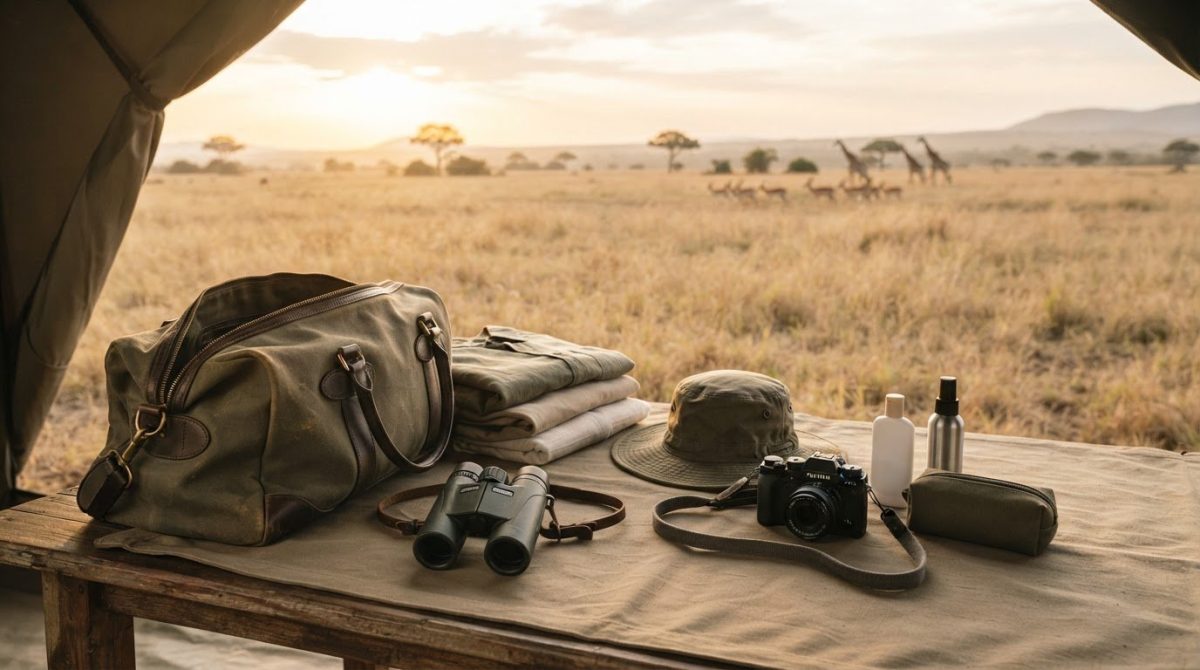
Pack light, but make every item earn its place. Knowing what to pack for an African safari starts with the flight: safari charter flights commonly limit each passenger to 15 kg (33 lbs) of luggage in total, including carry-on baggage. A soft-sided bag is often the practical choice, while clothing, sun and insect protection, and essential medicines deserve priority.
It’s natural to want a backup for every possibility, especially when days may shift from cool early drives to warm afternoons outdoors. A thoughtful packing list helps you stay comfortable without overloading your bag. Choose breathable, neutral layers, protect yourself from sun and insects, organize medication, and leave room within charter-flight luggage limits. The goal is to arrive prepared, travel comfortably, and leave space to enjoy the journey.
Key Takeaways
- Pack broad-spectrum sunscreen with SPF 50+ and insect repellent containing 25-30% DEET to prepare for sun and insects.
- Choose breathable, neutral-colored layers that help shield you from sun, bugs, and changing temperatures.
- Prioritize essentials in a soft-sided bag, keeping your safari charter’s luggage restrictions in mind.
- Keep personal medications in your hand luggage. According to the World Health Organization, travelers arriving from designated countries must receive a Yellow Fever vaccination at least 10 days before arrival.
1. Insect repellent and sunscreen
If you’re deciding what to pack for African safari travel, begin with two essentials: broad-spectrum sunscreen rated SPF 50+ and insect repellent containing 25-30% DEET. They serve different purposes, so include both in your packing list rather than relying on one product. Add SPF lip balm for exposed lips, and keep these items accessible during game drives, when you may spend long stretches outdoors watching wildlife or using your camera.
Pack enough sunscreen and insect repellent for your planned time outdoors, and follow each product’s label. Sunscreen and SPF lip balm protect exposed skin, while repellent should be used as directed. If you choose to treat clothing, apply permethrin spray one week before departure, following the instructions for where and how to apply it. Clothing spray does not replace skin repellent.
Keep personal care items easy to manage. Group sunscreen, lip balm, and repellent in a clearly marked toiletry pouch, and keep the products you’ll need during drives close at hand. Sunglasses can make bright conditions more comfortable, while a small packable bag keeps daily essentials together and separate from spare clothes or camera accessories.
At lodges, separate evening toiletries from daytime sun and insect protection so you can find each item quickly. Keep repellent accessible before heading outdoors. Store earplugs in a separate pocket if unfamiliar nighttime sounds might disturb your rest. Earplugs do not protect against insects, so use repellent as directed.
A practical approach to what to pack for African safari outings is to organize products by purpose: sunscreen and lip balm for sun exposure, and DEET repellent for insect protection. Check labels before packing, and keep these products within easy reach rather than burying them under clothes. This makes it easier to grab the right item before a drive or time outdoors.
2. Neutral-colored safari clothing
Choose breathable clothing in earth tones such as khaki, olive, and brown. These colors suit dusty game drives and are less conspicuous around wildlife than bright shades. In areas where tsetse flies may be present, avoid patterned, black, blue, or brightly colored clothing, as these colors can attract them. White may show dust quickly, making it less practical for vehicle rides.
Build outfits in layers rather than packing one heavy set. Light, short-sleeved shirts work in warm sunshine, while long sleeves and trousers offer more coverage from sun, insects, and thorny vegetation. Add a lightweight jacket for cool mornings, and pack a rain jacket for possible afternoon storms. In South African reserves, September nights can fall below 50°F while daytime temperatures reach 86°F, making removable layers especially useful. Southern Africa’s winter falls from June through August.
For children, pack comfortable layers and a spare outfit for dusty days outdoors. Whether you’re staying at a luxury lodge or camping, choose practical basics, then adjust sleepwear and extra layers to the setting and available laundry.
Plan clothing around your destination and the season, as East African conditions can shift from warm sunshine to cool breezes. For gorilla trekking in Rwanda or Uganda, long socks or leg gaiters can cover the gap between trousers and footwear. Camouflage clothing is illegal in Nigeria, Uganda, Zambia, Ghana, and Zimbabwe, so leave it at home.
Closed-toe shoes with good support help protect your feet on dusty, uneven terrain. Choose a comfortable pair suited to excursions and walking, and bring hiking socks that fit well inside them. Avoid relying on new shoes you haven’t worn in.
Clothing isn’t the only destination-specific consideration: drone permits are required in Rwanda, Uganda, and Tanzania, while drone cameras are banned in Kenya, Madagascar, and Morocco. Families planning a Tanzania trip can explore the 8Days Tanzania Private Guided Family Safari as they plan practical clothing for the journey.
3. Charter-flight luggage limits and soft-sided bags
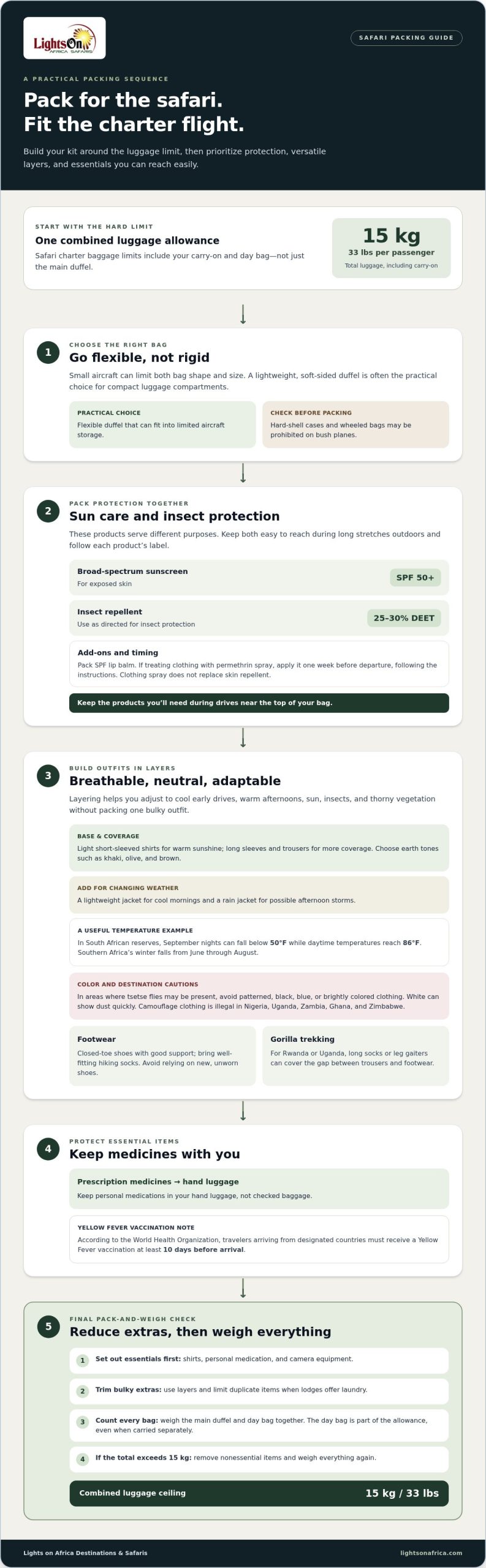
For safari charter flights, plan for a total luggage limit of 15 kg (33 lbs) per passenger, including carry-on baggage. Small aircraft can also restrict bag shape and size, so weight isn’t the only consideration. The aircraft’s luggage space affects which bags fit, making a soft-sided duffel a practical option. Hard-shell cases and wheeled bags may be prohibited on bush planes.
Start safari packing with the bag itself. Choose a lightweight, flexible duffel that can fit into a compact luggage compartment, rather than a rigid suitcase that keeps its shape. Keep the packed bag within the 15 kg total, counting any separate carry-on. This limit applies to the combined luggage, so a day bag can’t be treated as extra weight outside the allowance.
Pack by priority. Set out the essentials first, such as shirts, personal medication, and camera equipment, then remove bulky extras. Choose clothing that can be worn in layers, and limit duplicate items when lodges offer laundry. Weigh the packed bags together, including the day bag, before travel. If your scale shows more than 15 kg, remove nonessential items and weigh everything again.
A small day bag keeps useful items within reach during drives, but it counts toward your total luggage allowance. Choose one that folds flat or packs easily inside your main duffel when not in use. Consider its weight before adding a water bottle and other outing essentials. Protect fragile items with clothing, and keep frequently used belongings near the top for easy access.
Treat the luggage limit as part of your packing plan, not just a final measurement. A flexible duffel, awareness of the combined bag weight, and a short list of daily essentials make travel on a small charter aircraft easier. Avoid adding a second rigid case at the last minute, as its shape and weight can make it harder to fit.
4. Medication, prescriptions, and vaccinations
Keep prescription medicines in your hand luggage, not checked baggage. Leave them in their original labeled containers and pack enough for the itinerary, including travel days. Place a written medication list beside them, with each medicine’s name and your usual instructions, so the details are easy to find if your luggage is delayed.
Plan health preparations before departure. Arrange a medical appointment four to six weeks before travel to discuss health concerns and routine vaccinations for your destinations. Travelers arriving from countries designated by the WHO must receive a Yellow Fever vaccination at least 10 days before arrival, according to the World Health Organization. Keep vaccination records with your travel documents.
For a compact first-aid pouch, consider familiar supplies such as adhesive bandages and antiseptic wipes, along with personal items you regularly use. Pack lubricating eye drops for irritation from dust. Over-the-counter medicine for an unexpected headache or motion sickness can also be useful on long vehicle rides or bumpy journeys. Keep medicines in their labeled packaging and follow the directions.
Separate daily toiletries from first-aid supplies, so you don’t have to unpack your whole bag for your morning routine. Keep prescriptions and essential first-aid items accessible, and place toiletries in a leak-resistant pouch. Organize everything before packing so medicines aren’t buried beside shorts, binoculars, or spare clothing. Protect the pouch from direct sunlight and heat inside the vehicle.
Your season and itinerary shape what you’ll use most. A dusty drive may make eye drops more useful, while a long travel day can call for familiar motion-sickness medicine. Keep the medication pouch in your hand luggage throughout transit, rather than transferring essentials into checked luggage at the last minute. For help planning a Tanzania journey around practical travel needs, explore Tanzania safari options.
Lights on Africa Destinations & Safaris: 16 Days- The Great Migration Luxury Safari & Zanzibar Retreat
Lights on Africa Destinations & Safaris offers the 16 Days- The Great Migration Luxury Safari & Zanzibar Retreat for travelers drawn to wildlife encounters and time on Zanzibar’s coast. Once you’ve planned the practical essentials, choosing a journey that brings those experiences together can help shape your packing around the trip ahead. For a Tanzania-focused safari, the 8-Day Luxury All Inclusive Tanzania Safari and Serengeti Migration Safari are other options; families can consider the 8Days Tanzania Private Guided Family Safari.
Explore the itinerary that best suits your travel plans, then prepare clothing and personal essentials for its safari and retreat experiences. To discuss a journey with Lights on Africa Destinations & Safaris, visit lightsonafrica.com.
Let Your Safari Plans Take Shape
Let your itinerary guide your final choices as you picture the landscapes, wildlife, and quieter moments ahead. Deciding what to pack for an African safari is easier when you know what each day involves, from time in the vehicle to evenings at camp or a coastal retreat. Treat your packing plan as part of preparing for the experience you want, not just a checklist to complete.
Lights on Africa Destinations & Safaris offers journeys including the 16 Days- The Great Migration Luxury Safari & Zanzibar Retreat, the 8-Day Luxury All Inclusive Tanzania Safari, and the 8Days Tanzania Private Guided Family Safari. Explore these options as you consider the kind of trip that feels right for you, then shape your preparations around that choice.
Contact Lights on Africa Destinations & Safaris to take the next step toward your journey. A little thoughtful planning can make room for a more present, rewarding adventure.
Frequently Asked Questions
How to pack everything?
Pack by priority, then weigh every bag together, including your day bag. Safari charter flights commonly allow 15 kg (33 lbs) total per passenger, carry-on included, so avoid treating a small backpack as extra allowance. Put medicines and travel documents where you can reach them, and nest smaller bags inside your soft-sided duffel for transit. Remove duplicate items before removing essentials.
What colors and fabrics are best for safari clothing, and which should you avoid?
Choose comfortable, breathable clothing in muted earth tones such as khaki or olive, and bring layers for cool mornings and warmer afternoons. Lightweight long sleeves and trousers provide practical coverage outdoors. Avoid bright, patterned, black, or blue clothing in tsetse-fly areas. Camouflage clothing is illegal in Nigeria, Uganda, Zambia, Ghana, and Zimbabwe, so leave it out when visiting those countries.
What sun protection, insect repellent, and malaria-prevention supplies should you pack?
Pack sunscreen, SPF lip balm, sunglasses, and insect repellent, keeping daily-use items accessible during outings. Follow each product’s label for application and reapplication. For malaria prevention, bring any medication prescribed for your itinerary and follow its instructions. Don’t rely on repellent as a substitute. A medical appointment before departure can help you discuss destination-specific health needs and routine vaccinations.
What medicines and first-aid items should you bring on safari?
Bring regular prescriptions in their labeled packaging, along with a written list of medicine names and instructions. Keep essential medication in your hand luggage, and organize bandages, antiseptic wipes, and other first-aid supplies in a separate pouch. Pack familiar over-the-counter remedies for issues such as headaches or motion sickness, and keep lubricating eye drops handy for dusty conditions.
What camera, binoculars, and electronics should you pack, and how can you charge them?
A zoom lens of at least 200 mm can help frame distant wildlife, while compact 8×42 binoculars make viewing easier. Pack a pocket-sized LED flashlight, spare camera batteries, and memory cards; avoid flash, which can disturb wildlife. Tanzania and Kenya commonly use Type G sockets, with electrical current of 220-240 volts at 50 Hz. Pack a suitable plug adapter and check your charger’s input label.
What items are prohibited or restricted in African safari parks and on flights?
Restrictions vary by country and flight, so account for both when planning what to pack. Single-use plastic bags are banned in Tanzania, Uganda, South Africa, Kenya, and Rwanda. Drone permits are required in Rwanda, Uganda, and Tanzania, while drone cameras are banned in Kenya, Madagascar, and Morocco. Bush planes may prohibit hard-shell and wheeled luggage, and charter-flight weight allowances can be strict.