
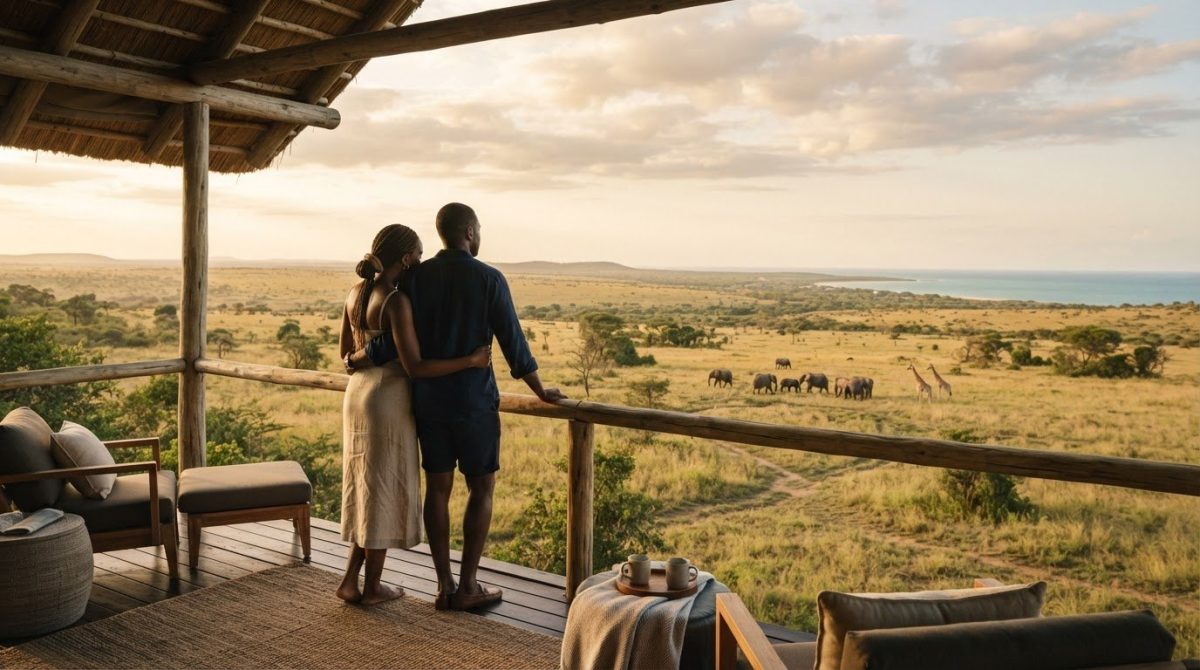
The best safari honeymoon is about balance, not collecting destinations. Plan a luxury African safari honeymoon itinerary for 10 to 14 days, with time for wildlife encounters and a relaxing beach stay.
It’s natural to want both the thrill of a game drive and quiet moments together, without turning your luxury African safari honeymoon itinerary into a rush between camps. The right route depends on the wildlife you hope to see, when you travel, and how much time you want to unwind by the coast.
This guide explains how to choose an African safari destination and specialist, match your travel dates to the experience you want, and decide which wildlife to seek. You’ll also get a sense of a typical safari day, so you can picture the pace before shaping a journey that feels adventurous, personal, and comfortably unhurried.
Key Takeaways
- Choose travel dates around your priority: Safari seasons vary by destination, so consider the wildlife and conditions you hope to experience when choosing travel dates.
- Match your destination to the wildlife and landscapes you most want to experience, then shape the route around time for both adventure and rest.
- Use a specialist to bring together destination, season, wildlife interests, and the pace you want as a couple.
- Expect a safari day to balance wildlife viewing with time to pause and enjoy camp, rather than filling every moment with activities.
Best travel seasons in East and Southern Africa
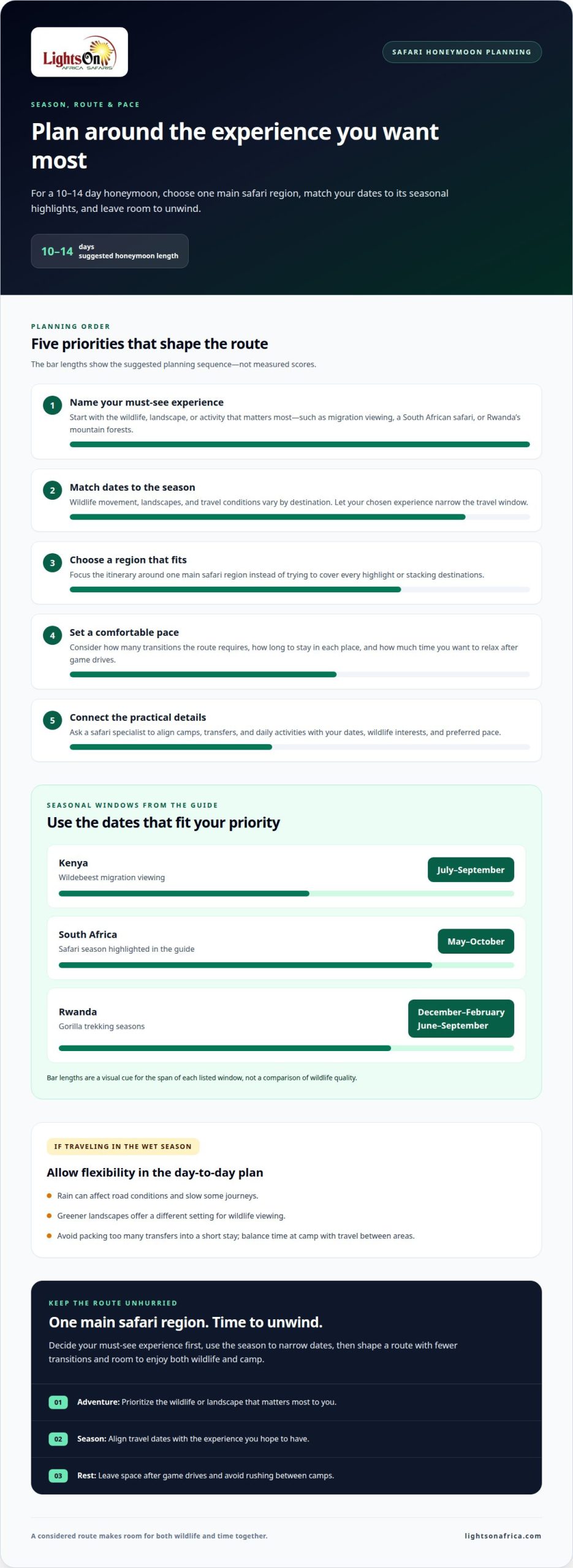
Choose dates around the experience you value most, whether that’s migration viewing, a South African safari, or Rwanda’s mountain forests. Then shape the route around seasonal conditions and leave time to rest.
Seasonal Timing for Safari Travel
The season affects wildlife movement, landscapes, and the feel of each destination. In Kenya, July through September is a season for viewing the wildebeest migration. South Africa’s safari season is May through October. Rwanda’s gorilla trekking seasons are December through February and June through September. Match your dates to your priority, then build the itinerary around that region instead of trying to cover every highlight.
Wet-Season Travel Considerations
Rain can affect road conditions and slow some journeys, while greener landscapes offer a different setting for wildlife viewing. Consider how flexible you want your daily travel to be, and avoid packing too many transfers into a short stay. Ask your safari specialist to balance time at camp with travel between areas. For couples, a quieter pace leaves room to enjoy both the scenery and time together.
For U.S. passport holders, visa and entry requirements depend on each country visited, so plan for every border on your route. The CDC recommends hepatitis A vaccination for travelers to Sub-Saharan Africa, including safari-goers. Align health planning with your destinations and planned activities.
Safari safety starts with respecting wildlife and following park rules. Don’t feed or disturb animals, and stay inside vehicles unless your guide instructs otherwise. Malaria prevention depends on your destinations and itinerary timing; discuss suitable precautions with a travel health professional. Review travel insurance for your trip’s needs, including medical care and disruption protection.
For a honeymoon of 10 to 14 days, choose one main safari region and allow time to unwind after game drives. A Kenya migration focus, South African wildlife journey, or Rwanda trekking stay each creates a distinct trip. Set your must-see experience first, then use the season to narrow your dates and route.
Choosing a destination and safari specialist
Choose a destination based on the experience you want, then shape the route around your preferred pace. A safari specialist can connect your priorities with practical choices about camps, transfers, and daily activities.
Destination Selection
Tanzania and Kenya suit couples drawn to East African wildlife, while Uganda and Rwanda add forest and trekking experiences. South Africa, Botswana, and Namibia offer different landscapes and safari styles. Start by listing your priorities, such as wildlife viewing, cultural experiences, or a beach finish. Then compare how each destination fits your travel dates and desired pace.
For a honeymoon, don’t choose destinations by reputation alone. Consider how many transitions the route requires, how long you want to stay in each place, and whether you’d rather focus on one country or combine regions. A specialist should explain the route and show how each stop supports your priorities, rather than simply stacking destinations.
Romantic Lodges and Camps
The right luxury lodge or romantic camp suits your destination, preferred level of privacy, and planned activities. Compare its location, setting, dining arrangements, and access to game viewing. Check the specific stay details for inclusions: private dinners, spa treatments, and room upgrades vary by property and booking.
Which lodges offer honeymoon perks? Look for properties that clearly describe their inclusions. Don’t assume a romantic setting automatically comes with a private dinner, treatment, or upgrade.
How do private game drives, charter flights, and lodge transfers work? A private drive is arranged around your party, while charter flights connect destinations when they’re included in the route. Transfers link airstrips or arrival points with camps; the itinerary should show how each connection fits together.
What should couples pack, including luggage limits? Choose practical layers, comfortable walking shoes, sun protection, and a compact outfit for evenings at camp. Luggage limits depend on the transport used, so follow the allowance stated in your itinerary rather than assuming one limit applies throughout.
Use these criteria to shape a route that feels personal, not overfilled. Explore tailor-made African journeys as you consider the destinations and experiences that matter most to you.
Wildlife and Big Five safaris
Set your wildlife priorities before choosing parks or planning game drives. The Big Five are lion, leopard, elephant, rhinoceros, and buffalo, but a rewarding safari can also focus on birdlife, animal behaviour, or changing landscapes.
Decide whether seeing particular animals matters most, or whether you’d rather observe wildlife at a slower pace. A guide can tailor game drives to your interests, whether that means tracking animal movement or spending longer at a sighting. Keep expectations flexible: wild animals move freely, so every drive brings different possibilities rather than a fixed viewing schedule.
Akagera National Park in Rwanda offers an example of varied wildlife experiences. Lions were reintroduced there in 2015, and black rhinos were reintroduced in 2017. The park also has more than 520 bird species, making it a compelling choice for couples interested in birdlife alongside larger animals. Include time to notice calls, colours, and behaviour, not only the Big Five.
For a wildlife-focused honeymoon, choose a region that suits the experience you want, then build your days around it. Photography may call for patient observation and time to compose images; birdwatching rewards attention to smaller details and sounds. Tell your specialist which animals or experiences matter most, and ask how the route supports those priorities. A clear focus keeps the itinerary purposeful without making every drive feel like a checklist.
At sightings, follow your guide’s instructions and respect park rules. Don’t feed or disturb wildlife, and stay inside vehicles unless instructed otherwise. These practices help keep encounters respectful and allow animals to continue their natural behaviour. For couples, sharing quiet moments can be as memorable as spotting a lion or elephant: listen for birds in the morning, watch the landscape change, and leave space between drives to enjoy camp together.
A typical safari schedule
A recommended luxury safari honeymoon itinerary lasts 10 to 14 days, balancing wildlife viewing with time to rest. Plan the safari around your priorities, then leave space for a slower finish together.
Daily Safari Schedule
A safari day often begins with an early game drive, when the landscape is cool and wildlife may be active. Return to camp for breakfast and a pause before the next activity. Depending on the camp and itinerary, that might mean another drive or time to relax. An afternoon outing can lead into dinner and a restful evening.
Ask how each camp structures its activities and how much flexibility you’ll have as a couple. Some days may focus on wildlife viewing, while others leave more room to enjoy the setting. Keep the pace comfortable instead of treating every available activity as essential. That leaves time to share the experience, whether you’re watching wildlife or unwinding at camp.
Itinerary Planning
For a 10- to 14-day honeymoon, choose one main safari region and add a restful stay if it suits your plans. A Tanzania route, for example, could centre on wildlife before ending with time on Zanzibar’s coast. Build the journey around your priorities, and consider how transfers affect time for game viewing and relaxation.
Discuss the order of stops, the length of each stay, and the balance between guided activities and downtime. A well-paced route avoids making every day a travel day. Leave room for unhurried meals and quiet moments, especially after a full day outdoors. The best structure reflects both partners’ interests.
Before settling the plan, review how each connection fits: camp transfers, flights, and arrival or departure days. This practical step helps keep the schedule clear and makes it easier to protect time together. Plan a safari schedule around your priorities and the kind of honeymoon you want to share.
Lights on Africa Destinations & Safaris: 16 Days- The Great Migration Luxury Safari & Zanzibar Retreat
Lights on Africa Destinations & Safaris offers the 16 Days- The Great Migration Luxury Safari & Zanzibar Retreat for couples seeking wildlife encounters alongside time on Zanzibar. Its safari-and-coast structure brings together two distinct honeymoon moods, from the anticipation of migration viewing to a more restful island stay.
Turn to this itinerary if the Great Migration is central to your plans and you want a beach retreat within the same journey. If you prefer to focus on Tanzania without the Zanzibar pairing, the 8-Day Luxury All Inclusive Tanzania Safari offers another route to consider. The Serengeti Migration Safari is also relevant for couples prioritizing migration-focused wildlife viewing.
Share the experiences you want to shape your honeymoon, such as migration viewing, time by the coast, or a Tanzania-focused safari. Visit lightsonafrica.com to explore the journey or contact Lights on Africa Destinations & Safaris to discuss your plans.
Shape the journey around what matters to you
Your honeymoon can be more than a sequence of destinations. Let it reflect the moments you want to share, from quiet time together to the anticipation of a wildlife encounter. A thoughtfully planned luxury African safari honeymoon itinerary gives both partners room to be present while keeping the journey connected to your interests.
Lights on Africa Destinations & Safaris offers the 16 Days- The Great Migration Luxury Safari & Zanzibar Retreat and the 8-Day Luxury All Inclusive Tanzania Safari. The 8Days Tanzania Private Guided Family Safari is another Tanzania option for couples planning a journey with family. Each offers a different starting point for considering the experience and pace that suit your plans.
Take the next step by sharing what you hope your honeymoon will feel like, and explore how a safari journey could bring those wishes together. Contact Lights on Africa Destinations & Safaris to begin shaping your plans. Your time together in Africa can start with a clear idea and grow into a meaningful adventure.
Frequently Asked Questions
Which African safari destinations are best for a honeymoon, and how do they compare?
Tanzania and Kenya suit couples who prioritize savannah wildlife, while Botswana offers the Okavango Delta’s waterways and Rwanda brings forest trekking. When planning a luxury African safari honeymoon itinerary, compare more than animal highlights: consider whether you prefer varied landscapes, cultural experiences, or fewer transitions between stays. A focused route can give you more time to settle into each destination together.
When is the best time to visit Tanzania, Kenya, Botswana, South Africa, and Zambia for a safari honeymoon?
Choose travel dates according to the region and wildlife experience you value most. Kenya’s wildebeest migration viewing season is July through September, and South Africa’s safari season is May through October. In Tanzania, Botswana, and Zambia, narrow down the timing by first choosing specific areas and wildlife experiences. Then plan around seasonal conditions and the pace you want as a couple.
How can you combine a safari with a beach honeymoon in Zanzibar, Seychelles, or Mauritius?
Plan a mainland safari first, then add an island stay as a slower-paced finale. Zanzibar pairs naturally with a Tanzania journey, while the Seychelles or Mauritius can provide a separate coastal escape. The Seychelles is an archipelago of 115 islands. For a luxury African safari honeymoon itinerary, allow the beach portion to feel distinct from game-drive days, with time to enjoy the coast without rushing between activities.
What are the best luxury safari lodges and romantic camps for honeymooners?
Options mentioned include Wilderness Magashi in Akagera, Wilderness Vumbura Plains in a private concession, Mara Plains Camp in Kenya’s Olare Motorogi Conservancy, and Giraffe Manor in Nairobi. Choose based on your preferred destination, privacy, setting, dining, and activities.
What are the visa, vaccination, and entry requirements for U.S. travelers on an African safari honeymoon?
Visa and entry requirements depend on every country on your route, so plan for each border. Hepatitis A vaccination is recommended for travelers to Sub-Saharan Africa; malaria precautions depend on your destinations and timing, so discuss them with a travel health professional.