
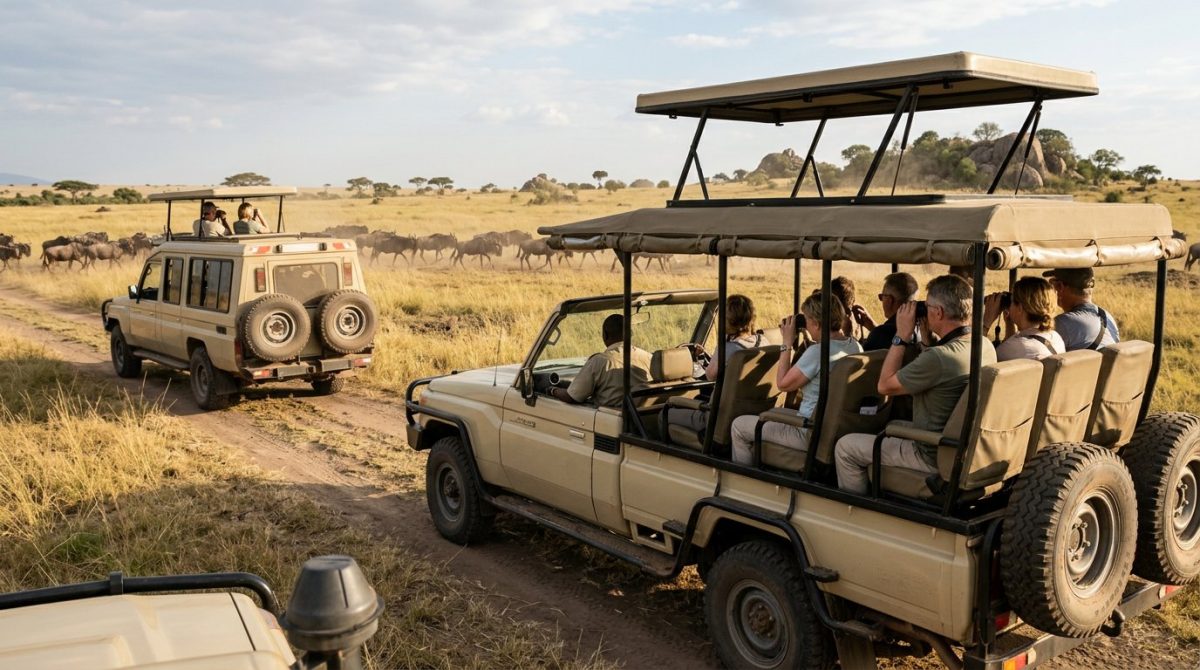
The private safari versus group tour decision comes down to what matters most: sharing the journey and its costs, or shaping the experience around your own party. Group safaris generally follow a set itinerary, while a private safari offers more flexibility over pace and plans. Neither is automatically the better choice; let your budget, travel style, and appetite for flexibility guide you.
It’s natural to weigh cost first when planning a journey around unforgettable wildlife encounters. But how you travel matters just as much: sharing a vehicle can bring travelers together, while a private arrangement gives your party more control over the experience.
Compare costs, schedules, travel styles, and shared-seat options to understand what a joining safari involves. Use these differences to find an approach that suits your plans and the kind of time you want to spend in Africa’s remarkable landscapes.
Key Takeaways
- Compare the full safari style, not just the headline cost: destination, lodging, routing, and party size all shape the overall value.
- Choose a scheduled group departure if a set route and shared travel suit you; choose a private itinerary when your party values more control over pace and plans.
- Before choosing a shared-seat safari, compare its departure schedule, route, accommodations, and planned activities with the experience you want.
- For a Tanzania journey that brings wildlife and local agriculture into focus, explore Lights on Africa Destinations & Safaris’ 9 Days Tanzania Agriculture Tour and Safaris.
Choosing a safari based on budget and travel style
Start with the experience you want, then consider how sharing affects your budget. A scheduled group safari shares vehicle and guiding arrangements among travelers, while a private itinerary is planned around your party. This distinction matters for a couple seeking quieter game drives, a family wanting a gentler pace, or a solo traveler hoping to meet fellow wildlife enthusiasts.
Safari costs also reflect destination, lodge level, route, party size, internal flights, and private services. In Tanzania, park charges are another part of the picture: according to Ngorongoro Conservation Area Authority, the entry fee for non-East African adults is $70.80 per adult. Include required park fees when comparing trip budgets, rather than judging options by accommodation alone.
| Option | Sharing | Best fit | Budget consideration |
|---|---|---|---|
| Scheduled group safari | Vehicle and itinerary shared | Solo travelers or sociable couples | Shared arrangements spread costs |
| Private family safari | Travel with your own party | Families with varied energy levels | Party size influences the per-person cost |
| Private couple’s safari | Plans centered on two travelers | Couples seeking a personal pace | Private services shape the total |
| Solo private safari | Private arrangements for one | Solo travelers prioritizing independence | Accommodation may carry a single supplement |
If you’re traveling solo, ask how accommodation is priced when one person occupies a room. A single supplement can raise lodging costs, so compare that arrangement with joining a scheduled departure and sharing the experience. Couples can consider whether private vehicle time is more important than the social atmosphere of a group.
Families should weigh more than the headline budget. A private itinerary can make it easier to shape daily plans around children, while a scheduled departure follows a shared route and timetable. Choose the option that best balances your party’s preferred pace, willingness to share, and spending priorities.
Group Safari vs Private Safari: Which One Should You Actually Book?
A scheduled safari isn’t automatically a large motorcoach tour. African departures may use smaller groups and experienced guides, so compare the actual setup rather than relying on the label. A honeymooning couple may value privacy, while a solo traveler may enjoy sharing wildlife sightings with others.
There is no single minimum group size or age rule for every safari departure. Group-size requirements, age guidance, and other conditions depend on the specific trip and its activities.
Private and shared group safaris are available across African destinations, including Tanzania, Kenya, Uganda, Rwanda, South Africa, Botswana, and Namibia. Routes and departure formats vary by destination.
Before choosing a departure, compare the practical details that shape each day. Ask:
- What route and lodges does the itinerary include, and how much time is spent travelling between stops?
- Is the departure scheduled for a fixed date, or can your party choose its start date?
- How many travelers share each vehicle, and is it a shared or private game-drive arrangement?
- Which activities are planned, and how much room is there for personal interests, such as photography?
- What accommodation level is included, and does it match your expectations for comfort or luxury?
- For a family, what age guidance applies to the activities and daily schedule?
Read the quote alongside the itinerary. It should clearly describe the route, accommodation level, vehicle arrangement, and included activities. Treat vague terms such as “luxury lodges” or “small group” as a reason to review the booking terms for specifics. For example, a honeymoon traveler should confirm whether game drives are private rather than assume this from the word “private” in a trip title.
Choose the departure that answers those questions clearly and fits your preferred balance of shared company, comfort, and control. If Tanzania suits your plans, Tanzania safari planning can help you explore a route that fits your travel style.
Schedule flexibility and itinerary structure
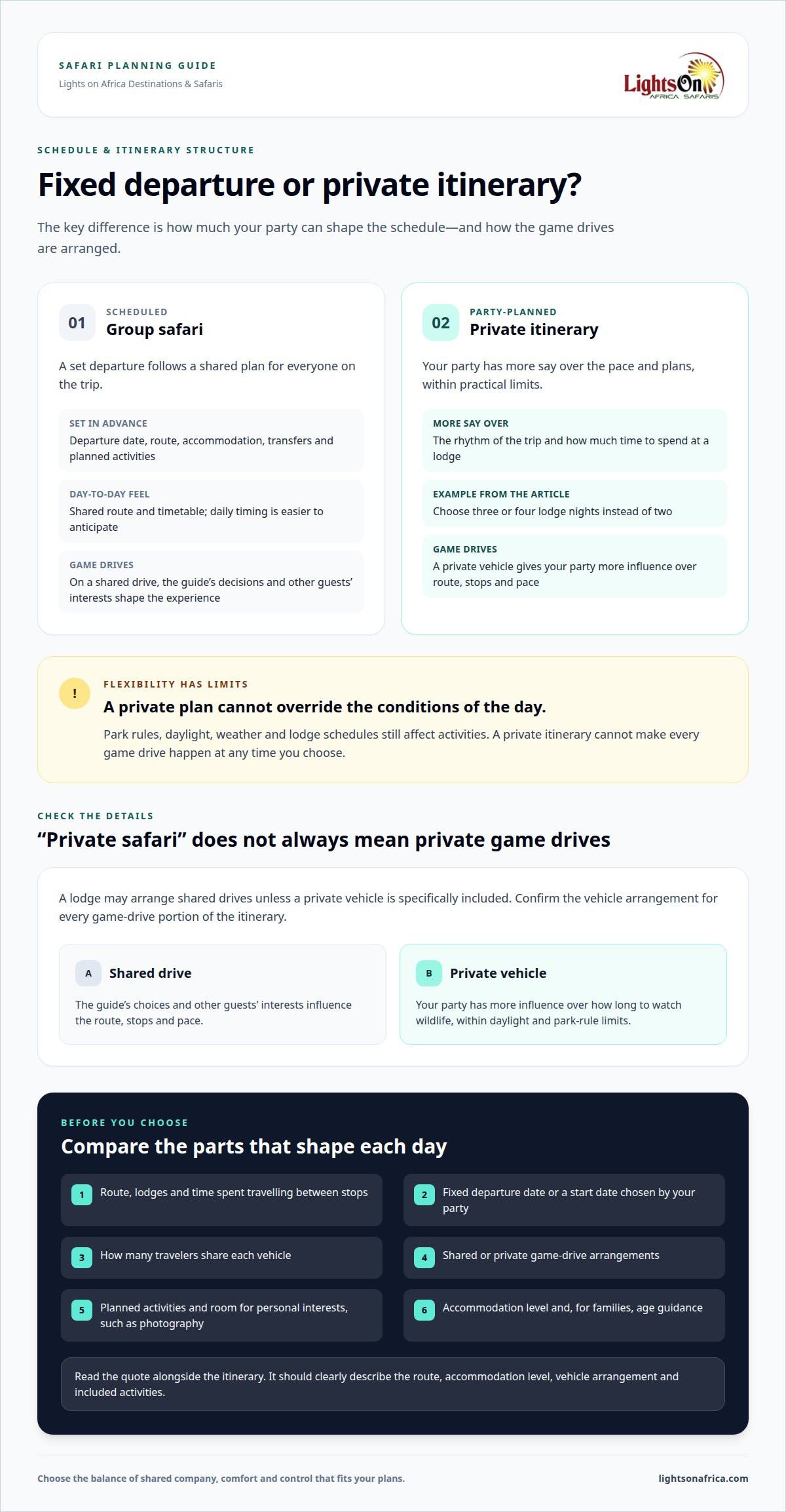
A scheduled safari sets the departure date, route, accommodation, transfers, and planned activities. A private itinerary gives your party more say over the pace, though wildlife viewing still has practical limits.
Flexible Schedules
A private itinerary lets you shape the rhythm of the trip around your interests. You might choose three or four nights at a lodge instead of two, for example, or allow time to watch a lion pride. These choices make the schedule more personal than a fixed departure.
That flexibility has limits. Park rules, daylight, weather, and lodge schedules still affect activities, so a private plan can’t make every game drive happen at any time you choose. A scheduled safari follows the same structure for everyone, making daily timing easier to anticipate.
Shared Vehicle Game Drives
A private safari itinerary doesn’t always mean an exclusive vehicle on every game drive. A lodge may arrange shared drives unless a private vehicle is specifically included. This affects how much control your party has over the route, stops, and pace when wildlife appears.
On a shared drive, the guide’s decisions and other guests’ interests shape the experience. A private vehicle gives your party more influence over how long to watch an animal, within daylight and park-rule limits. Clarify the vehicle arrangement for every game-drive portion of the itinerary.
Fixed departures require travelers to follow the published schedule. If a group is due to leave at 8:00 a.m., everyone needs to be ready then. A private itinerary can offer more control over departure timing, but lodge schedules and planned transfers still shape the day.
Compare the arrangements, not just the labels. A scheduled route suits travelers comfortable sharing the same stops and activities. A private plan is a better fit for those who want to adjust the pace or spend longer at a particular sighting. Either way, the itinerary should clearly explain drive arrangements and timing.
Before deciding, note the moments you most want to shape, such as an unhurried morning game drive or extra time at a lodge. If those details matter more than following a set route, prioritize flexibility. If a predictable sequence suits your travel style, a scheduled departure may fit better.
Shared-seat joining safaris versus private safaris
A shared-seat safari brings travelers from different bookings together for guiding and game drives. Tipping expectations depend on more than whether the safari is private or shared. Follow the trip’s guidance and keep gratuities separate from shared expenses.
Shared Safari Arrangements
On a joining safari, you share the guide, vehicle, and game drives with other travelers. This can suit friends who want to travel together and meet fellow guests, or solo travelers looking for company on an African safari. The group follows one route and coordinates activities, rather than shaping each drive around one party’s preferences.
Private Safari Arrangements
A private safari is planned for your own party rather than around a published departure. Your group travels together, and the itinerary can reflect its interests. In a joining arrangement, other guests share the vehicle and guiding. Keep in mind that a private itinerary can still include shared lodge game drives unless a private vehicle is specifically arranged.
Vehicle Size and Seating
Shared 4×4 safari vehicles in East Africa typically hold a maximum of six or seven people. For Tanzania joining safaris, four to six travelers in one vehicle is often considered a practical group size. Seating affects how much space each guest has and how the group shares views during a game drive. A private vehicle keeps your party together without adding unrelated guests.
Costs and Tipping
Joining safaris spread vehicle and guiding expenses among travelers, while a private party covers its own vehicle arrangements. Sharing can make a smaller booking more accessible, while friends booking together may divide private-trip expenses. Neither format sets a universal tipping amount. Consider the service arrangements and any trip-specific guidance, keeping gratuities separate from expenses shared by the group.
Decide whether shared guiding or a vehicle reserved for your party better suits your Tanzania plans, then plan your safari journey around that preference.
Lights on Africa Destinations & Safaris: 9 Days Tanzania Agriculture Tour and Safaris
Lights on Africa Destinations & Safaris offers the 9 Days Tanzania Agriculture Tour and Safaris for travelers drawn to both safari and agricultural themes. If wildlife is your main focus, the Best Tanzania & Kenya Safari Tours for Wildlife Lovers may better match your interests. For a longer journey combining the Great Migration and Zanzibar, consider the 16 Days- The Great Migration Luxury Safari & Zanzibar Retreat.
Use the comparison above to decide whether you prefer a shared departure or a trip shaped around your party. Then consider which Tanzania or East African experience suits your interests, from wildlife viewing to a journey with a broader focus.
Contact Lights on Africa Destinations & Safaris to discuss the journey that feels right for you.
Make Your Safari Choice the Start of the Adventure
Choosing a private safari versus a group tour means shaping more than your transport. It helps define the memories you’ll bring home, whether you share your first wildlife sightings with fellow travelers or enjoy a journey centered on your family’s interests. Let the experience you want guide your decision.
For a family-focused private journey, explore the 8Days Tanzania Private Guided Family Safari. The 8-Day Luxury All Inclusive Tanzania Safari offers another Tanzania option for travelers considering a different style of trip. Each gives you a starting point for imagining the landscapes, wildlife encounters, and pace that suit your travel party.
Bring your preferences and travel ideas together, then take the next step toward a safari that feels right for you. Contact Lights on Africa Destinations & Safaris to begin planning your African journey.
Frequently Asked Questions
Which Safari Is Right for You?
Choose the safari that fits your party’s priorities and how you like to travel together. A multigenerational family may value familiar company and shared interests; a couple celebrating an occasion may prefer more privacy. If your dates or a particular route are non-negotiable, start with departures that match those needs. If travelers have different interests, look for a format that can accommodate them.
Do private and shared vehicles see the same animals?
Both formats can encounter the same wildlife species in the same parks; vehicle ownership doesn’t determine which animals are present. Sightings vary with animal movements, habitat, and route. A private vehicle and a shared vehicle traveling different routes on the same morning, for example, may see different scenes. Compare viewing arrangements rather than expecting a particular sighting.
Which option costs less?
A shared group tour usually costs less per traveler because vehicle, guiding, and other shared arrangements are divided among guests. On a private safari, your party covers its own dedicated arrangements. A solo traveler’s per-person cost may differ from that of friends traveling together. Compare the total party cost with each person’s share, then weigh both against your preferred experience.
What is the difference between a private safari and a group safari tour?
Choosing a private safari versus a group tour mainly changes who the trip is planned around. A private safari is designed for your party, while a group departure follows a program shared with other travelers. A published departure may suit someone with fixed dates and a preferred route. A party with varied interests may value an itinerary built around its shared priorities.
How much does a private safari cost compared with a group tour?
There’s no single price difference that applies to every safari. Compare trips with similar durations, destinations, accommodation standards, and routes, then account for party size and private services. Room occupancy can affect a solo traveler’s total, while friends can divide the party’s costs. Comparing like-for-like itineraries gives a clearer picture than relying on headline rates alone.
What is typically included in private and group safari tour prices?
Safari quotes can differ in what they include, so read each inclusion carefully. Look for accommodation, transfers between stops, guiding, planned activities, and any meals or fees expressly named. An activity listed in an itinerary isn’t necessarily included in the price. Compare the written inclusions item by item, and don’t assume an unstated component is covered.
One thought on “Private Safari vs Group Tour: Compare Costs and Flexibility”