
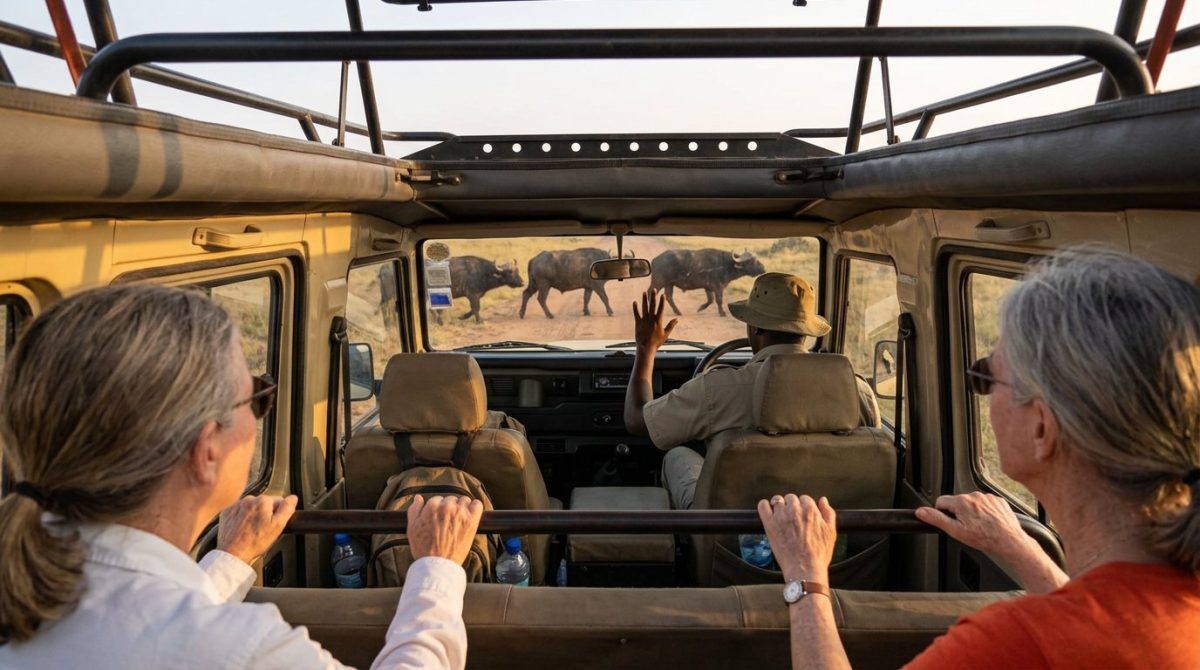
A safe guided safari in Africa is possible, and an experienced guide can help manage wildlife encounters and explain how to behave around animals. Follow your guide’s instructions promptly, remain seated during game drives, and avoid sudden movements or loud noises. These habits help keep encounters calm and respectful of wildlife.
It’s natural to wonder how safety differs when travelling with children, as a couple, alone, or as an older adult. The answer depends not only on the travelers, but also on the guide’s approach, camp arrangements, and activities in the itinerary.
Learn what safety considerations matter for different travelers, what to ask about camps and guides, and how guided travel helps manage risks. We’ll also cover wildlife encounters, camp routines, and emergency preparation, so you can plan with confidence while leaving room for the wonder of the journey.
Key Takeaways
- Match the pace and activities of your safari to your group’s needs, whether you’re travelling with children, as a couple, solo, or as a senior.
- Learn how camp routines, airport transfers, and travel between lodges can shape a smoother, more secure journey.
- See which guide, vehicle, and emergency-planning details matter, and how travel insurance fits into your preparations.
- Understand how guided decisions on the ground can help you respond to wildlife and travel risks with greater confidence.
1. Safety for families, couples, solo travelers, and seniors
A safe guided safari in Africa depends on clear routines, attentive guides, and travelers following instructions. Millions of travelers take African safaris every year without issues. Professional guides are trained to read animal behaviour, helping them choose how to approach wildlife encounters carefully.
On game drives, remain seated and let the guide position the vehicle. Avoid sudden movements and loud noises that may disturb animals. Keep windows closed in wildlife areas, and never approach or feed wild animals. In South Africa, leave the vehicle only when your guide permits it.
Walking safaris call for different precautions. Guides choose routes carefully and lead walks in small groups. As a precaution, guides carry firearms during walking safaris in some settings. Follow their instructions, move calmly, and stay with the group throughout.
Around camps and lodges, keep tent doors closed in wildlife areas and remain within designated guest areas. Don’t wander outside at night without an escort where one is provided. Ask the guide or camp staff for directions before moving through areas where wildlife may be present.
Families should consider whether children can remain seated and quiet during drives. Couples and solo travelers can discuss boundaries with the guide before activities begin. Seniors can plan around mobility and comfort, especially if the itinerary includes walking. Ask about guide training and safety procedures before booking. For ideas on tailoring shared experiences, explore an African safari for couples.
There is no single typical safari cost by country or trip length. Price depends on the itinerary, accommodation, transport, activities, and season, and is given after a quote request.
When comparing destinations and parks, consider wildlife rules, camp routines, and the operator’s safety arrangements. Look for guided travel with clear briefings, careful wildlife viewing, and practical procedures for moving around camps and lodges.
2. Are Safari Camps and Lodges Secure?
A lodge’s safety plan starts before arrival. For an airport transfer, agree on the pickup point and traveler name in advance, then confirm the driver and vehicle before leaving the terminal. Between lodges, keep your itinerary accessible and follow the planned handover rather than accepting an unexpected ride. In South Africa, use reputable transfers or recognised ride-hailing services.
In unfenced reserves, wildlife can come close to camp, so arrival briefings and clear boundaries matter. Staff explain where guests may walk and how to move between shared spaces and rooms. In Greater Kruger, lodges typically define guest areas and give safety briefings on arrival. Stay within those areas and follow staff instructions around the property.
Some camps provide staff escorts after dark. Use one when offered, and don’t walk outside alone. Staff may be on duty around the clock, but that doesn’t replace following the lodge’s safety procedures. Secure your room when you leave, and ask staff for the safest route to dining or reception.
For women travelling alone or with friends, practical comfort matters alongside wildlife procedures. Consider how the lodge manages escorted movement, room access, and transport arrivals. Share your expected arrival time with the lodge, and keep your phone charged during transfers. These steps support a more comfortable journey, while recognising that arrangements differ between camps.
Before departure, keep travel insurance details and emergency contacts easy to reach. A tourist arriving after a long flight may benefit from a planned pickup and a clear welcome briefing, rather than making transport decisions while tired. When shaping a trip, tailor-made African journeys can bring transfers, lodge stays, and game drives into one coordinated itinerary.
3. Guide qualifications, insurance, and emergency procedures
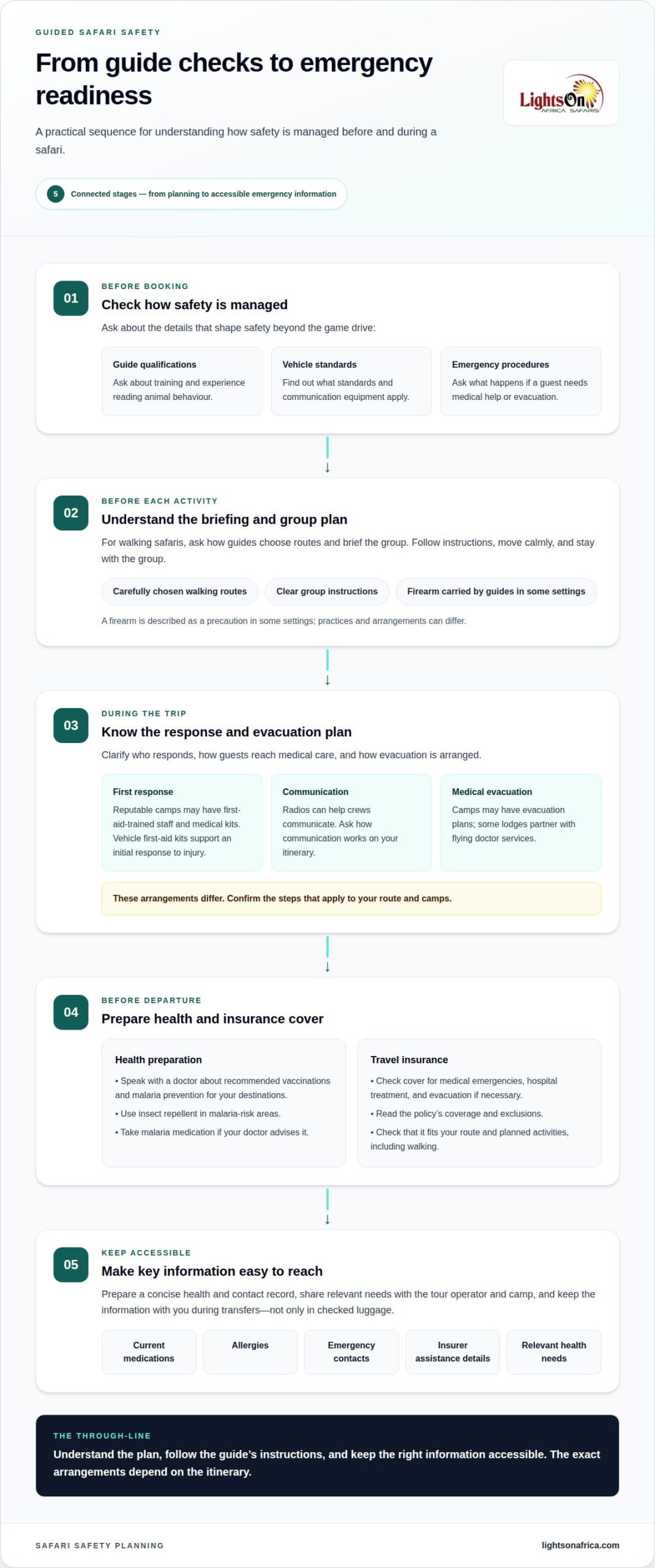
Guide skill matters when wildlife behaviour changes. Professional safari guides are trained to read animals and manage encounters, including close sightings of elephants. Before booking, ask about guide qualifications, vehicle standards, and emergency procedures. These details show how safety is managed beyond the game drive.
Ask how guides brief guests before activities and manage walking routes. Walking safaris call for careful route choices, clear group instructions, and close attention to the guide. In some settings, guides carry a firearm as a precaution. In vehicles, radios can help crews communicate, and first-aid kits support an initial response to injury.
Emergency planning should explain who responds, how guests reach medical care, and how evacuation is arranged. Reputable camps may have first-aid-trained staff, medical kits, and evacuation plans. Some lodges partner with flying doctor services for emergency evacuation. These arrangements differ, so understand the steps that apply to your itinerary and keep emergency contacts accessible.
Before travel, speak with a doctor about recommended vaccinations and malaria prevention for your destinations. Use insect repellent in malaria-risk areas, and take malaria medication if your doctor advises it. Travel insurance should include medical emergencies, hospital treatment, and evacuation if necessary.
Before departure, prepare a concise health and contact record with current medications, allergies, emergency contacts, and your insurer’s assistance details. Share relevant health needs with the tour operator and camp so staff can respond appropriately. Keep the information accessible during transfers, not only in checked luggage.
Read your insurance policy’s coverage and exclusions before travelling, especially for medical care and evacuation. Check that the policy fits your route and planned activities, including walking. A private itinerary may include remote camps, so understand where the emergency plan directs guests and how communication works. Preparation helps you focus on the landscape while knowing what to do next.
4. Guided safaris as a way to reduce travel risks
Safari risks can include wildlife encounters, theft in busy areas, road travel, and health concerns. A guided itinerary helps coordinate guides, transfers, camp routines, and responses when plans change. This structure matters because conditions vary between destinations.
During wildlife encounters, a guide reads animal behaviour and adjusts the vehicle’s position. In Greater Kruger, safari vehicles can be a neutral presence when people follow established rules. Stay seated, avoid loud noises, and let the guide decide when to move. These actions limit disruption and help keep a close sighting from becoming risky.
Guided transport means you don’t have to make unfamiliar driving decisions while tired or distracted. In South Africa, visitors who drive should avoid night travel where possible, keep doors locked, and keep bags out of sight. Planned transfers can reduce the need to navigate unfamiliar roads alone, especially after arrival or between destinations.
Safety considerations extend beyond the reserve. In South African cities, avoid displaying valuables, use recognised transport, and don’t walk alone after dark. A guide or arranged transfer can help you plan where and when to travel. At camp, follow staff directions rather than assuming a path is safe because it looks familiar.
Health risks also call for preparation and timely action. Sun exposure and dehydration can affect guests during long drives, so drink water and protect yourself from the sun. In malaria-risk areas, use insect repellent and follow your doctor’s advice. Before travel, know who to alert and what the emergency plan recommends.
Guided travel doesn’t remove every concern; it gives you experienced support for decisions on the ground. Choose an itinerary where wildlife encounters, transfers, and camp procedures are clearly managed. Plan a guided safari journey with those practical safeguards in mind.
Lights on Africa Destinations & Safaris: 8Days Tanzania Private Guided Family Safari
Lights on Africa Destinations & Safaris offers the 8Days Tanzania Private Guided Family Safari for families planning a guided wildlife journey together. A private guided itinerary may suit travelers who want to discuss their family’s pace, comfort, and interests while shaping their Tanzania trip.
Use these safety principles as a starting point: consider how your family will manage game drives, camp routines, transfers, and time outdoors. A private guided itinerary gives you a clear basis for discussing the experience you want, while Tailor-Made African Journeys. Unforgettable Experiences reflects the appeal of a journey shaped around your interests.
Planning a family safari in Tanzania? Contact Lights on Africa Destinations & Safaris to discuss a private guided itinerary tailored to your trip.
Carry your confidence into the journey
Choose an itinerary that lets your travel companions experience Africa at a comfortable pace. Shape the journey around what matters most, from wildlife interests to time in camp and the level of structure you prefer. Let those priorities guide your plans, making room for curiosity, shared moments, and the quiet wonder of the landscape.
A safe guided safari in Africa is also about choosing an experience that feels right for the people travelling with you. Lights on Africa Destinations & Safaris offers the 8Days Tanzania Private Guided Family Safari, 16 Days- The Great Migration Luxury Safari & Zanzibar Retreat, and 8-Day Luxury All Inclusive Tanzania Safari.
Ready to explore which journey suits your travel style? Contact Lights on Africa Destinations & Safaris and take the next step toward your African adventure.
Frequently Asked Questions
Is an African safari safe?
Yes, guided safaris can be a safe way to experience Africa when travelers follow local instructions and prepare thoughtfully. Tanzania is generally safe for tourists as long as you practice common sense. Conditions vary by destination and activity, so plan around your route, health needs, and transport arrangements. Treat wildlife rules and camp guidance as essential parts of the journey.
Will wild animals attack me?
Wild animals can be dangerous, but wildlife-related incidents on safari are extremely rare and almost always associated with broken protocols. Keep a respectful distance, never feed animals, and don’t leave a vehicle unless the guide permits it. For example, an elephant near the track needs space, not a closer approach for a photograph. Let the guide decide when to pause or move.
How Dangerous Are Game Drives or Walking Safaris?
Both activities require attention, and walking brings guests closer to wildlife than a vehicle does. Follow the guide’s instructions promptly, stay with the group, and avoid sudden movements or noise. Before a walk, understand the route plan and what to do if the group stops. During a drive, keep your hands and body inside the vehicle.
Are Safari Camps and Lodges Secure?
Camp security depends on following site-specific routines, especially where wildlife can move through unfenced areas. On arrival, learn the guest-area boundaries and the camp’s arrangements for moving after dark. If staff offer an escort, use it instead of walking alone. Store valuables discreetly, and tell staff promptly if you notice a damaged door, gate, or light.
Guided Safari vs Self-Drive: Which Is Safer?
A guided safari reduces the need to make wildlife and route decisions alone. Self-driving means managing navigation, road conditions, and animal encounters yourself. A guide can respond to changing animal behaviour and coordinate the day’s movements. If you’re unfamiliar with local roads or wildlife protocols, guided travel provides support with those decisions.
Is Malaria a Concern?
Malaria is a concern in some safari destinations, and risk depends on where you travel. Before departure, discuss your route with a doctor, including preventive medication and recommended vaccinations. Use insect repellent in malaria-risk areas, and take malaria medication if your doctor advises it. Ask about destination-specific precautions early, so you can prepare before packing and travel begin.
One thought on “A Safer Guided Safari in Africa for Every Type of Traveler”