
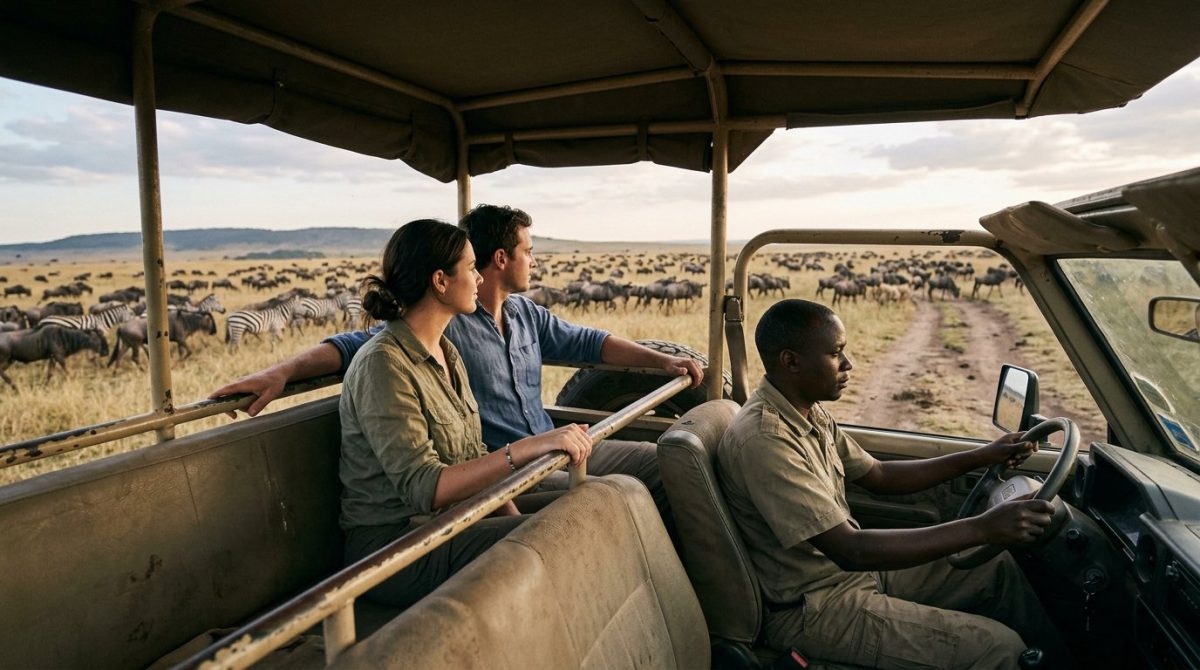
A safari honeymoon doesn’t automatically mean private game drives or dinners. Whether these are shared or private depends on the camp or lodge and the experience booked, so an African safari for couples can be tailored to the kind of time together you value. The setting matters, but so does the way each day is planned.
It’s natural to want both the thrill of spotting wildlife and quiet moments to celebrate together. This guide compares destinations and couple-friendly safari experiences, explains what to wear for game viewing, and explores ways to combine an East African safari with a relaxing beach stay.
From Tanzania’s seasonal Great Migration to intimate stays and itineraries that continue to the coast, you’ll find practical ideas for choosing a journey that feels right for you. Consider what matters most as you plan a shared adventure, with comfort and a sense of place woven into each day.
Key Takeaways
- Match your destination to the experience you want, from seasonal migration viewing in Tanzania to Botswana’s mokoro trips and bush walks.
- Choose couple-friendly stays and experiences around the privacy you prefer, including room style and whether drives and dining are shared.
- Pack earth-tone clothing in lightweight, breathable fabrics, with layers for cooler mornings and evenings.
- Pair an East African wildlife adventure with time on the coast, such as a safari followed by a Zanzibar beach stay.
Safari destinations in South Africa, Tanzania, Botswana, Kenya, Zimbabwe, and Namibia
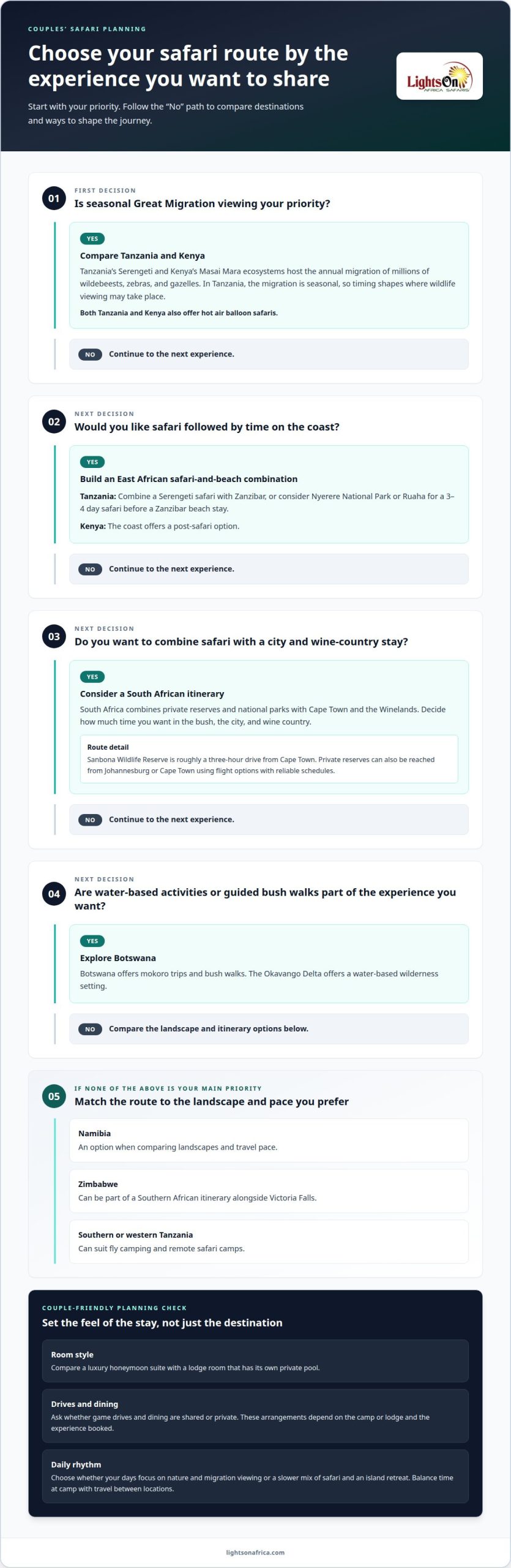
Choosing an African safari for couples starts with the experience you want to share. South Africa combines private reserves and national parks with Cape Town and the Winelands; Tanzania and Kenya offer seasonal Great Migration viewing. Botswana adds mokoro trips and bush walks, while Namibia and Zimbabwe offer different landscapes and itinerary options.
In South Africa, private reserves can be reached from Johannesburg or Cape Town using flight options with reliable schedules. Sanbona Wildlife Reserve is roughly a three-hour drive from Cape Town, making it a distinct route option. A South African itinerary can pair safari drives with Cape Town and the Winelands. Before choosing a route, decide how much time you want to spend in the bush, the city, and wine country.
For an East African itinerary, Tanzania’s Serengeti and Kenya’s Masai Mara ecosystems host the annual migration of millions of wildebeests, zebras, and gazelles. The Great Migration is seasonal in Tanzania, so timing shapes where wildlife viewing may take place. Kenya and Tanzania also offer hot air balloon safaris. In Tanzania, Nyerere National Park or Ruaha can suit a 3-4 day safari before a Zanzibar beach stay.
Botswana offers couples mokoro trips and bush walks, while southern and western Tanzania suit fly camping and remote safari camps. Zimbabwe can be part of a Southern African itinerary alongside Victoria Falls, and Botswana’s Okavango Delta offers a water-based wilderness setting. Namibia is another option when comparing landscapes and travel pace. An African safari for couples can focus on one country or connect destinations. Start with the wildlife experience you want, then shape the route around the season and settings you’d like to share.
Safari packages suited to honeymooners and couples
A couple-friendly package balances time with wildlife, privacy, and room to celebrate. Whether game drives and dining are shared or private depends on the camp or lodge and the experience booked.
Romantic Travel and Honeymoon Planning
For a honeymoon, compare the room style and the rhythm of each stay. A luxury honeymoon suite offers a dedicated setting for newlyweds, while a lodge room with its own private pool can add quiet time between drives. Consider whether you want days focused on nature and migration viewing or a slower mix of safari and an island retreat.
Visa and travel-document requirements vary by destination and traveler citizenship. Vaccination choices depend on your route and personal health circumstances, so include both topics in your preparations before departure.
Safari health and safety planning should account for wildlife proximity, outdoor conditions, and time spent on drives. Follow your guide’s instructions, and discuss personal health needs with a qualified health professional before traveling. To assess responsible travel, look for clear information about how an operator approaches conservation and local community involvement.
Itinerary Length and Planning
There’s no single ideal duration for every couple; let the route and your priorities shape the schedule. Start by choosing a main experience, such as migration viewing in Tanzania, then decide whether to add a beach stay or another destination. Balance time at camp with travel between locations instead of packing each day with a new stop.
Next, consider the mood you want from each lodge: private downtime, shared meals, or a mix. Ask how the planned game drives and dining are arranged, since those details affect the feeling of togetherness. Couples who want help shaping a route around these preferences can explore tailor-made safari journeys.
What do you wear on a safari for couples?
For a game drive in Tanzania or Kruger National Park, choose earth-tone clothing for wildlife viewing. Pack lightweight, breathable fabrics for warm days and add layers for cool mornings and evenings. This keeps your clothing practical as you move between the vehicle, camp, and outdoor activities.
Couples can shape safari activities around their interests, from game drives to walking safaris. Open-vehicle drives offer direct views of the landscape, while guided walks let you explore the surroundings on foot. Botswana’s bush walks are one example. Match activities to the pace and style you both prefer.
Big Five safaris focus on wildlife encounters, while migration experiences follow a seasonal natural spectacle. Couples can travel on safari year-round, but wildlife-viewing opportunities vary by destination and season. If migration is your priority, choose the destination and travel period together rather than treating the migration as a fixed event in one place.
Use this simple packing approach for a day of viewing:
- For warm daytime drives: Choose lightweight, breathable clothing in earth tones.
- For early and late outings: Add a layer that you can remove as the day warms.
- For a walking activity: Wear comfortable clothing suited to moving outdoors, and follow your guide’s directions.
For a shared romantic moment, consider how your clothing will work throughout the day. A light layer can make an early drive more comfortable, while breathable fabrics suit warmer hours in the vehicle. If quieter wildlife viewing matters to you, consider avoiding school vacation periods when your schedules allow. This may help create a more private-feeling trip, while the destination and season still shape the wildlife experiences available.
East African safari and beach combinations
Pairing a safari with the coast gives a couples’ vacation two distinct rhythms: wildlife-focused days followed by time beside the water. In East Africa, a Serengeti safari can be combined with Zanzibar, while Kenya’s coast offers another post-safari option. Choose your safari destination first, then select a beach stay that suits the kind of rest you want.
Tanzania offers a clear example of this balance. A safari in Nyerere National Park or Ruaha can fit into a 3-4 day wildlife stay before time in Zanzibar. That sequence moves from game viewing to an island setting without asking couples to choose between nature and relaxation. A longer itinerary can also place the Serengeti at its heart, with the season shaping migration viewing.
For a different East African route, combine a Kenya safari with the Kenya Coast. Beyond the region, Mozambique, the Seychelles, and Mauritius are Indian Ocean beach destinations to consider after a safari. South Africa can pair a safari with Cape Town and the Winelands for a different kind of post-safari escape. The right combination depends on the wildlife experience you want and the atmosphere you’d enjoy afterward.
Botswana’s Okavango Delta offers a water-rich wilderness experience, including mokoro trips, but it isn’t a beach stay. Treat a Botswana safari and a coastal break as distinct parts of one vacation, rather than expecting the delta to replace an ocean destination. Zimbabwe offers another possible stop through Victoria Falls, which can complement a wildlife itinerary before a separate beach escape.
To shape a safari-and-beach holiday, choose one wildlife priority, such as the Serengeti, then decide whether Zanzibar, the Kenya Coast, or another Indian Ocean destination best suits your preferred pace. Consider travel between stops as part of the itinerary, and leave space for each setting to feel distinct. A well-matched combination can turn a couples’ safari into a journey of a lifetime. Plan your safari and beach journey.
Lights on Africa Destinations & Safaris: Tailor-Made African Journeys. Unforgettable Experiences
Lights on Africa Destinations & Safaris helps couples shape a safari around their preferred wildlife experiences, comfort, and beach time. Turn to the team when you’re ready to bring your destination choices and romantic travel priorities together in one itinerary.
For a migration-focused trip with time on the coast, consider 16 Days- The Great Migration Luxury Safari & Zanzibar Retreat. Couples who prefer a Tanzania-focused wildlife stay can explore the 8-Day Luxury All Inclusive Tanzania Safari. The 8Days Tanzania Private Guided Family Safari is another Tanzania option for couples travelling with family.
Share the experiences you value, such as migration viewing, lodge comfort, or a Zanzibar retreat, to guide your planning conversation. Contact Lights on Africa Destinations & Safaris to discuss your safari plans.
Shape the Journey Around What Matters to You
Your shared adventure can begin with one simple question: what do you most want to remember together? Perhaps it’s the stillness of a morning in the wild, the anticipation of following wildlife, or unhurried time to reconnect. Let that feeling guide the choices that make the journey personal. An African safari for couples is most meaningful when it reflects both partners, not just a destination on a map.
As you move from inspiration to planning, bring your priorities into one conversation: the atmosphere you want, the balance between adventure and downtime, and the moments you hope to share. Lights on Africa Destinations & Safaris can help shape those ideas into a considered trip. You don’t need to have every detail decided before you begin.
Start planning your safari with Lights on Africa Destinations & Safaris, and take the first step toward an adventure you’ll look back on together with warmth.
Frequently Asked Questions
Are game drives and dining experiences shared with other guests?
Game drives and dining can be shared or private, depending on the camp or lodge and the experience booked. A shared vehicle can feel sociable, while a private arrangement suits couples who prefer a more intimate pace. For a honeymoon, consider each activity separately: private drives don’t automatically mean private meals, and a secluded room doesn’t determine either arrangement.
What are the best African safari destinations for couples?
The best destination depends on the experience you want to share. Choose Tanzania or Kenya if seasonal migration is central to your plans; consider Botswana for water-based exploration and guided walks. South Africa can suit couples who want to combine a safari with Cape Town or the Winelands. Namibia and Zimbabwe offer different settings, so let your preferred landscape and itinerary style guide your choice.
Which African safari lodges offer romantic stays, private plunge pools, or honeymoon packages?
Look for lodge room categories that specifically describe a honeymoon suite or a private plunge pool; these features can help create a more secluded stay. Compare the room with the rest of your itinerary, including how much time you’ll spend at camp between outings. Choose accommodation that suits your preferred balance of privacy, shared experiences, and time immersed in nature.
What health and safety risks should couples know about when traveling on safari in Africa?
Plan for wildlife proximity, outdoor conditions, and time spent on drives. Follow your guide’s instructions, and discuss personal health needs with a qualified health professional before traveling.
How can couples choose a responsible safari operator that supports conservation and local communities?
Look for clear information about how the operator approaches conservation and local community involvement.
One thought on “African Safari Trips for Couples and Honeymooners”