
The cost of Kenya safari packages depends on your travel season, trip length, accommodation and transport, so there is no single price for every itinerary. For the Maasai Mara’s Great Migration, the main viewing window is July to September. Demand and your choice of stay can shape the overall budget.
It’s natural to weigh the excitement of seeing the migration against the cost of travel and the comfort you want. This guide explains what affects safari costs, when to plan for migration viewing, and how Kenya-only and Kenya-and-Tanzania itineraries differ. It also compares budget, mid-range and luxury trip styles, helping you focus on the wildlife experience and pace that matter most.
Key Takeaways
- Estimate your safari budget by weighing the season, trip length, accommodation and transport style together.
- Plan Maasai Mara migration viewing for July to September, while allowing for wildlife experiences beyond the river crossings.
- Choose between a Kenya-focused route and a Kenya-Tanzania itinerary based on the wildlife areas and pace you want.
- Use the budget, mid-range and luxury comparisons to identify which trip style best fits your comfort priorities.
What does a Kenyan safari cost?
The cost of Kenya safari packages depends on travel dates, park fees, accommodation, transport and the number of days on safari. July through October is a busy safari season, while Kenya’s longer rains run from April through June. These seasonal shifts affect itinerary planning and the wildlife viewing you can prioritize.
National parks and reserves shape a route in different ways. The Maasai Mara is known for migration viewing, while Amboseli offers a distinct landscape and wildlife stop. An itinerary can combine these areas or focus on one reserve. The distance between destinations and time spent on game drives also influence the overall cost.
Lake Nakuru National Park offers a different experience on a Kenyan safari. Wildlife viewing can include rhinos and birdlife, creating a useful contrast with the open plains of the Maasai Mara. Plan a game drive around the park’s habitats rather than expecting every reserve to offer the same experience.
June through September is a popular dry-season window for wildlife viewing, and migration viewing in the Mara is associated with July through September. October can also suit a broader safari itinerary. The best season depends on whether you prioritize migration, quieter travel periods or visits to several parks. A balloon experience offers an aerial perspective, while game drives bring you closer to wildlife at ground level.
Choose a safari operator that can clearly explain the route, accommodation, transport, park visits and game-drive plans. Ask for an itinerary that shows how each stop supports your wildlife priorities and preferred pace.
Travelers entering Kenya need a passport and the required electronic travel authorization. According to the Directorate of Immigration Services, Kenya, eTA applications are usually processed within 3 days. Vaccination needs depend on your health and itinerary; a travel-health professional can advise on your personal needs.
Luggage limits depend on the itinerary’s transport, including any flight segments. Make sure the applicable baggage allowance is included in the trip plan, so you know what luggage suits your route.
Great Migration viewing in the Maasai Mara
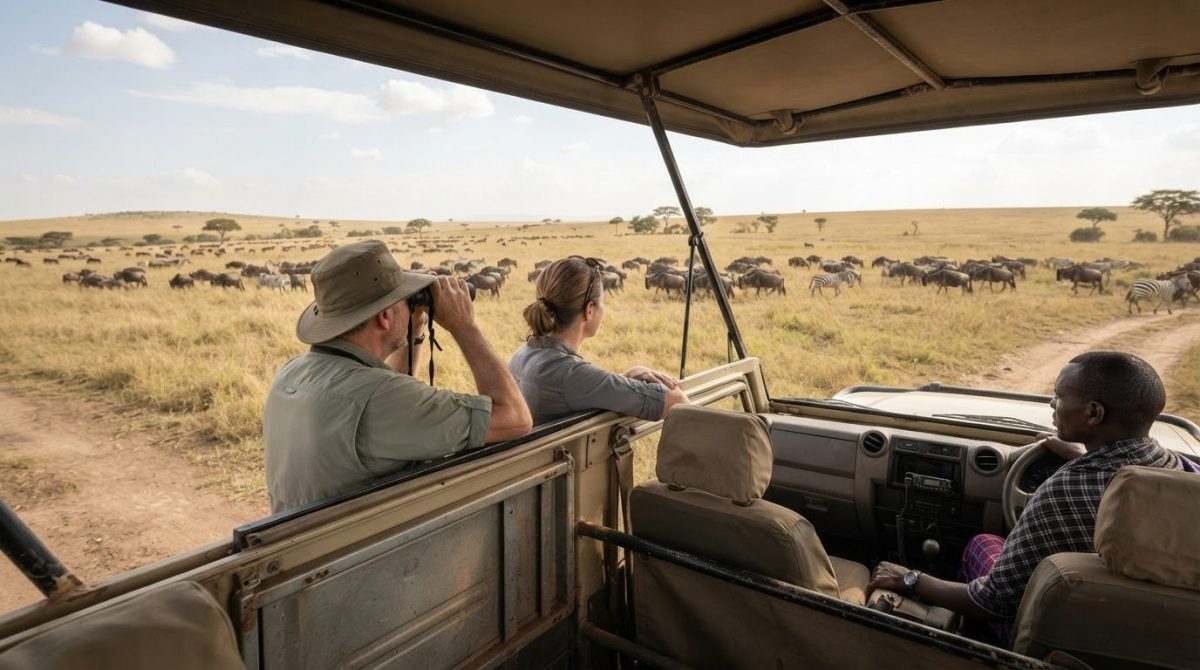
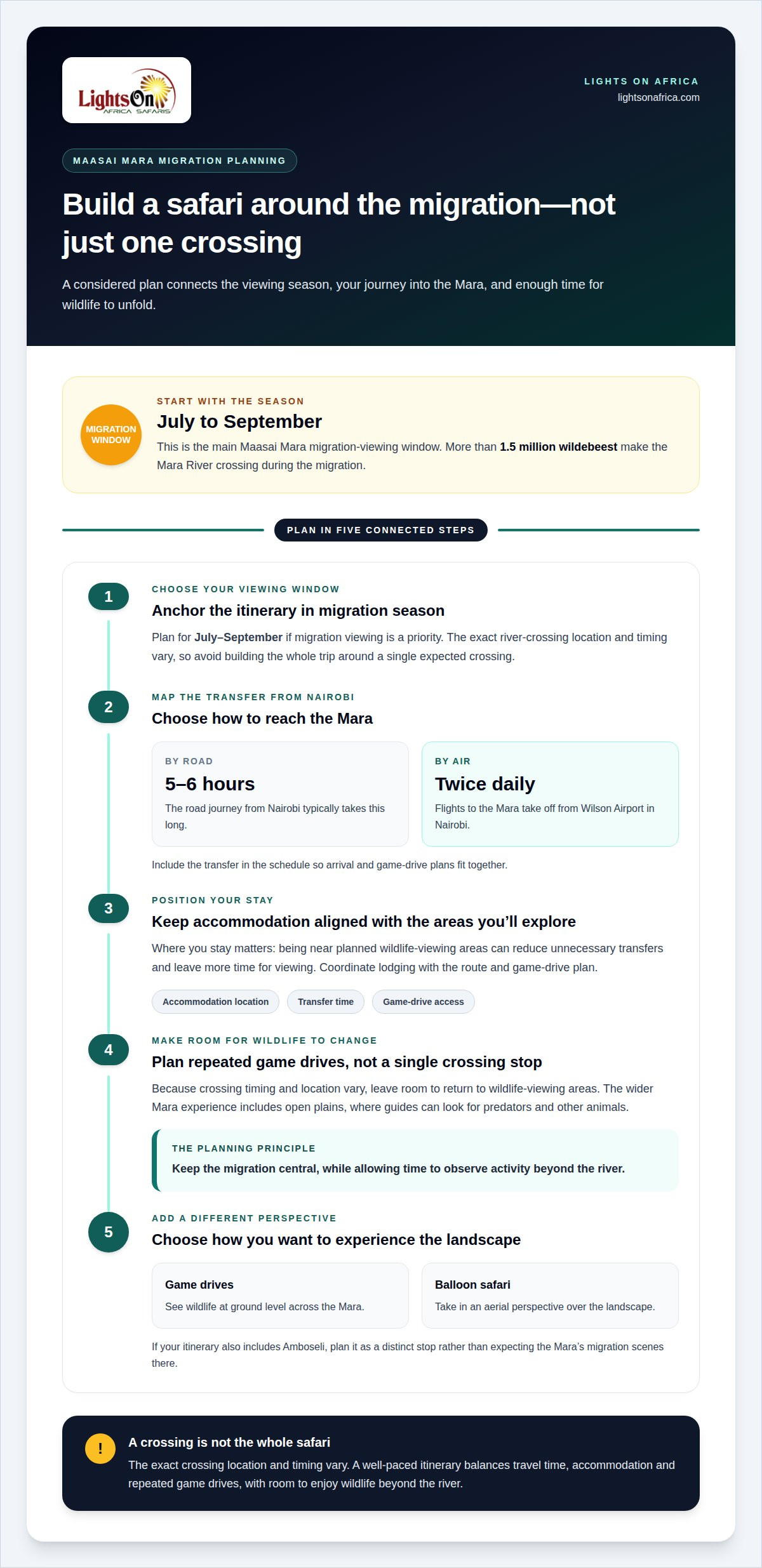
The Great Migration brings vast herds of wildebeest toward the Maasai Mara’s grasslands. More than 1.5 million wildebeest make the Mara River crossing during the migration. The exact crossing location and timing vary, so an itinerary should leave room for repeated game drives rather than relying on one viewing stop.
Plan around the experience you value most. River crossings are dramatic, but the Mara also offers wildlife viewing across open plains, where guides can look for predators and other animals. A well-paced safari leaves time to observe changing wildlife activity, not just travel between sightings. That patience makes the wider Maasai Mara experience rewarding, even away from the river.
From Nairobi, the road journey to the Maasai Mara typically takes 5 to 6 hours. Flights from Wilson Airport in Nairobi to the Mara take off twice daily. The choice affects the shape of the travel day: a road transfer offers a ground-level route, while flying reduces time spent travelling overland. Include the transfer in the itinerary so arrival and game-drive plans work together.
Beyond standard game drives, a balloon safari offers an aerial perspective over the Mara landscape. Accommodation location matters too: staying near the areas you plan to explore can reduce unnecessary transfers and leave more time for wildlife viewing. If your East Africa itinerary includes Amboseli, plan it as a distinct stop rather than expecting to see the Mara’s migration scenes there.
For a tailored route that connects Nairobi, the Maasai Mara and other wildlife destinations, explore East Africa safari journeys. A thoughtful plan balances travel time, accommodation and game drives, keeping the migration central without making every day depend on a river crossing.
Kenya and Tanzania Great Migration safari itineraries
Choose a route based on your wildlife priorities, preferred pace and available time. A first safari can focus on Kenya’s established wildlife destinations, while a cross-border journey adds Tanzania’s Serengeti.
Itinerary Destinations and Routes
A Kenya route can link the Masai Mara with Lake Nakuru, Naivasha or Amboseli. Each destination offers a different landscape and wildlife focus, so weigh driving time against the number of stops. For first-time visitors, an itinerary centered on the Mara and one or two other destinations keeps the journey focused without rushing through every park.
Kenya safari package prices depend on season, accommodation, transport, park visits and trip length. A clear itinerary should show how these choices shape the total price.
Package Inclusions and Duration
An all-inclusive itinerary should clearly identify accommodation, meals, transfers, park fees and planned game drives. Because “all-inclusive” can mean different arrangements, review the itemized inclusions and exclusions before choosing. The schedule should also show how transport between destinations fits with time for wildlife viewing.
Six to eight days is a typical duration for experiencing Kenya’s key wildlife areas. A shorter stay can focus on fewer destinations; extra time allows a more measured pace or additional stops. Match the trip length to your priorities rather than adding locations that leave little time at each one.
Combining Safari and Beach Stays
To pair a Kenyan safari with Mombasa or Diani, plan the wildlife portion first, followed by the coastal stay. Coordinate the destination sequence and transfer timing, and decide how much time to reserve for wildlife and the beach. Include travel connections in the schedule so a change of setting does not compress your Mara visit or time to relax on the coast.
Comparing Regional Safari Itineraries
Kenya and Tanzania itineraries can connect the Masai Mara with the Serengeti, giving migration-focused travelers wildlife destinations in both countries. A Kenya-only route keeps the focus within one country; a cross-border option adds destinations and transfer planning. Kenya and Uganda itineraries offer another regional combination for travelers whose interests extend beyond Kenya’s parks.
For a first safari, choose the route that matches your main wildlife interest, available days and preferred pace. Compare the countries by destinations and itinerary flow, not by assuming one route suits every traveler.
Budget, mid-range, and luxury options
Safari style shapes how you spend time in Kenya’s parks, from practical accommodation to carefully chosen lodges. Compare accommodation, transport, guiding and included activities before deciding which experience suits you.
Budget and Luxury Safari Options
Budget trips can prioritize essential accommodation and focused game drives, while luxury itineraries emphasize elevated lodging and a more tailored pace. Compare more than the room: consider how each plan handles transfers, meals, park visits and guide services. A route focused on wildebeest viewing in the Maasai Mara, for example, has different priorities from one that also visits Lake Nakuru.
Mid-range options balance comfort with variety. Ask for an itinerary showing where time is spent, which services are included and how accommodation choices affect the route. A clear breakdown helps you judge whether an upgrade supports your priorities, such as spending more time with a guide or having a quieter stay between drives.
Luxury Lodges and Tented Camps
Luxury lodges and tented camps offer different ways to experience Kenya’s landscapes. Compare their locations and settings, then consider how each stay connects with planned game drives. A camp near the Mara can suit migration-focused viewing, while a lodge on a route through Lake Nakuru may fit a broader wildlife journey.
Look beyond the word “luxury” to the details that shape your days: meals, transfers, included activities and time for wildlife viewing. A well-planned stay should complement your destination, whether you hope to see elephants, follow seasonal wildlife movement or include cultural experiences. Guides can add context to the animals and landscapes you encounter.
To shape a safari around your preferred comfort level, wildlife priorities and route, plan a tailored safari journey. Share whether lodges, tented camps, Lake Nakuru or migration viewing matter most, so the itinerary can reflect the experience you have in mind.
Lights on Africa Destinations & Safaris: Mount Kilimanjaro Trekking Packages
Lights on Africa Destinations & Safaris plans wildlife journeys and Mount Kilimanjaro treks across East Africa. Explore its safari offerings if your itinerary is shifting toward Tanzania or you want to pair migration viewing with a coastal retreat.
The 16 Days- The Great Migration Luxury Safari & Zanzibar Retreat combines a migration-focused journey with time in Zanzibar. For a Tanzania-focused wildlife experience, the 8-Day Luxury All Inclusive Tanzania Safari offers another direction; families can consider the 8Days Tanzania Private Guided Family Safari. Choose based on the destinations and style of travel you want, then shape the journey around your priorities.
Ready to explore a Tanzania safari or Kilimanjaro trek? Contact Lights on Africa Destinations & Safaris to discuss your plans.
Make Your Safari Plans Your Own
Your safari can be more than a sequence of destinations. Think about the days you want to remember: patient wildlife observation, a meaningful connection with local culture or a journey that continues beyond the plains. Let those priorities shape your Kenya safari packages, including the pace, comfort and experiences that matter most.
Lights on Africa Destinations & Safaris can help shape those preferences into a considered East African journey. Share what draws you to the Mara, whether you’re traveling with family and what you hope to experience beyond safari. These details give your planning conversation a personal starting point without forcing your trip into a standard template.
Take the next step when you’re ready, and contact Lights on Africa Destinations & Safaris to discuss the journey you have in mind. Your adventure begins with the choices that feel right for you.
Frequently Asked Questions
When is the best time to visit Kenya?
For dry-season wildlife viewing, January to March and June to September are strong periods to consider. The Maasai Mara’s migration season is generally July to September, while the broader dry-season window can suit travelers visiting several parks. Wildlife can be viewed year-round, and traveling outside peak periods may mean fewer crowds. Choose dates around your main destination and the experience you want to prioritize.
How safe is Kenya for tourists?
Safety depends on your route, surroundings and travel arrangements, so plan each day with local guidance. On safari, follow your guide’s instructions around wildlife and at camps, and use arranged transport between destinations. In towns, keep valuables discreet and stay aware of your surroundings, particularly after dark. A well-organized itinerary clarifies transfers and daily plans, but sensible precautions remain important throughout your trip.
How is the wildlife viewing?
Kenya offers varied wildlife viewing across open plains, lakes and other habitats. In the Maasai Mara, game drives can reveal predators and migrating herds; Lake Nakuru offers a different setting for spotting wildlife. Sightings vary with animal movement and conditions, so allow time to observe rather than expecting the same encounters on every drive. A guide can help interpret animal behavior and the landscape.
Is there tipping in Kenya?
Yes. Tipping is customary in several service roles, and the amount depends on the service. A common guideline is 15% for porters, restaurant staff and maids. Safari guides should receive at least US$10 per person per day. Carrying small denominations can make it easier to tip appropriately during a journey, while recognizing the people whose care contributes to your travel experience.
How much do Kenya safari packages cost per person?
The per-person cost depends on trip length, season, accommodation, transport, park visits and whether the itinerary is private or shared. A route with several destinations may require different logistics from a stay focused on one reserve. For a tailored quote, share your preferred dates, group details, comfort level and wildlife priorities. These details help shape an itinerary and price around your plans.
Which Kenyan national parks and reserves are included in safari packages?
Common itinerary destinations include the Maasai Mara, Lake Nakuru, Amboseli and Naivasha. Routes vary: one may focus on the Mara, while another links several parks and reserves for a broader wildlife journey. The right combination depends on your interests, available time and preferred pace. Choose a route that makes clear which destinations are included and how travel between them fits the schedule.
One thought on “Kenya safari packages and costs for the Maasai Mara migration”