
A Kenya and Tanzania safari tour is best planned as a journey of at least two weeks, and its cost depends on the itinerary, accommodation, transport, and activities you choose. There isn’t one set price for every trip: the price depends on your plans and is provided after a quote request. Give yourself time to experience the distinct landscapes and wildlife of both countries without making the itinerary feel rushed.
It’s natural to want a clear picture of value before choosing a safari. This guide explains what typically shapes the cost, which inclusions to look for, and what to expect from group size and activity levels. You’ll also find practical detail on walking and terrain, so you can picture the pace of days on safari and plan a journey that feels rewarding as well as comfortable.
Key Takeaways
- Plan enough time to experience both countries, and understand which itinerary choices shape the overall safari cost.
- Look beyond the headline group size to see how vehicle arrangements and daily activities influence the pace of your trip.
- Review accommodation, meals, and transport together to understand what the tour package covers.
- Check the walking expectations and terrain so you can choose an itinerary that suits your comfort and activity level.
How much does a safari to Kenya and Tanzania cost?
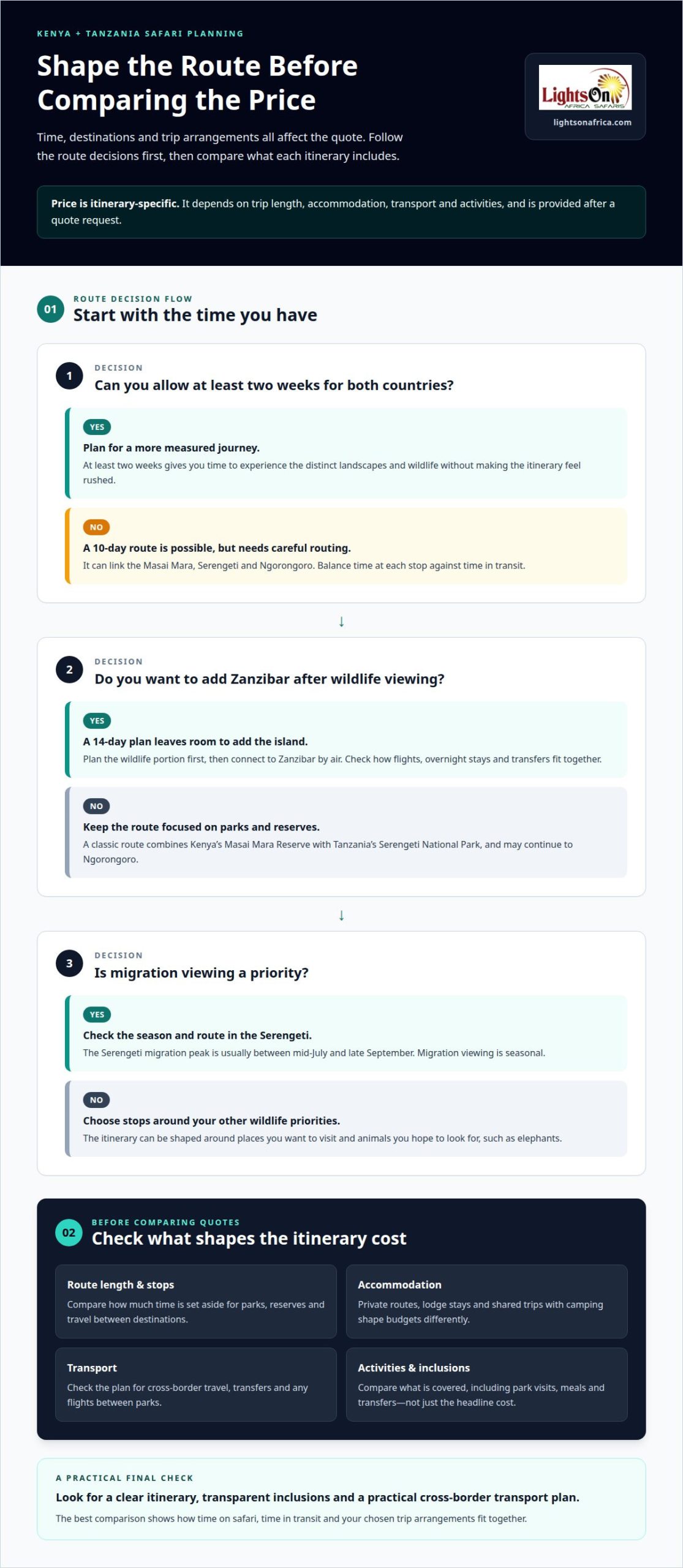
The cost of a Kenya and Tanzania safari tour depends on its length, accommodation, transport, and activities. The price depends on your itinerary and is provided after a quote request. A private route, lodge stays, and flights between parks shape the budget differently from a shared trip with camping. Compare what each itinerary includes, not just its headline cost, so park visits, meals, and transfers are clear.
Allow at least two weeks to experience both countries at a measured pace. A 10-day Kenya and Tanzania itinerary can link the Masai Mara, Serengeti, and Ngorongoro, but requires careful routing to make time for each stop. A 14-day plan leaves room to add Zanzibar after wildlife viewing. The balance between time on safari and time in transit is a key planning step.
To combine Tanzania’s Serengeti with Zanzibar, plan the wildlife portion first, then connect to the island by air. This creates a natural transition from national park landscapes to the coast. Check how flights, overnight stays, and transfers fit together when choosing your route.
A classic itinerary combines the Masai Mara Reserve in Kenya with Serengeti National Park in Tanzania, then may continue to Ngorongoro. A 16-day itinerary allows more time for visiting parks and reserves than a shorter trip. Choose stops around your priorities, such as migration viewing or looking for elephant and other animals.
When choosing a Kenya and Tanzania safari operator, look for a clear itinerary, transparent inclusions, and a practical plan for cross-border transport. The Masai Mara is a reserve, while the Serengeti is a national park. Migration viewing is seasonal, with the Serengeti peak usually between mid-July and late September.
Pack comfortable walking shoes, sun protection, and light layers for changing conditions on game drives. For safety, follow your guide’s instructions, stay with the group, and keep a respectful distance from wild animals. These steps help you prepare for varied terrain and wildlife encounters.
Tour group size and activity level
Group size affects the feel of game drives, time at sightings, and flexibility between destinations. Shared departures bring travelers together in one vehicle, while a private safari gives your party its own vehicle and daily rhythm. Consider whether shared company or a more tailored pace matters most, and compare the advertised group limit with vehicle capacity.
Listed safari formats illustrate that range: one shared tour allows a maximum of 7 people per vehicle, while other itineraries list a maximum group size of 6 or limit departures to 16 travelers. Another program has 12 or fewer participants, and some safari vehicles carry no more than 6 guests each. Treat these as itinerary-specific examples, not one standard for every tour. Smaller groups can make it easier to settle into a viewing spot, while larger groups may share the experience with more fellow travelers.
Private and small-group options also affect the trip’s activity level. A private departure can give your party more say in how long to spend at a sighting; shared drives follow the group’s schedule. On a Ngorongoro Crater visit, for example, wildlife viewing involves time in the vehicle, with opportunities to watch animals such as giraffes across changing scenery. Participants on one program may need to stand for up to 2 hours at a time, so consider how you feel about extended periods on your feet as well as drives.
Price and group size are connected through the way a trip is organized: vehicle use, accommodation, and whether costs are shared all influence the quote. The exact price depends on your itinerary and is provided after a quote request. For conservation-focused travel, look for a clear schedule that balances wildlife viewing with considerate visits to protected destinations. Compare the group limit, vehicle capacity, and expected daily pace together; that gives you a more useful picture than group size alone.
Accommodation, meals, and transport inclusions
Accommodation, meals, and transfers vary by itinerary, so compare each inclusion against your route. A Nairobi arrival, Masai Mara stay, and park-to-park transfer can shape the practical details of an East Africa journey.
Safari Accommodation Types
Safari stays may combine city hotels, lodges, and comfortable tented camps. One listed itinerary allocates 4 nights to hotels, 4 nights to safari lodges, and 5 nights to tented camps. That mix offers different settings across the trip, from Nairobi’s urban base to nights closer to nature. Look at the accommodation breakdown alongside the route, rather than relying on a general category such as “lodge safari.”
If your itinerary includes a stopover before the safari, check whether that night is included or whether accommodation covers only the main trip. A stay near the airport can simplify an early transfer, while extra time in the city may leave room for local attractions.
Accommodation and Meal Inclusions
Meal counts differ between itineraries. One Kenya and Tanzania program lists 13 breakfasts, 13 lunches, and 11 dinners, while another package lists 34 meals: 12 breakfasts, 11 lunches, and 11 dinners. These examples show why the exact schedule matters. Review which days include meals, especially arrival and departure days, and whether the plan allows time for meals between game drives.
Night totals also vary: a separate package includes 12 nights of accommodation. Match the nights and meal counts to the itinerary so you can see where accommodation or meals fall outside the package.
Transportation Arrangements
Transport may combine airport transfers, safari vehicles, and flights between parks. One itinerary uses a 7-seat 4×4 safari vehicle, while another includes two internal flights between safari parks. Flights can reduce time spent traveling between distant destinations, leaving more time for wildlife viewing. Check which transfers connect Nairobi, the Masai Mara, and the Tanzania portion of your route.
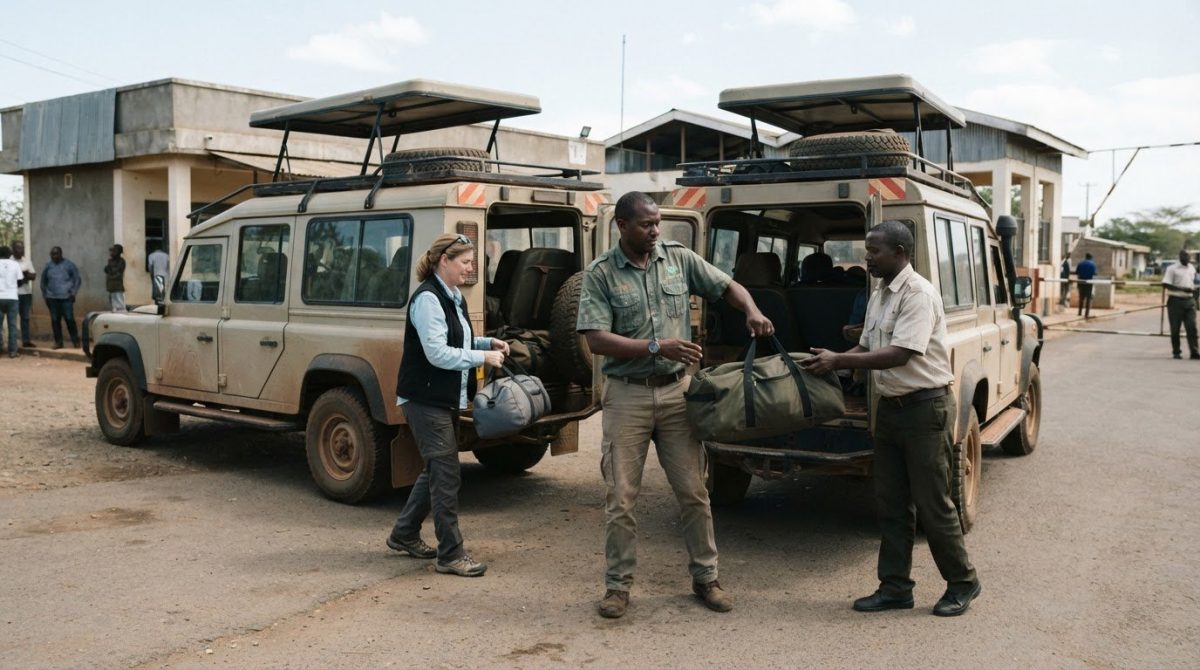
For a cross-border journey, ground travel and flights create different schedules. A drive from the Masai Mara to the Serengeti takes about 10 hours, compared with about 3 hours by air. The route and transport mode affect how much time remains for visiting protected areas.
Daily walking and terrain requirements
A safari blends long stretches in a vehicle with short walks and time standing. One Kenya and Tanzania program involves walking up to 3 miles per day; a separate 16-day estimate gives approximately 7 miles of walking overall. These figures describe different itinerary details, so look at the daily activity notes as well as the trip total. Walking pace on the program is moderate, around 2 mph.
Landscapes shift between open plains, park roads, and places where guests leave the vehicle. In Tarangire, wildlife viewing may focus on animals across broad natural settings; in the Serengeti, wildebeest movement can shape the adventure. The program reaches elevations up to 7,500 feet, and participants may need to stand for up to 2 hours at a time. Consider how you manage uneven ground, changing elevations, and extended periods on your feet.
Age limits also matter: travelers must be at least 12 years old at travel time, while a person booking the package must be at least 18. For a family, factor these thresholds into the itinerary before choosing a departure. A tented camp stay adds another practical consideration: pack walking shoes and clothing suited to outdoor conditions.
Check the entry requirements for this tour before departure. US citizens need a multiple-entry visa for Kenya and Tanzania, priced at USD 100 per person. Passports must remain valid for at least 6 months after the return date. Allow at least 6 weeks to apply for a Tanzanian visa; processing can take up to 35 business days.
Do US travelers need visas or vaccinations for Kenya and Tanzania? Yes, US travelers need the multiple-entry visa described above. Vaccination advice depends on the route and personal health, so discuss your itinerary with a travel-health clinician before departure.
Build your walking comfort, entry preparations, and wildlife priorities into the route. Plan your safari adventure around the landscapes and experiences you most want to enjoy.
Lights on Africa Destinations & Safaris: 9 Days Tanzania Agriculture Tour and Safaris
Lights on Africa Destinations & Safaris offers the 9 Days Tanzania Agriculture Tour and Safaris for travelers drawn to a Tanzania-focused itinerary with an agriculture theme alongside safari experiences. If wildlife across both countries is your priority, Best Tanzania & Kenya Safari Tours for Wildlife Lovers is a closer match. For a longer journey that combines migration viewing with a Zanzibar retreat, consider 16 Days- The Great Migration Luxury Safari & Zanzibar Retreat.
Choose an itinerary that fits your interests, preferred pace, and available time. Reviewing the route and tour details can help you decide which journey suits your East Africa plans.
For help choosing a safari itinerary, contact Lights on Africa Destinations & Safaris.
Choose the journey you want to remember
Let the experience you most want shape your next planning decision. A Kenya and Tanzania safari tour can be guided by your interest in wildlife, family travel, or a slower transition from the bush to the coast. Choose the feeling and focus you want from the journey, then use those priorities to narrow down the itinerary that suits you.
Lights on Africa Destinations & Safaris offers journeys with distinct themes: 16 Days- The Great Migration Luxury Safari & Zanzibar Retreat, 8-Day Luxury All Inclusive Tanzania Safari, and 8Days Tanzania Private Guided Family Safari. Each gives you a different starting point for considering the kind of East African experience you’d like to plan.
Take the next step by sharing what matters most to you, from the landscapes you hope to experience to the style of journey you prefer. Contact Lights on Africa Destinations & Safaris to discuss your plans, and start imagining the adventure ahead.
Frequently Asked Questions
What can I expect from a trip to Kenya and Tanzania?
Expect a guided journey shaped by wildlife viewing, changing scenery, and travel between safari areas. Depending on the itinerary, days may include game drives, time at camp, and cultural encounters. Animals move freely, so each drive brings a different experience rather than a fixed schedule of sightings.
Why is Kenya and Tanzania an ideal combination?
Kenya and Tanzania bring together neighboring safari regions, each with distinct destinations and experiences. Combining them lets you explore more than one country’s landscapes and wildlife habitats in a single holiday. This broader East African journey suits travelers who want variety rather than focusing all their time in one country.
So, what is the best way to book a safari?
Start with your travel dates, preferred pace, party details, and priorities, such as wildlife, family travel, or a beach extension. Then request an itinerary that connects those choices to destinations and daily logistics. Review the inclusions alongside the route before booking. A tailor-made guided safari can bring these decisions together.
What are the best times of year to visit Kenya and Tanzania for wildlife viewing?
Dry-season wildlife viewing is commonly recommended from June through October and January through February. The best period also depends on the parks and wildlife experiences you want to prioritize. If migration viewing is central to your plans, coordinate your dates with the season and route rather than choosing travel dates in isolation.
Will I see the Big Five?
You may encounter lions, leopards, elephants, buffalo, and rhinos, but sightings cannot be guaranteed because these animals move freely through large habitats. Your chances depend on the route, season, and wildlife movements during your visit. Tell your safari planner which species matter most, while keeping expectations flexible on each game drive.
What are the best Kenya and Tanzania safari itineraries and routes?
The best route depends on your travel dates and what you want from the journey. A cross-border itinerary suits travelers interested in varied safari destinations; adding Zanzibar works well if coastal time is also a priority. Choose the park order around seasonal interests and practical connections, leaving enough time for the experiences you value most.
One thought on “Kenya and Tanzania Safari Tour Cost and Inclusions”