
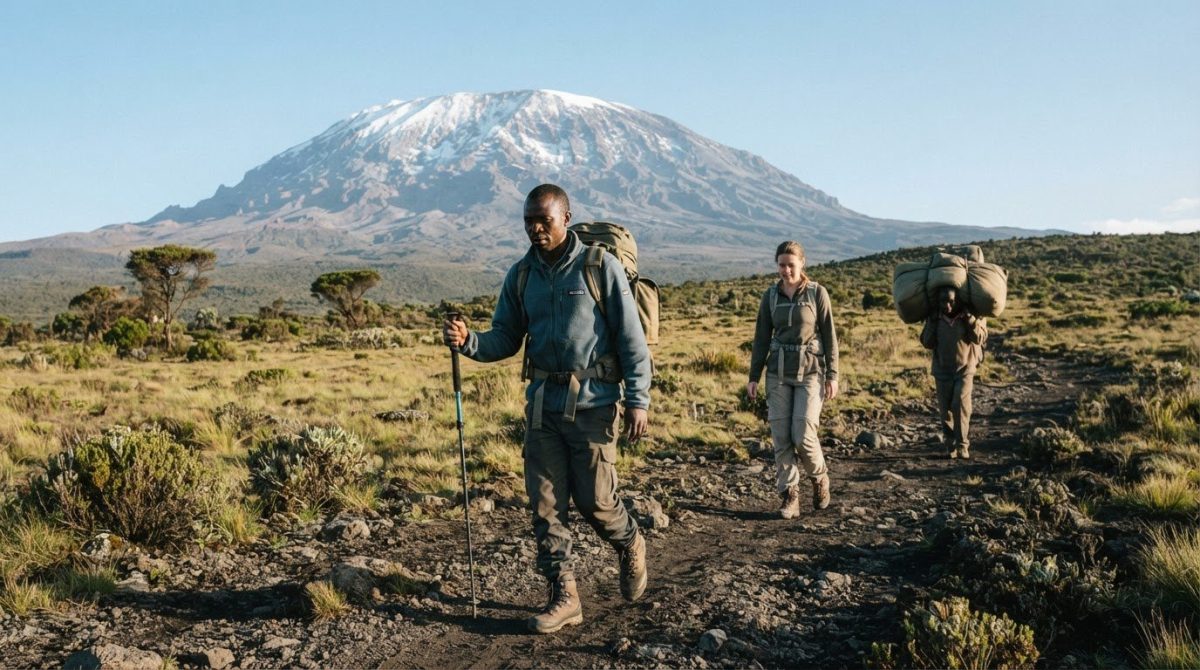
A Kilimanjaro summit is a demanding trek, not a technical climb: the mountain rises to 5,895 meters, and technical climbing experience isn’t required. Kilimanjaro trekking packages provide guided support for the route, while the real challenge is walking for several days and adapting to the thinner air at altitude.
It’s natural to wonder whether you need mountaineering experience or exceptional fitness for Kilimanjaro trekking packages. Technical climbing skills aren’t required, but regular hikes and hill walks can build stamina and strengthen the muscles you’ll use. A steady pace, attentive guidance, and time to adjust to altitude are important parts of the journey.
Here, you’ll learn what guided climb support can involve, why the trek can feel difficult, and what fitness and experience are useful before setting out. You’ll also find practical context for choosing a route and understanding how a guided climb is organized, so you can approach the mountain with a clearer plan and greater confidence.
Key Takeaways
- Compare route profiles, including Rongai-Mawenzi, Lemosho, Umbwe, and Western Breach, to understand how the trek’s demands can differ.
- Learn which practical details to look for in guided-climb support, from transport and meals to gear and porter arrangements.
- Use terrain and the demands of consecutive trekking days to shape a realistic fitness plan before departure.
- Understand what can affect package value and how guided support can make the climb more organized from arrival to the mountain.
How hard is it to climb Mount Kilimanjaro?
Route choices include Machame, Lemosho, Northern Circuit, Marangu, Rongai-Mawenzi, Umbwe, and Western Breach, each with a different itinerary and duration. July through October, as well as January and February, are described as the driest and most pleasant times to trek.
Route and Trip Duration Options
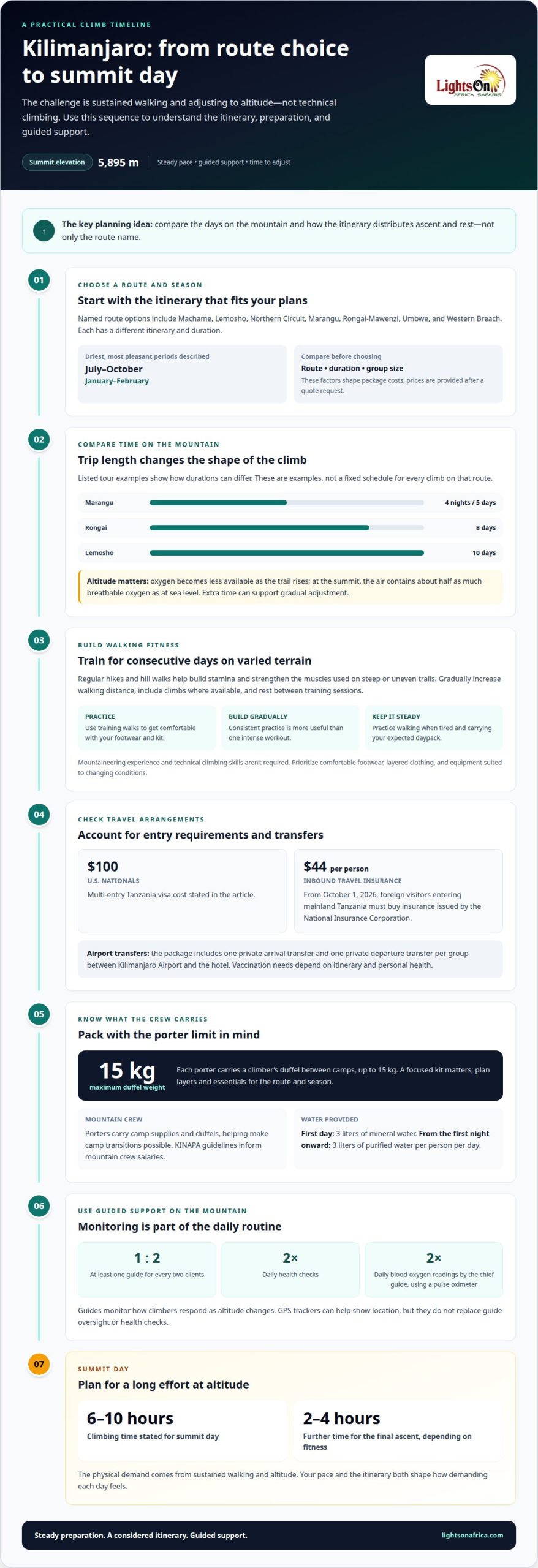
Trip length varies by route and itinerary: a standard Marangu climb is often sold as a 4-night, 5-day return trek, while listed tours include an 8-day Rongai Route and a 10-day Lemosho Route. Machame, Northern Circuit, Umbwe, and Western Breach are other named options. Compare the days planned on the mountain, not just the route name, when weighing time for climbing and altitude adjustment.
Acclimatization Itinerary
The Rongai Route offers an 8-day itinerary in the listed tour, giving travelers a route-specific schedule to consider. Focus on how the itinerary distributes ascent and rest rather than assuming every Rongai climb follows the same sequence. Extra time on a trek can support gradual adjustment to altitude, where oxygen becomes less available as the trail rises; the summit reaches 5,895 meters.
The physical challenge comes from sustained walking and altitude, not technical climbing. At the summit, the air contains about half as much breathable oxygen as at sea level. Route descriptions can help illustrate how quickly a trek may enter high-altitude terrain. Your pace and the itinerary both shape how demanding each day feels.
Compare route, trip duration, and group size when reviewing package costs. A longer itinerary means more time on the mountain, while group arrangements also affect the package structure. Prices depend on the chosen route, duration, and group size, and are provided after a quote request. Consider these details together so a lower initial price doesn’t distract from the number of days allocated for the climb.
Included transport, meals, gear, and porter support
Kilimanjaro support brings together transport logistics, camp planning, and a mountain crew. When comparing options, look at what is moved between camps, what climbers carry themselves, and how guides monitor the group.
Included Transport, Meals, and Gear
A package includes one private arrival airport transfer and one private departure airport transfer per group between Kilimanjaro Airport and the hotel. On the mountain, each porter carries a climber’s duffel bag between camps, up to 15 kg. That limit makes a focused kit important. Meals and personal gear also shape comfort, so plan layers and essentials for the route and season rather than relying on safari packing habits.
Guide and Porter Support
Guided climbs provide at least one guide for every two clients, alongside porter support. Guides conduct health checks twice daily, and the chief guide takes blood-oxygen readings with a pulse oximeter twice a day. These checks help the team monitor how climbers respond as altitude changes. Porters carry camp supplies and duffels, leaving trekkers to focus on walking.
Water is another practical part of mountain support: climbers receive 3 liters of mineral water on the first day, then 3 liters of purified water per person per day from the first night onward. GPS trackers can help show location, but they don’t replace guide oversight or health checks. Medical support planning and acclimatization remain central to a guided expedition.
Porter welfare deserves attention alongside comfort. A 15 kg duffel limit sets a clear carrying boundary, while KINAPA guidelines inform mountain crew salaries. This local team makes each camp transition possible, from moving equipment to keeping the climb organized. Responsible support recognizes that the experience depends on both climbers and crew.
For a guided route plan that brings these logistics together, explore guided Kilimanjaro climb planning.
What level of fitness and experience is required for a mountain climbing tour?
For U.S. nationals, a multi-entry Tanzania visa costs $100; from October 1, 2026, foreign visitors entering mainland Tanzania must buy inbound travel insurance issued by the National Insurance Corporation, costing $44 per person. Vaccination needs depend on itinerary and personal health. Regular hikes and hill walks help build stamina and climbing muscles for the trek.
Terrain and Trek Difficulty
Mount Kilimanjaro is a sustained trekking adventure, with difficulty shaped by the route, daily distance, and time spent climbing at altitude. Summit day demands particular stamina: the climb takes 6 to 10 hours, followed by another 2 to 4 hours for the final ascent, depending on fitness. Prepare for long hours on foot, not a technical climbing course.
Fitness and Training Preparation
Build endurance with regular hikes and hill walks to develop stamina and strengthen the muscles used on steep or uneven trails. Gradually increase your walking distance and include climbs where available. Consistent practice is more useful than a single intense workout. Try carrying the daypack you expect to use and walking when tired to get a better sense of your pace before the Tanzania trek.
Mountaineering Experience and Equipment
Mountaineering experience isn’t the same as trekking fitness. Prioritize comfortable footwear, layered clothing, and equipment suited to changing conditions, then practice using your kit on training walks. Aim to keep moving steadily across varied terrain and manage your essentials without unnecessary weight. This walking-based adventure does not focus on technical climbing skills.
Plan your preparation around the full itinerary, not just the summit. One short walk may feel manageable, but successive days on the mountain call for recovery and steady effort. Rest between training sessions and build confidence with hikes that include sustained uphill walking. A thoughtful plan helps you prepare for the physical rhythm of the climb.
Why should I choose a Kilimanjaro climbing tour?
A guided tour brings the route plan, mountain crew, and camp logistics together for a challenging ascent. Every trekker must book a package with a guide and at least one porter. Before comparing options, review how permits and park fees appear in the itinerary and cost breakdown.
Classic and premium packages can differ in route, trek duration, group arrangement, and included services. A short Marangu itinerary and a longer Northern Circuit climb allow different amounts of time on the mountain, so compare the schedules rather than relying on a package tier label. Weather, route, and trip length also shape the experience.
Price depends on the route, duration, group size, and package inclusions, and is provided after a quote request. Review the itinerary to see what the quoted amount covers, including transfers, meals, crew, and camping arrangements. Also identify separate travel expenses, such as flights to Tanzania, that are outside the climb package. For another Tanzania travel option, compare the Kenya and Tanzania safari tour cost and inclusions and how itinerary choices shape the overall price.
Before booking, compare the practical details side by side:
- Route and duration: Check the planned hiking days and ascent schedule for Marangu or another route.
- Included support: Look for guides, porters, meals, water, and camp logistics.
- Fees and exclusions: Review permit and park-fee arrangements, along with travel costs outside the package.
- Group format: See whether the itinerary describes a private or open-group climb.
Tips for guides and porters are another budget consideration; they can add to the overall cost of a climb. Include them in your travel planning rather than treating the package price as the only expense. This helps you compare options across Africa with a fuller picture of the trip.
Choose a guided climb when you want route planning and expedition support organized around your ascent. Explore Kilimanjaro climb options to plan a route and itinerary that fit your travel priorities.
Lights on Africa Destinations & Safaris: Mount Kilimanjaro Trekking Packages
Lights on Africa Destinations & Safaris offers Mount Kilimanjaro Trekking Packages for travelers planning a guided climb in Tanzania. When you’re ready to move from comparing routes to planning your trek, consider which route and trip length suit your schedule, along with your hiking preparation and preferred mountain support. These choices help clarify what matters most for your journey.
To start planning, gather your preferred travel dates and route ideas, and note any questions about the itinerary or package details. This gives you a clear basis for discussing a climb that fits your priorities. The summit is a memorable goal, and thoughtful preparation and a suitable itinerary shape the experience along the way.
Contact Lights on Africa Destinations & Safaris to discuss your Kilimanjaro plans.
Take the next step toward your Tanzania adventure
Let your interest in Kilimanjaro trekking packages become the beginning of a thoughtfully planned journey. Consider how you’d like your time in Tanzania to unfold after the climb, whether that means returning home or adding a wildlife experience. Lights on Africa Destinations & Safaris also offers the 16 Days- The Great Migration Luxury Safari & Zanzibar Retreat, the 8-Day Luxury All Inclusive Tanzania Safari, and the 8Days Tanzania Private Guided Family Safari.
Bring your preferred travel dates and the kind of experience you’re hoping for into your planning conversation. A clear sense of your priorities makes it easier to shape the next stage of your trip around what matters to you. Contact Lights on Africa Destinations & Safaris to discuss your plans, and take your next step toward an adventure in Tanzania.
Frequently Asked Questions
What is the summit success rate on Kilimanjaro?
Published estimates of Kilimanjaro summit success rates usually range from 65% to 75% across routes and operators. The figure is a broad estimate, not a personal prediction: route length, acclimatization itinerary, and how your body responds at altitude all matter. Compare itineraries for the time they allow on the mountain, rather than choosing by a success-rate figure alone.
Can a beginner hike Kilimanjaro?
Yes, beginners can attempt Kilimanjaro without prior technical mountaineering experience. The trek still takes preparation: start with regular walks, then work up to longer hikes and hill walks that build stamina and strengthen climbing muscles. Practice carrying your daypack, too. First-time trekkers can benefit from getting used to sustained walking before setting out, even without previous mountain-climbing experience.
How dangerous is the altitude?
Altitude is a serious challenge because breathable oxygen decreases as you climb. At Kilimanjaro’s 5,895-meter summit, the air contains about half as much breathable oxygen as at sea level, and stronger altitude effects set in above 3,000 meters. This can make exertion harder. Take the itinerary seriously, follow guide instructions, and tell the climb team promptly if you feel unwell.
How difficult is a Kilimanjaro trek?
The trek is physically demanding because it combines repeated days of walking with high altitude, even though technical climbing skills aren’t required. Summit day is especially strenuous: the climb takes 6 to 10 hours, with another 2 to 4 hours for the final ascent, depending on fitness. Build endurance for long periods on your feet, not just short bursts of exercise.
How do you prevent altitude sickness on Kilimanjaro?
Altitude risk can’t be removed, but a gradual itinerary gives your body more time to adjust. Choose a climb with more days rather than compressing the ascent; the recommendation is to add at least one day to a five-day climb. During the trek, follow your guides’ directions and tell them how you feel so the team can respond to changes.
How long do I need to complete the climb, and does that include time to acclimatize?
Plan for the full route itinerary, which includes the days spent ascending and adjusting to altitude. A standard Marangu return climb is often sold as 4 nights and 5 days, while listed examples include an 8-day Rongai trip and a 10-day Lemosho trip. More days mean a different schedule, so review the complete itinerary when arranging travel around the climb.
One thought on “Kilimanjaro Trekking Packages with Guided Climb Support”