
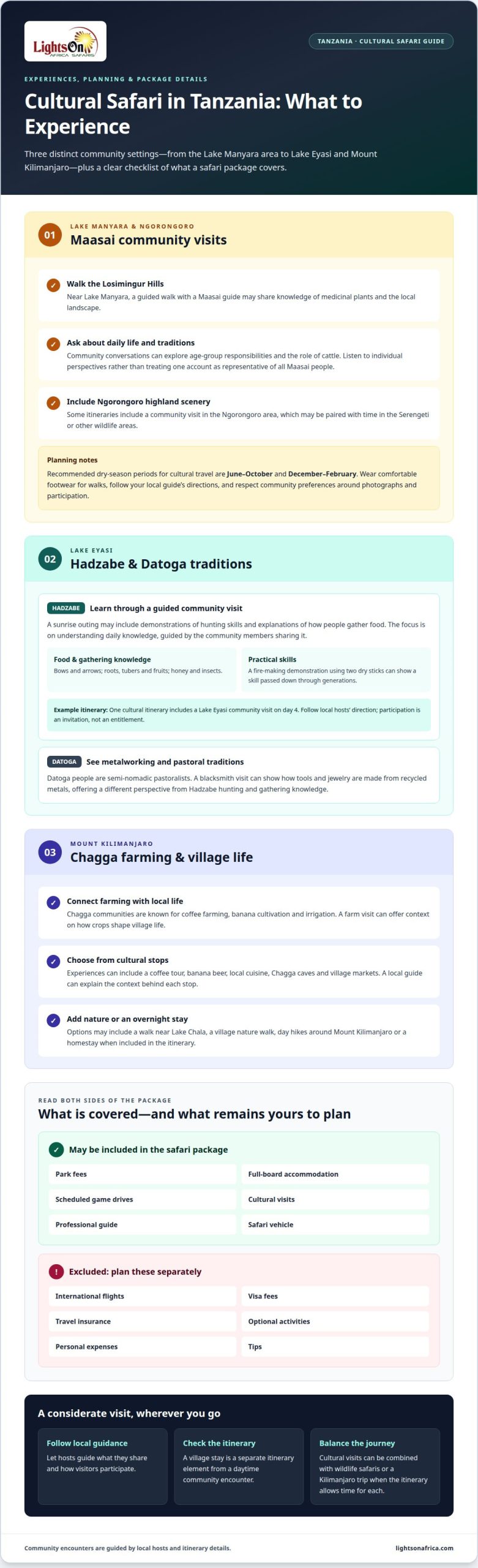
The most important part of a cultural safari in Tanzania may be knowing what the package includes and excludes. Safari packages can include park fees, full-board accommodation, scheduled game drives and cultural visits, a professional guide, and a safari vehicle. International flights, visa fees, travel insurance, optional activities, personal expenses, and tips are excluded.
It’s natural to focus on meeting Maasai, Hadzabe, and Chagga communities, but clear inclusions and exclusions help you understand the full journey. This guide explains what visits can involve and where they take place, from Maasai experiences near Lake Manyara to Hadzabe encounters around Lake Eyasi and Chagga village visits near Mount Kilimanjaro. You’ll also learn how to read package details and plan for cultural experiences, wildlife drives, and costs outside the itinerary.
Key Takeaways
- Near Lake Manyara, a guided walk with Maasai community members can offer insight into local plant knowledge and the landscape of the Losimingur Hills.
- At Lake Eyasi, cultural visits can introduce you to Hadzabe hunting and gathering traditions, with opportunities to learn about fire-making and everyday skills.
- Explore Chagga village life around Mount Kilimanjaro through coffee experiences, local food, and walks shaped by the region’s farming heritage.
- Read the inclusions and exclusions together to understand which trip arrangements are covered and which expenses remain yours to plan.
Maasai community visits and walking safaris near Lake Manyara
For a cultural safari in Tanzania, consider Maasai community visits near Lake Manyara and Ngorongoro. Around Lake Manyara, a guided walk may lead into the Losimingur Hills, where a Maasai guide can share knowledge about medicinal plants. This experience connects landscape and heritage, adding context beyond wildlife viewing.
Maasai social life is organized by age groups, with duties assigned to each group. During a community visit, ask your guide how these responsibilities shape daily life and how cattle feature in Maasai traditions. Listen to community members’ perspectives rather than treating one account as representative of all Maasai people. A considerate, guided encounter makes room for conversation and respect.
Ngorongoro is another place to include Maasai cultural experiences, with community visits and highland scenery forming part of some itineraries. One route moves toward the Ngorongoro area on day 5. A visit may be paired with time in the Serengeti or other wildlife areas, creating a safari experience that balances cultural learning with game viewing.
The Lake Manyara area and Ngorongoro Highlands are strong locations for Maasai visits. Recommended dry-season periods for cultural travel in Tanzania are June to October and December to February. These windows can help with planning, while your route and the balance of walking, community time, and wildlife viewing shape each day.
Yes, cultural visits can be combined with wildlife safaris or a Kilimanjaro trip, provided the itinerary allows time for each. Walking near Lake Manyara calls for comfortable footwear and attention to your local guide’s directions; vehicle transfers connect communities and park areas. Bring personal essentials, follow guidance during walks, and respect community preferences around photographs and participation. Since village stays are a separate itinerary element, distinguish an overnight visit from a daytime community encounter when planning.
Hadzabe hunting and gathering traditions near Lake Eyasi
Lake Eyasi offers an opportunity to learn about Hadzabe traditions through a community visit. On day 4 of one cultural itinerary, visitors meet communities connected with traditional lifestyles and heritage knowledge in the area. A visit can include a sunrise outing, where Hadzabe community members demonstrate hunting skills and explain how people gather food. The focus is on understanding daily knowledge, not simply watching an activity.
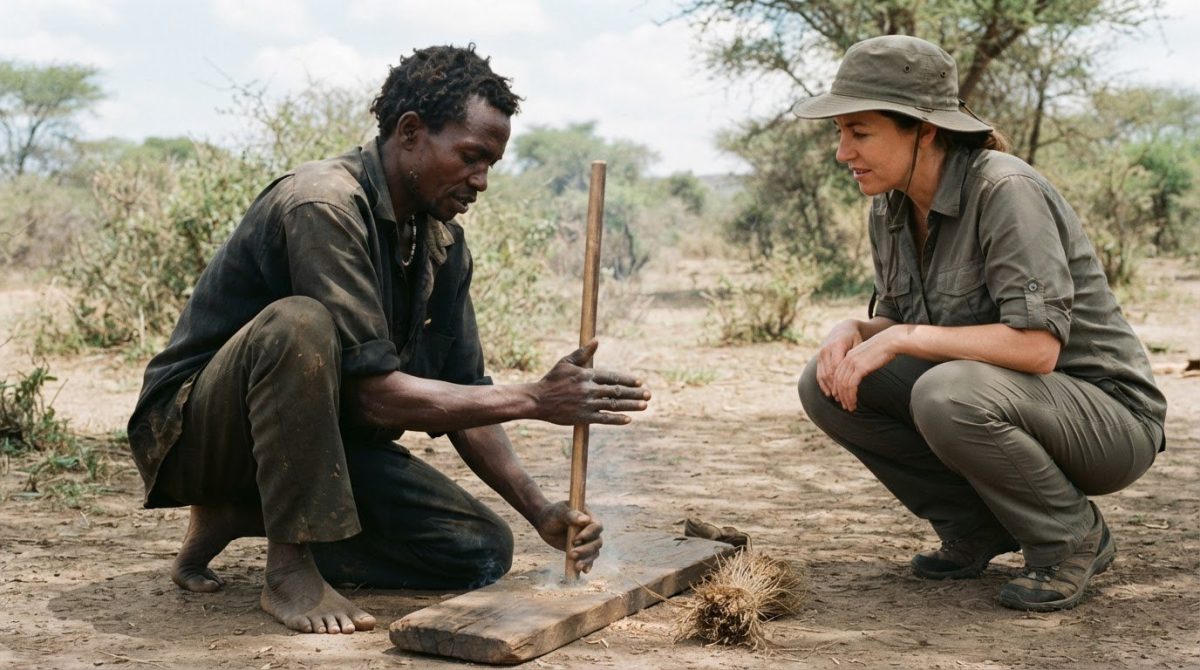
Hadzabe visits can offer insight into using bows and arrows, gathering roots, tubers, and fruits, and collecting honey and insects. A fire-making demonstration using two dry sticks shows a practical skill passed down through generations. These encounters reveal how the landscape provides food and materials, while local hosts guide what they share. Follow their direction and treat participation as an invitation, not an entitlement.
Near Lake Eyasi, visits with Datoga communities can add another perspective. Datoga people are semi-nomadic pastoralists who make tools and jewelry from recycled metals. A blacksmith visit can show the work behind these crafted objects and how metalworking supports community life. Datoga pastoral traditions also offer a contrast with Hadzabe hunting and gathering knowledge.
Mount Kilimanjaro offers a different setting. Chagga communities are known for coffee farming, banana cultivation, and irrigation. Village experiences can include a coffee tour, local cuisine, a market visit, or a walk near Lake Chala. Each activity connects customs with the mountain environment and its cultivated landscapes.
Visitors can also learn about the Sukuma, Tanzania’s largest ethnic group, whose population exceeds 8 million and makes up one-sixth of the country’s population. Across Hadzabe, Datoga, Chagga, Sukuma, and Maasai communities, dances, beadwork, and ceremonies are distinct expressions of heritage. Ask your guide about the meaning of an activity, and follow community preferences around viewing or joining. To shape a journey around these traditions, explore community visit planning.
Chagga coffee farming and village experiences
On Mount Kilimanjaro’s slopes, Chagga communities are known for coffee farming, banana cultivation, and irrigation. A village visit offers a closer look at how farming shapes local life in northern Tanzania. The wider Kilimanjaro region is also associated with Pare communities, while the experiences described here focus on Chagga heritage. Meet local communities with curiosity and let hosts explain the customs they choose to share.
A Chagga coffee tour takes you to a farm, where coffee cultivation forms part of the community’s agricultural story. Pair it with a banana beer experience to discover another way bananas feature in local traditions. These activities offer more than a tasting stop: they’re a chance to hear how crops, food, and village life connect. Listen closely and ask thoughtful questions about the practices being presented.
There’s more to explore beyond the farms. Chagga cultural programs can include visits to Chagga caves, local cuisine, and village markets. Each stop offers a different perspective, from places connected with heritage to foods and goods found in everyday community settings. A local guide can provide context, helping visitors understand what they’re seeing rather than treating each stop as a photo opportunity.
Nature also shapes the experience. A walk near Lake Chala or a village nature walk can complement coffee and cultural visits, while a homestay offers a closer look at daily life when included in the itinerary. Day hikes are another option around Mount Kilimanjaro. Choose a mix that suits your pace and leave room for conversation with Chagga hosts. Together, these experiences bring farming, cuisine, craft, landscape, and hospitality into one cultural journey in northern Tanzania.
Safari package inclusions and exclusions
A Tanzania safari package can bring wildlife viewing and cultural encounters together, but the inclusions determine what your itinerary covers. Common inclusions are park fees, full-board accommodation, scheduled game drives and cultural visits, professional guide service, and a safari vehicle. These elements support travel through diverse landscapes, from Tarangire’s wildlife areas to nearby communities.
Read the itinerary alongside the inclusion list. A scheduled cultural visit is part of the plan, while an optional activity is not. For example, a route through the Tarangire region may allow for a community interaction or craft visit, depending on timing. This distinction sets clear expectations: the package covers scheduled experiences, not every possible stop or activity.
Typical exclusions include:
- International flights and visa fees
- Travel insurance
- Optional activities
- Personal expenses and tips
These exclusions affect different parts of the trip. International flights and visa fees are separate from the safari arrangements, while personal expenses and tips depend on individual choices. Optional activities may add experiences beyond scheduled game drives and cultural visits. Include these items in your travel planning rather than assuming the package covers them.
For a clear comparison, match each itinerary day to the inclusions: note where accommodation, transport, guiding, park access, and cultural encounters appear. Then identify excluded items separately. A day in Tarangire, for instance, may combine a game drive with a community experience, but the itinerary specifies the activities scheduled. This simple review makes package descriptions easier to understand and shows how wildlife time and cultural visits fit together.
Ready to shape an itinerary around cultural encounters and wildlife landscapes? Plan your Tanzania safari with the experiences that matter most to you.
Lights on Africa Destinations & Safaris: Cultural Safaris in Tanzania
Lights on Africa Destinations & Safaris offers Cultural Safaris in Tanzania for travelers who want community encounters to shape their journey. Choose this option when you’re ready to include visits with Maasai, Hadzabe, or Chagga communities alongside time in Tanzania’s landscapes and wildlife areas.
If you’d like to pair cultural experiences with other travel interests, the 16 Days- The Great Migration Luxury Safari & Zanzibar Retreat, 8-Day Luxury All Inclusive Tanzania Safari, and 8Days Tanzania Private Guided Family Safari offer different journey themes. Choose the experience that best matches your priorities, then discuss how cultural visits fit into the trip you have in mind.
To plan a cultural journey in Tanzania, contact Lights on Africa Destinations & Safaris.
Shape a Journey That Feels Personal
Let your interests set the rhythm of your journey. You might prefer unhurried conversations, time outdoors, or a route balancing community encounters with wildlife viewing. A cultural safari in Tanzania can be more meaningful when the itinerary reflects what you’re curious to learn, while leaving room to experience each place with attention and respect.
Before setting out, decide which experiences matter most and how you’d like them to fit into your trip. Lights on Africa Destinations & Safaris can help shape those preferences into a cultural journey through Tanzania. Share the experiences you hope to include and the pace you have in mind.
Contact Lights on Africa Destinations & Safaris to begin planning, and take the first step toward a journey shaped around your curiosity.
Frequently Asked Questions
What is a cultural safari in Tanzania?
A cultural safari in Tanzania is a guided journey that makes learning about local communities and heritage part of the travel experience. Rather than treating culture as a brief stop between destinations, it allows time to hear explanations, observe demonstrations, and understand how place shapes daily life. Wildlife viewing may also feature, depending on the route and itinerary.
What activities are included in a Tanzania cultural safari?
Activities depend on the route and may combine guided community visits with practical demonstrations, local food, village walks, or time at a market. A traveler interested in farming might prioritize a coffee experience, while someone curious about traditional skills could choose a craft or blacksmith visit. Check scheduled activities separately from optional additions so the day’s plan is clear.
How long should a cultural safari in Tanzania last?
Choose a duration based on the regions and experiences you want to include. A Tanzania cultural itinerary is described as lasting seven days, while a Lake Eyasi visit focused on Hadzabe and Datoga communities can take one to two days. A shorter cultural visit can fit into a wider trip; allow more time when combining several communities and wildlife areas.
How can travelers choose ethical, community-led cultural tours in Tanzania?
Look for visits guided by people connected to the communities you’ll visit, and choose itineraries that describe cultural encounters as guided and considerate. Before an activity, listen to how the host wants visitors to participate. A meaningful experience leaves room for conversation and respects community members’ choices about what they share, rather than treating people or traditions as attractions staged for visitors.
What cultural etiquette and visitor rules should travelers follow in Tanzania?
Follow your local guide’s instructions, ask before taking photographs, and accept a refusal without pressing. Listen before joining a dance, demonstration, or other activity, since an invitation to watch doesn’t automatically mean participation is welcome. Dress and behave considerately, and don’t assume one community’s customs represent all Tanzanians. A respectful visit starts with courtesy and attention.
One thought on “Cultural Safari Tanzania with Maasai, Hadzabe and Chagga Visits”