
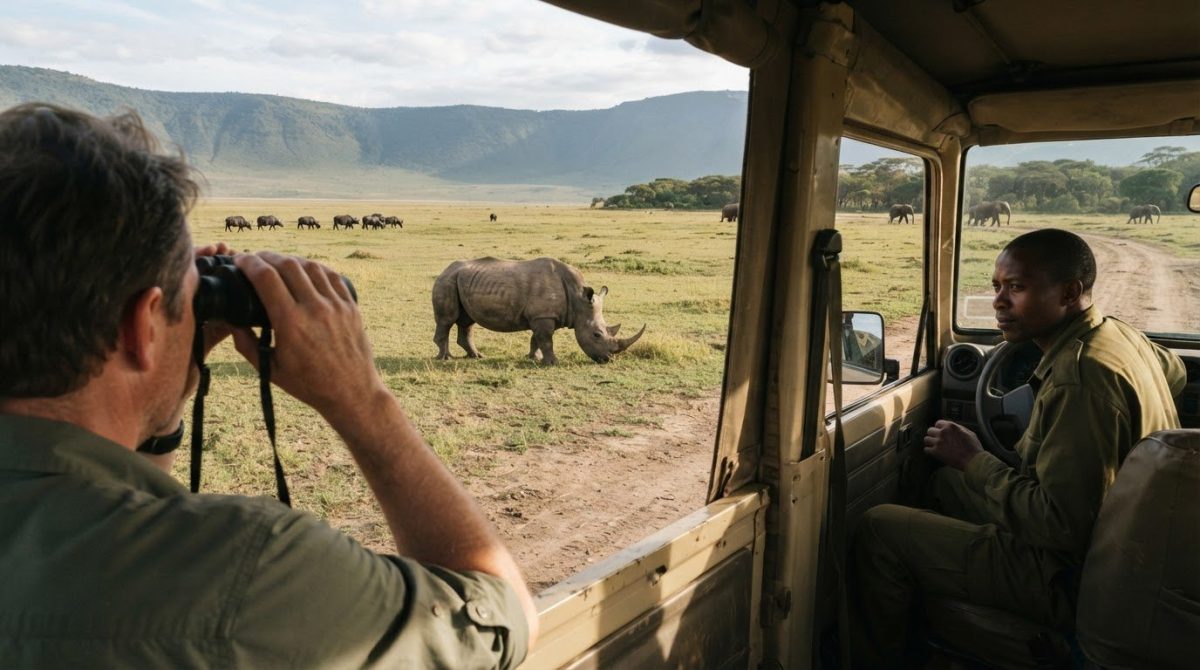
Your best chance of seeing the Big Five comes from allowing time for repeated game drives in wildlife-rich areas, rather than trying to cover too much ground. A well-planned Big Five safari package can focus on Kenya’s Masai Mara, Tanzania’s Serengeti and Ngorongoro Crater, or South Africa’s Greater Kruger, where the lion, elephant, rhino, buffalo and leopard roam.
It’s natural to hope to see all five, and choosing the right destinations and season can help shape a rewarding trip. This guide explains how to improve your chances with careful timing, enough time in the parks, and a mix of safari activities. You’ll also see how Kenya, Tanzania, and South Africa differ, and how Tanzania Big Five safari packages can bring iconic wildlife areas together in one journey tailored to your travel style.
Key Takeaways
- Plan around seasonal conditions: dry periods can concentrate wildlife near water, while the greener months bring different scenery and birdwatching opportunities.
- Match your route to the experience you want, from migration viewing in East Africa to concentrated wildlife viewing in South Africa’s Greater Kruger.
- Choose activities that suit your trip: game drives are central to wildlife viewing, while some conservancies also make guided bush walks possible.
- Explore Tanzania itineraries that combine wildlife areas and travel styles, then shape the journey around your priorities and pace.
Big Five wildlife viewing
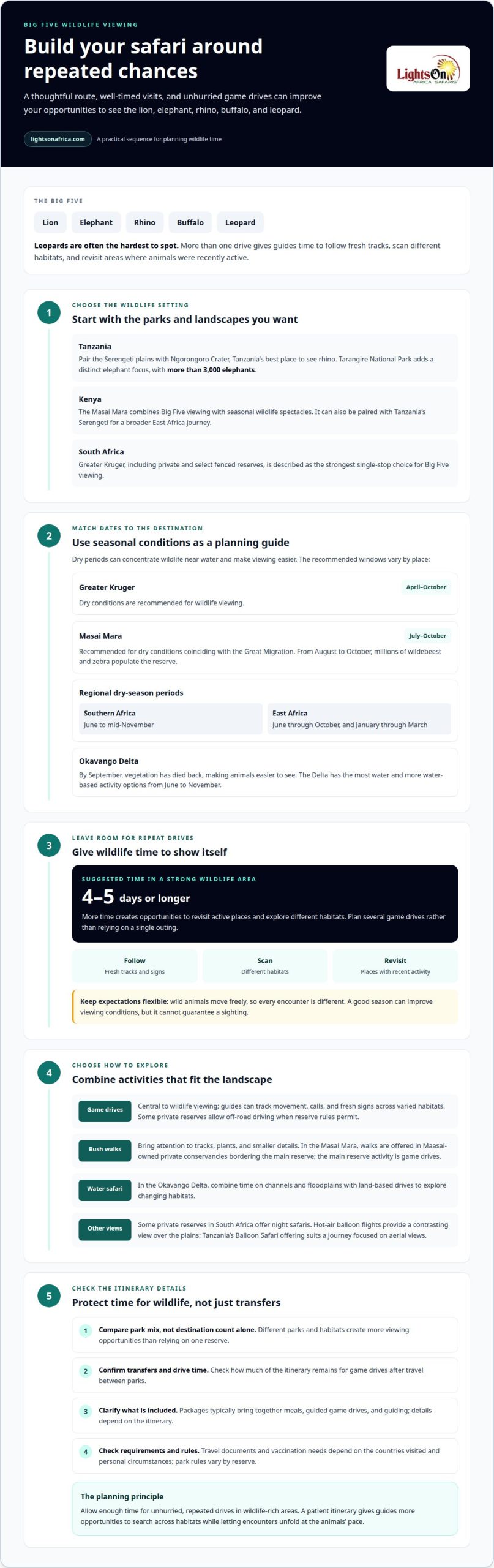
The Big Five are the lion, elephant, rhino, buffalo, and leopard. Leopards are often the hardest to spot, so plan several game drives rather than relying on a single outing. In a strong wildlife area, allow four to five days or longer. More time gives guides opportunities to follow fresh tracks, scan different habitats, and revisit places where animals were recently active. Big Five safari packages are most rewarding when the itinerary allows patient observation, not just long transfers between parks.
South Africa’s Greater Kruger is a well-known setting for game drives, which are generally the best way to track the Big Five there. Dry conditions from April to October are recommended for wildlife viewing. Sabi Sands, a private reserve beside Kruger, is described as one of the oldest private reserves. Guides and trackers make sightings more meaningful by interpreting signs such as tracks, calls, and movement through the landscape. Their knowledge helps direct the search while allowing encounters to unfold at the animals’ pace.
In Kenya, the Masai Mara combines seasonal wildlife spectacles with Big Five viewing. Visits from July to October are recommended, when dry conditions coincide with the Great Migration. From August to October, millions of wildebeest and zebra populate the reserve. In Uganda, choose parks according to the wildlife and landscapes you want to experience. Kenya and Uganda offer distinct settings, so a thoughtfully planned route can balance time in each country with your wildlife priorities.
Season affects visibility across the region. Southern Africa’s dry season runs from June to mid-November, while East Africa has dry-season periods from June through October and January through March. Botswana’s Okavango Delta is another seasonal option: by September, vegetation has died back, making animals easier to see. Choose dates around your preferred destination, then allow enough time for unhurried drives in each wildlife area. The right season can improve viewing conditions, but wild animals move freely, so every encounter is different.
Safari destinations in Kenya, Tanzania, and South Africa
Choose a destination around the wildlife and landscapes you most want to encounter. Tanzania’s Serengeti plains pair naturally with Ngorongoro Crater, the country’s best place to see rhino. Tarangire National Park adds a distinct focus, with more than 3,000 elephants. In South Africa, Greater Kruger’s private and select fenced reserves are the strongest single-stop choice for Big Five viewing.
Kenya’s Masai Mara can anchor a Kenya itinerary. Pair it with Tanzania’s Serengeti for a broader East Africa journey. A 10-day East Africa Year-Round Migration Safari itinerary follows wildlife regions. A 12-day Best of Kenya & Tanzania itinerary allows a longer, two-country format. A private safari uses a vehicle and schedule for your party. A group safari shares both with other travelers. Compare Big Five safari packages by park mix, not destination count alone.
Destination choice affects your chances of seeing all five. An itinerary covering several parks creates more viewing opportunities than relying on one reserve, especially when habitats and wildlife populations differ. Visiting different national parks exposes you to varied animal movements and ranges. Greater Kruger is South Africa’s strongest single-stop option, while the Serengeti and Ngorongoro offer distinct ecosystems. Botswana’s Okavango Delta adds wetlands to a Southern Africa route, balancing open plains with riverine landscapes.
Before booking, make sure the route, park choices, timing, and inclusions are clear. Confirm how transfers fit into the itinerary and how much time remains for game drives. Travel documents and vaccination needs depend on the countries visited and personal circumstances; park rules vary by reserve. A safari package typically brings together meals, guided game drives, and guiding, with the details shaped by the itinerary. If seeing all five is a priority, choose a route with repeated drives across several wildlife areas.
Game drives, bush walks, and hot-air balloon flights
Game drives let guides cover varied habitats while tracking movement, calls, and fresh signs. In Botswana’s Okavango Delta, a drive once followed seven wild dogs setting off to hunt in the evening. The sighting shows how a skilled guide can interpret animal behavior without treating wildlife encounters as scripted events. Some private game reserves also allow off-road driving, which can bring a vehicle closer to a sighting when reserve rules permit. Night safaris offer another perspective by revealing animals active after dark.
Water safaris in the Okavango Delta offer a different perspective, where channels and floodplains shape wildlife movement. The Delta has the most water and more water-based activity options from June to November. An itinerary can combine time on the water with land-based drives to explore changing habitats. Match the activity to the landscape: vehicles cover open ground, while water travel explores waterways and their edges.
Walking draws attention to tracks, plants, and smaller details that can be missed from a vehicle. In Kenya’s Masai Mara, game drives are the activity in the main reserve, while Maasai-owned private conservancies bordering it offer bush walks. This difference can help travelers choose an itinerary that combines wildlife viewing with a closer feel for the landscape. Hot-air balloon flights provide a contrasting view over the plains; Tanzania’s Balloon Safari offering suits a journey focused on aerial views.
Namibia itineraries may use fly-in or self-drive travel, two distinct ways to move between wildlife areas. A fly-in journey centers on flights between destinations, while self-drive puts the traveler behind the wheel. For a professionally guided safari, prioritize guided drives and activities suited to the reserve’s habitat and rules. Some private reserves in South Africa offer both off-road drives and night safaris, adding variety beyond daytime tracking. Choose activities for the wildlife and landscapes they reveal, not simply to collect experiences.
Tanzania safari packages
Tanzania suits travelers who want to experience several wildlife habitats on one safari. A northern-circuit itinerary can link Tarangire National Park, the Serengeti, and Ngorongoro Crater, where game drives reveal different landscapes and species. A seven-day Big Five tour is one available itinerary length and a useful starting point when deciding how much time to spend. Longer journeys can add stops or allow a slower pace; the best fit depends on your wildlife priorities and how much time you want in each place.
Build the route around what you most want to discover. Tarangire brings elephant country into the journey, while the Serengeti’s broad plains are known for migration viewing. Ngorongoro Crater offers a distinct setting for wildlife drives. Rather than rushing between all three, consider where extra time would add value: repeated drives in a priority area, a cultural experience, or a quieter day between excursions. This gives the journey a clear focus without treating every stop as a checklist.
Season also shapes the experience. Tanzania’s Serengeti dry season runs from July to October, when animals gather around waterholes and migration herds are in the north. Seasonal conditions can offer a different window for wildlife viewing. Discuss your dates alongside route priorities to shape a package around the wildlife experience you want, rather than choosing dates and destinations separately.
Accommodation style influences the feel of each day, from tented stays close to the landscape to luxury options with added comfort. A property rating can help describe accommodation standards, but it doesn’t measure wildlife viewing; park location and time for game drives matter too. Hot-air balloon flights can add an aerial perspective over the Serengeti, while guided drives keep the focus on tracking animals across the ground. Share your preferred pace, accommodation style, and wildlife priorities to shape a Tanzania itinerary around your travel style. Explore Tanzania safari options for a journey built around these choices.
Lights on Africa Destinations & Safaris: Mount Kilimanjaro Trekking Packages
Lights on Africa Destinations & Safaris helps travelers shape a Tanzania journey around wildlife, comfort, and the kind of adventure they value. If you want to pair Big Five viewing with time on the mountain, Mount Kilimanjaro Trekking Packages offer a trekking-focused next step. For a wildlife-led itinerary, options include the 8-Day Luxury All Inclusive Tanzania Safari and the 8Days Tanzania Private Guided Family Safari.
Choose a safari that reflects your priorities, whether that means migration viewing, a family-focused pace, or a retreat combining safari and coast. The 16 Days- The Great Migration Luxury Safari & Zanzibar Retreat brings wildlife exploration together with a Zanzibar stay. Share your preferred destinations, travel style, and key interests to help shape a suitable journey.
Contact Lights on Africa Destinations & Safaris to discuss your Tanzania travel plans.
Shape a safari around the experience you want
Start by picturing what you want to carry home: a quiet morning watching wildlife, a family journey with room to pause, or a broader escape that continues beyond the plains. The best Big Five safari packages are built around those priorities, with destinations and activities arranged to suit your pace. Keep your preferred season, travel style, and must-see experiences in mind when choosing your route.
For Tanzania travel, Lights on Africa Destinations & Safaris offers the 16 Days- The Great Migration Luxury Safari & Zanzibar Retreat, the 8-Day Luxury All Inclusive Tanzania Safari, and the 8Days Tanzania Private Guided Family Safari. Each gives you a different starting point for planning a wildlife journey, whether migration, comfort, or family time matters most.
Bring your ideas together and take the next step at a pace that feels right. Contact Lights on Africa Destinations & Safaris to discuss your safari plans, and begin shaping an African journey that feels distinctly yours.
Frequently Asked Questions
How can I increase the chance to spot the Big Five?
Choose an itinerary with repeated game drives and enough time in wildlife-rich areas. Prioritize sightings over frequent long transfers, then let guides adjust drives to recent animal movement and conditions. If you’re visiting several parks, allow time in each instead of treating every stop as a brief visit. This creates more opportunities to encounter different species without promising any particular sighting.
How likely am I going to see all members of the Big Five?
Seeing all five is possible, but no ethical safari operator can guarantee every sighting. Wildlife moves freely, and visibility changes with habitat, weather, and animal behavior. Plan for the overall experience rather than measuring success only by a complete checklist. An encounter with a lion or elephant can be memorable in its own right, even if another species stays hidden during your drives.
How many days do I need to see the Big 5?
Allow several days in a strong wildlife area, and add time if your itinerary includes long transfers or multiple destinations. The schedule should leave room for morning and afternoon drives, rest between outings, and flexibility to revisit promising areas. A shorter trip can still offer rewarding wildlife encounters, but less time in the field means fewer opportunities for sightings.
Is a Big 5 safari safe?
A guided safari can be safe when travelers follow their guide’s instructions and park rules. Stay inside the vehicle unless your guide says an activity is permitted, keep a respectful distance from wildlife, and never feed or call animals. Tanzania is generally safe for tourists as long as you practice common sense. Conditions and guidance vary by destination.
Is there a malaria-free Big 5 option?
Malaria risk depends on the exact area and route, so a country name alone cannot establish that a safari is malaria-free. Before choosing an itinerary, identify every reserve and overnight stop, then discuss the route with a qualified travel-health professional. They can advise on prevention based on your destination and personal circumstances. Don’t assume a lodge or private reserve is malaria-free without authoritative, area-specific guidance.
National park or private reserve: which is better for the Big 5?
Neither is automatically better; the right choice depends on your preferred activities and itinerary. Private reserves may allow off-road driving or night safaris, while national parks offer their own landscapes and wildlife experiences. Consider how each location fits your route, how much time you’ll have for game drives, and whether additional activity options matter to you. Combining both can add variety, as long as transfers don’t take time away from wildlife viewing.
One thought on “Big Five Safari Packages in Kenya, Tanzania and South Africa”