
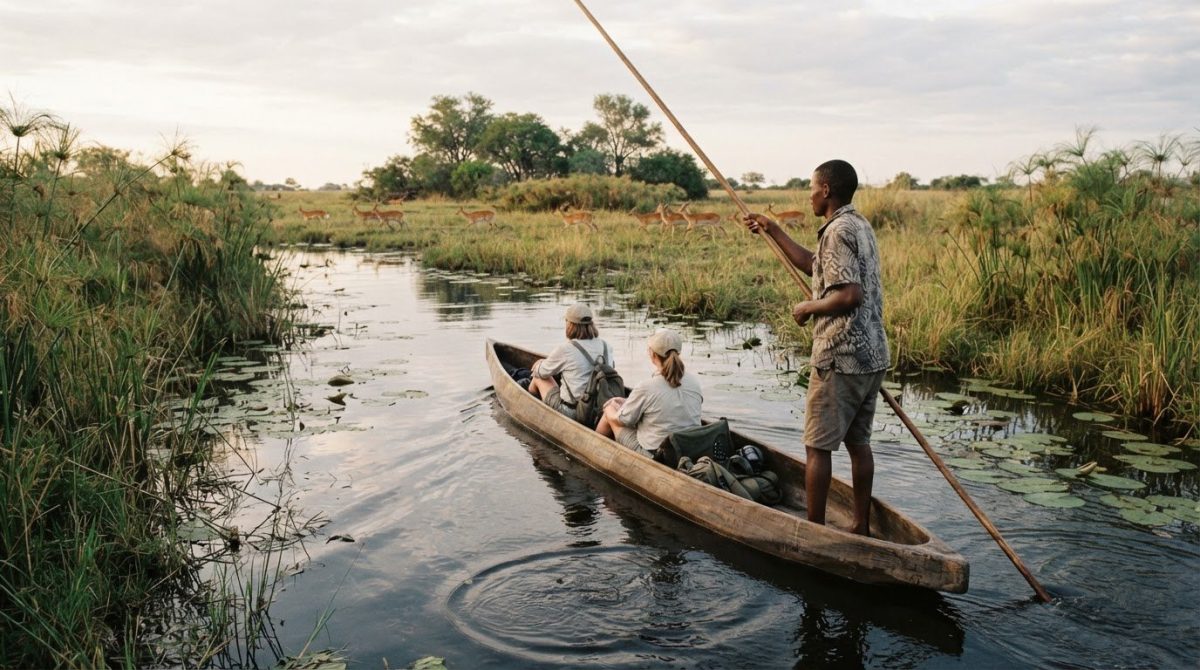
The most rewarding Okavango Delta safari itinerary is shaped around how you want to experience the wilderness, not squeezed into a standard route. A safari specialist can tailor your stay, activities and pace, with 3 to 6 nights in the Delta as a useful starting point.
A useful Okavango Delta safari itinerary is more than a list of camps and game drives. The right balance depends on your interests, preferred comfort and how the Delta fits into your wider journey. A safari specialist can help coordinate those choices, including time for mokoro trips and wildlife viewing by vehicle.
This guide explains how trip length and activities shape an itinerary, what to consider when combining the Delta with other destinations, and how a tailor-made plan can fit your travel style. Lights on Africa Destinations & Safaris creates personalized safari journeys that bring these details together.
Key Takeaways
- Match water-based outings and vehicle game drives to your interests and the Delta’s changing conditions.
- Choose a trip length and pace that leave room to settle into camp and enjoy each safari experience.
- Shape a wider journey around your travel dates, preferred comfort level, budget and the destinations you hope to include.
- Understand how seasonal floodwaters influence wildlife viewing across different parts of the Delta.
Safari activities including mokoro boating and driving
Build each day around the way you want to experience the Okavango Delta. A mokoro glides through shallow channels, bringing you close to reeds, birds and the quiet movement of the water. Vehicle game drives suit travelers keen to cover more ground and look for wildlife such as elephants. Depending on the camp and conditions, activities can also include speed boating and riding. Birdwatching can add a rewarding focus between drives.
Tell your safari specialist which experiences matter most. If you’re drawn to waterways, prioritize mokoro outings; if larger wildlife is your focus, allow more time for game drives. Seasonal water levels affect which water activities are possible at a particular camp, so plan around both your travel dates and interests. A balanced itinerary gives you time to enjoy water and land activities without rushing between destinations.
Mobile camping, lodge stays and luxury fly-in safaris describe different ways to organize a trip. Mobile camping moves camp between locations, while a lodge provides a base for activities nearby. A fly-in safari uses light aircraft to reach remote camps; flights from Maun to Delta camps typically take 15-45 minutes. These approaches can overlap, so the choice depends on your preferred comfort, pace and how you want to travel between camps.
Botswana’s park-entry arrangements, visa requirements and activity conditions are separate planning considerations. Visa requirements depend on your nationality, while safari activities depend on the destination and conditions at the time of travel. Account for these factors when shaping your route and activities, rather than assuming every camp or traveler has the same needs.
Maun can be a starting point for onward travel into the Okavango Delta. First, coordinate your arrival time with the transfer to camp, whether by road or light aircraft. Keep activities flexible on arrival day, especially if the onward journey takes up much of the day. Then plan game drives, mokoro trips and other outings across your nights in the Delta, according to your interests and camp location.
Sample safari itineraries and trip durations
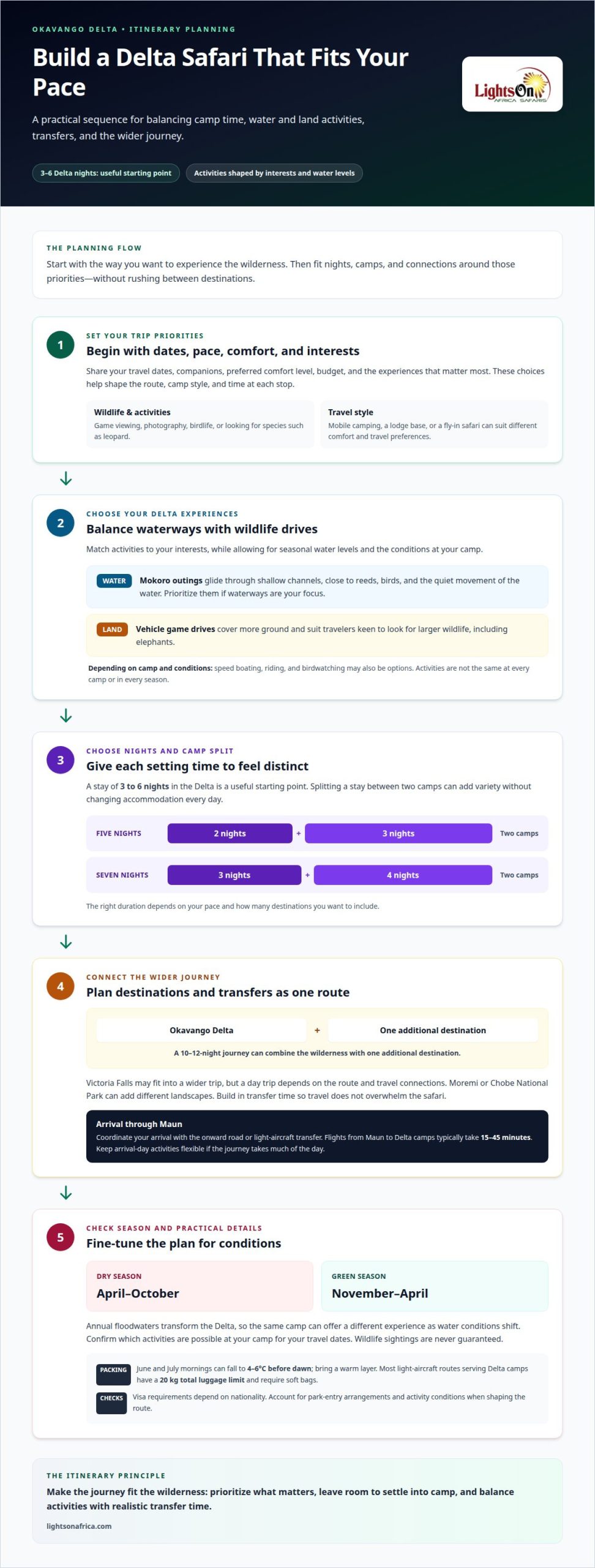
A useful itinerary balances time in the Delta with transfers and other destinations. For example, a 10-12-night journey can combine the wilderness with one additional destination without feeling rushed.
Safari Durations and Prices
Trip length shapes how many camps, activities and landscapes fit comfortably into the schedule. A five-night stay can be divided between two camps as 2+3 nights, while a seven-night stay can use a 3+4 split. This creates variety without changing accommodation every day.
The cost depends on the route, season, accommodation, transport and activities. Review the itinerary’s cost breakdown and confirm what it includes, such as accommodation, meals, transfers, park or game reserve fees, and safari activities. Check what is excluded, too. International flights and extra nights can affect the overall budget. The price is based on the individual itinerary and provided after a quote request.
Recommended Trip Length
Plan for 3 to 6 nights in the Okavango Delta to allow time for activities and a considered camp split. A five-night example could divide time between two settings, while a seven-night stay offers a 3+4-night balance. The right duration depends on your pace and how many destinations you want to include.
For a wider journey, 10-12 nights can accommodate the Delta and one additional destination. This may make space for Victoria Falls, but a day trip depends on the route and travel connections; plan it as part of the full itinerary rather than assuming it fits. A specialist can balance transfers and time in each place so travel doesn’t overwhelm the safari.
Season affects the experience. Botswana’s dry season runs from April through October, and the green season from November through April. Choose dates based on your priorities, whether that means a luxury camp, time in a national park or game reserve, or varied wildlife viewing, from elephants to giraffes. Share your preferred pace and destinations with a safari specialist, who can plan the nights and connections around them.
Tailor-made safari itineraries that include the Okavango Delta
A tailor-made journey starts with your travel dates, travel companions, preferred comfort and interests. A specialist can then plan how the Okavango Delta fits alongside other destinations, balancing time at camp with transfers and your preferred pace. If you’re drawn to waterways and birdlife, you might prioritize Delta experiences; if you want varied landscapes, you could add Moremi or Chobe National Park.
Share the wildlife and activities that matter most, whether game viewing, photography or looking for species such as leopard. These preferences help shape camp choices and daily plans, but sightings are never guaranteed in a wild, changing environment. Annual floodwaters transform the Delta, so the same camp can offer a different experience as water conditions shift. Season, budget and preferred accommodation also influence the route.
Connections deserve careful attention. A longer route through Savuti, the Okavango Delta and Moremi National Park can be arranged across days 13-17 of a wider itinerary, allowing the journey to link distinct wilderness areas. A specialist considers how each transfer fits with arrival times and planned activities, then adjusts the sequence to avoid spending your safari rushing between destinations. That’s especially helpful when the Delta is one part of a broader Africa adventure.
Pack for both the activity plan and the transfer style. June and July mornings in the Delta can fall to 4-6°C before dawn, so bring a warm layer alongside comfortable clothing for daytime outings. If your route includes light-aircraft transfers, most routes serving Delta camps have a 20 kg total luggage limit and require soft bags. A safari specialist can shape the packing guidance around your dates and itinerary.
The key is to build the route around your priorities, then account for season, connections and comfort. That leaves room for unhurried wildlife viewing and the kind of adventure you came to experience.
Which Okavango Delta areas and camps are best for wildlife viewing?
No single area is best for every safari. The Delta’s floodwaters continually reshape habitats and influence each camp’s experience. Match your wildlife interests and preferred activities to the landscape and season. In the drier winter months, large numbers of mammals move toward the Delta’s southeastern drylands, according to Botswana Tourism Organisation. If mammal viewing is a priority, this seasonal movement can help guide your camp choice.
For dry-season wild dog viewing, Jao and Chitabe are specific camp areas to consider. Operator trip records estimate around a 70-80% probability of dry-season wild dog sightings there. Treat this as an estimate, not a guarantee: wild animals move freely, and sightings vary. A specialist can use your dates and wildlife interests to decide whether these areas suit the rest of your route.
Consider the setting as well as individual species. Floodwaters affect where water-based activities are possible, while adjoining drylands offer a different environment for land-based game viewing. A camp’s location shapes both the scenery and the activities and habitats you can experience. If your trip is long enough to allow for transfers, consider splitting your stay between camps in contrasting environments.
Make the decision in three steps: identify priority wildlife, choose the season, then match camps to the experience you want. Travelers hoping to see wild dogs can consider Jao or Chitabe in the dry season; those interested in seasonal mammal movement can focus on southeastern drylands. A specialist can also fit camp locations into a route that includes Moremi or Chobe National Park, rather than treating each stop as an isolated choice.
Share your wildlife priorities and travel dates to shape a route around the Delta’s changing habitats. Plan a wildlife-focused safari itinerary that brings the areas and camp stays together.
Lights on Africa Destinations & Safaris: 14 Days Tanzania, Victoria Falls & Okavango Delta Explorer
Lights on Africa Destinations & Safaris offers the 14 Days Tanzania, Victoria Falls & Okavango Delta Explorer for travelers who want to combine these destinations in one journey. It provides a starting point for planning a broader safari, rather than treating the Okavango Delta as a stand-alone stop.
Turn to this itinerary if you’re interested in linking Tanzania’s wildlife experiences with Victoria Falls and Botswana’s Delta. A safari specialist can help shape the journey around your interests, preferred pace and comfort, then recommend how the Delta fits within the wider route. If your plans focus on a different style of trip, options also include the 8Days Tanzania Private Guided Family Safari and the 16 Days- The Great Migration Luxury Safari & Zanzibar Retreat.
Share the experiences you hope to enjoy and the destinations you’d like to connect. Contact Lights on Africa Destinations & Safaris to discuss your safari plans.
Begin shaping the journey that feels like yours
Your safari can be more than a sequence of camps. Let your preferred pace, wildlife interests and the places you hope to experience guide the decisions, so an Okavango Delta safari itinerary feels thoughtfully connected to you. If you’re also considering Tanzania, Lights on Africa Destinations & Safaris offers the 16 Days- The Great Migration Luxury Safari & Zanzibar Retreat, the 8-Day Luxury All Inclusive Tanzania Safari, and the 8Days Tanzania Private Guided Family Safari.
Talk through your ideas with a safari specialist to find a journey that fits your travel plans. Whether your trip centers on the Delta or includes other African destinations, start by sharing what matters most to you.
Contact Lights on Africa Destinations & Safaris to start planning, and look forward to an adventure shaped around your interests.
Frequently Asked Questions
How can a safari specialist plan your Okavango safari?
A safari specialist can shape an Okavango Delta safari itinerary around your travel dates, interests, preferred comfort and budget. They can coordinate camp stays, activities and connections with other destinations, then arrange the order of travel to suit your pace. Share whether you prioritize birdwatching, water-based outings or varied landscapes so the plan reflects what you most want from the journey.
Is malaria a serious concern in the Delta?
Malaria is a health consideration when traveling in the Delta, and the level of risk can depend on your itinerary and travel dates. Prevention advice also depends on your personal health. Before departure, discuss your plans with a travel-health clinician, who can advise you using current guidance and your circumstances. Don’t rely on general safari advice to make decisions about medication or prevention.
What wildlife are you actually going to see?
Wildlife sightings vary, but Delta habitats support elephants, lions, cheetahs, wild dogs and abundant birdlife. The area has over 500 bird species, offering plenty to notice even between larger mammal sightings. Your experience depends on animal movements, habitat and the season, so no itinerary can promise a particular encounter. Ask your guide to help you look for tracks and other signs, too.
What other parks and regions are recommended in Botswana for 2026/27?
Depending on the landscapes and wildlife experiences you want, consider combining the Delta with Moremi Game Reserve, Chobe National Park or Savuti. Moremi extends your trip through another part of the Delta region, while Chobe and Savuti add different settings. A safari specialist can help choose a combination that fits your available time without letting transfers dominate the trip.
What’s the one thing first-time Delta visitors consistently underestimate?
It’s easy to underestimate the time and coordination involved in moving between camps. A travel day may leave less time for activities than a full day at camp, so the sequence matters as much as the number of nights. Ask your specialist to account for arrival and transfer logistics when scheduling activities, rather than expecting every day to offer the same amount of safari time.
What is the best time of year for an Okavango Delta safari?
June to October is generally considered the best overall time to visit. The dry season runs from April through October, and rising floodwaters make June through August a distinctive time for a Delta safari. The green season runs from November through April, offering a different setting and experience. Choose dates according to your priorities, including preferred activities, weather and the pace of your wider trip.
One thought on “Okavango Delta Safari Itineraries and Travel Planning”