
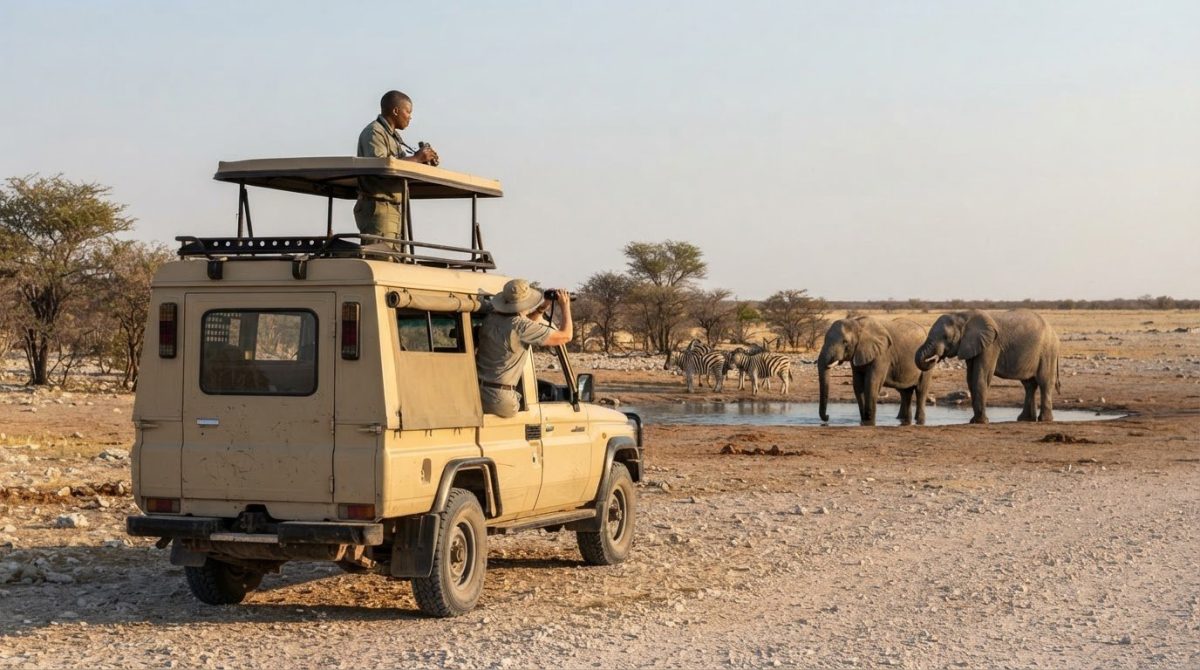
Wildlife viewing conditions vary through the year, so the dry season is not the only time to consider a Namibia safari. Namibia safari tours can be planned around what matters most to you: watching wildlife near water in March and April, or seeing the desert transformed by sporadic rains from January through March.
It’s natural to want a clear answer on when to go on Namibia safari tours. For classic wildlife viewing, the dry season is a strong choice; the greener months offer a different landscape, and March and April can also be rewarding as animals gather around remaining water. This guide explains what to expect in each season, how Etosha and Sossusvlei shape a safari, and which wildlife experiences and desert stays may suit your journey.
Key Takeaways
- Match your travel season to the experience you value most, from wildlife viewing to greener desert scenery.
- Understand how camping and lodge stays can shape the comfort, pace, and feel of your safari.
- See why Sossusvlei’s dunes call for a different kind of desert experience than Namibia’s wildlife areas.
- Learn how Etosha can anchor a safari itinerary and what to consider when combining it with other landscapes.
What is the wildlife viewing like in Namibia?
Namibia’s wildlife experiences range from Etosha’s waterholes to desert-adapted animals and the Skeleton Coast’s seal colony. The best season depends on your itinerary and the landscapes you most want to explore.
Wildlife Across Parks and Deserts
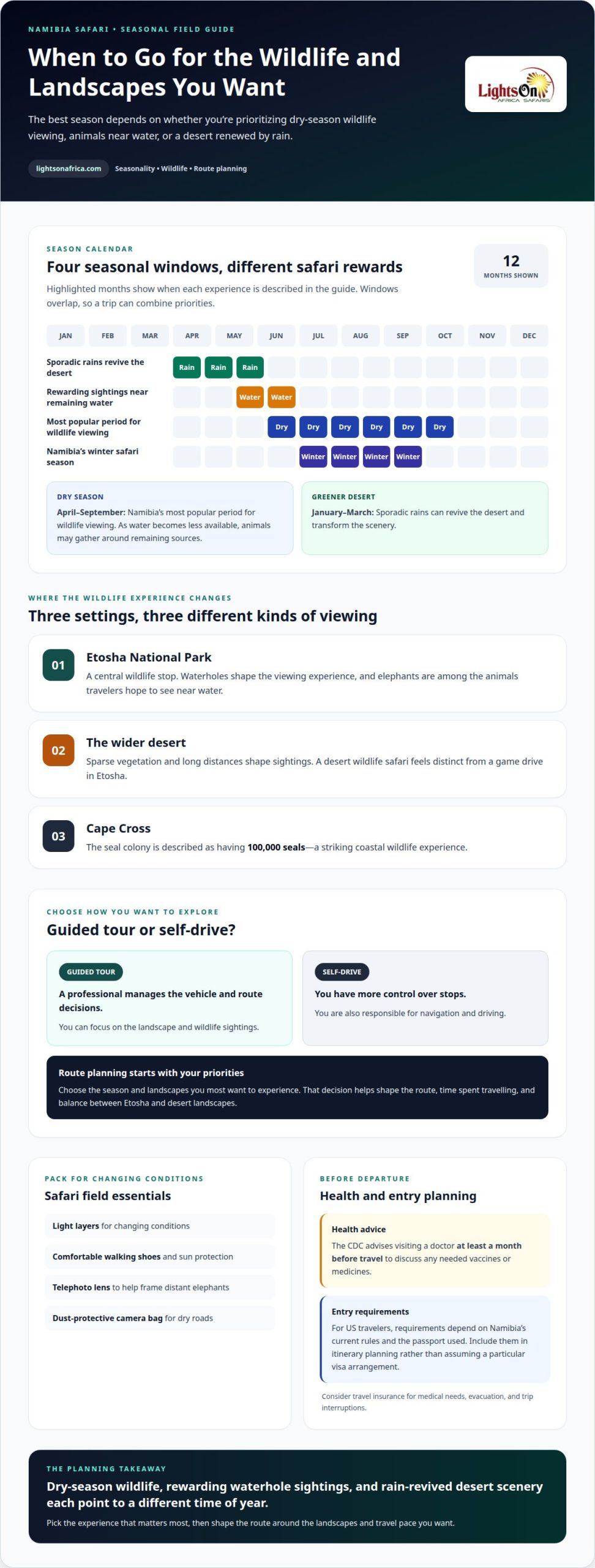
Etosha National Park is a central stop for wildlife viewing, with elephants among the animals travelers hope to see near waterholes. In the wider desert, sparse vegetation and long distances shape sightings, making a Namibia desert wildlife safari distinct from a game drive in Etosha. At Cape Cross, the seal colony is described as having 100,000 seals.
A guided tour and a self-drive safari differ in who handles the route and wildlife viewing. With a guide, a professional manages the vehicle and route decisions, leaving you free to focus on the landscape and sightings. Self-driving gives you more control over stops, but also makes you responsible for navigation and driving.
Pack light layers for changing conditions, comfortable walking shoes, sun protection, and camera gear suited to wildlife and wide desert views. A telephoto lens can help frame distant elephants, while a dust-protective camera bag is useful on dry roads. The Centers for Disease Control and Prevention (CDC) advises visiting a doctor at least a month before travel to discuss any needed vaccines or medicines. Consider travel insurance for medical needs, evacuation, and trip interruptions.
Seasonal Wildlife Viewing
The dry season, from April through September, is Namibia’s most popular period for wildlife viewing. As water becomes less available across the landscape, animals may gather around remaining sources. March and April can also be rewarding for sightings near water, while sporadic rains from January through March revive the desert. Namibia’s winter safari season runs from May through August.
For US travelers, visa and entry requirements depend on Namibia’s current rules and the passport used. Include entry requirements in your itinerary planning before departure rather than assuming a particular visa arrangement applies.
Choose a season based on your priorities: dry-season wildlife viewing, greener scenery, or a mix of both. That decision helps shape the route, time spent travelling, and balance between Etosha and desert landscapes.
What type of accommodations can I expect?
Accommodation shapes the rhythm of a Namibia tour, from quiet evenings beneath open skies to a comfortable base after a long drive. Camping and lodges offer different ways to experience the country, and a well-planned itinerary can balance both.
Camping brings you closer to the landscape. Depending on the camp setup, you may sleep in a tent and share facilities, or stay at a site with more established amenities. Ask how the camp fits the route, which facilities are available, and whether meals are arranged there. These details matter after a day travelling between remote places.
Lodges offer a more settled stay, with rooms and common areas for resting between outings. Their settings vary: some are near a reserve, while others provide a base for exploring southern Namibia. Consider location first, then compare room style, meal arrangements, and the time needed to reach the day’s activities.
For wildlife-focused travel, accommodation location can shape each day. Staying near a reserve may make early departures easier, while a desert stop can break up a longer journey. Lodges and camps also offer different evening experiences, from gathering in a shared camp area to unwinding indoors.
Comfort is personal. Travelers who value a closer connection to the outdoors may prefer camping; those seeking private rooms and a more structured retreat may prefer lodges. Families or travelers with varied preferences can combine accommodation types if the itinerary allows a practical transition between them.
Before confirming a route, a safari planner can match the accommodation style to driving distances, wildlife priorities, and preferred comfort. This approach keeps each stay purposeful rather than treating every night as interchangeable. For a broader African itinerary, explore tailored African journey planning as you consider the balance that suits your travel style.
Sossusvlei dunes and desert landscapes
Sossusvlei brings Namibia’s desert scenery into focus with towering dunes, open gravel plains, and striking color contrasts. Nearby Deadvlei, a clay pan where dark, preserved trees stand against pale ground and orange sand, offers a distinctive stop. Together, these places create an adventure shaped by light, distance, and the changing desert horizon.
Plan this part of the itinerary around the experience you want, rather than treating each destination as a brief photo stop. A guided visit can leave time for dune views, a walk across soft sand, and quiet moments to notice the landscape’s subtle textures. Early or late light can bring out stronger shadows and color contrasts, so a tour planner can time the day around the route and planned activities.
Comfort matters in the desert. Walking on sand takes more effort than viewing dunes from a vehicle, so a balanced schedule should leave room to rest between outings. Lightweight clothing, sun protection, sturdy footwear, and camera equipment suited to wide scenes can help you prepare. Protect camera gear from blowing sand, especially when moving between the vehicle and open dunes.
Sossusvlei pairs naturally with other southern destinations, but each stop changes the feel of the journey. Swakopmund offers a coastal contrast to the inland desert, while Damaraland adds another landscape to consider on a longer route. A thoughtfully paced Namibia safari tour can connect these places without making every day feel like a transfer. The key is travel time: allow meaningful time at each destination rather than simply stringing places together.
For travelers drawn to a memorable desert experience, Sossusvlei rewards flexibility in the schedule. Build in time for changing light, choose activities that suit your pace, and let the dunes set the rhythm of this part of the adventure.
Etosha National Park
Etosha National Park gives wildlife viewing a distinct rhythm, with routes connecting open landscapes and waterholes where animals may gather. Elephants, giraffes, zebras, lions, and rhinos are among the wildlife visitors hope to see. Cheetahs also live in Namibia, but sightings depend on location and conditions. Allow time for patient observation rather than expecting a particular encounter.
Waterholes offer useful pauses during a game drive. A guide can help identify tracks, explain animal behavior, and decide where to spend more time observing. At each stop, scan the surrounding landscape as well as the water’s edge: animals may approach quietly or remain farther away. An unhurried approach makes the drive more rewarding than treating every stop as a quick photo opportunity.
Route planning matters. A sample Namibia safari itinerary schedules Etosha for days 8-10, giving the park a substantial place in the journey. The exact balance depends on how the park fits with other destinations and travel time. An operator can coordinate the order of overnight stops and game drives, while nearby accommodations help shape the daily pace.
For travelers arriving through Windhoek, the journey north to Etosha becomes part of the itinerary. A professional planner can organize the transition, schedule time for wildlife viewing, and fit the park into a trip that also includes desert destinations. Ask how game-drive timing is handled, how much time is planned inside the national park, and where accommodation sits in relation to the route. These details clarify what each day involves.
Etosha suits travelers who want wildlife-focused days, while Sossusvlei offers a contrasting desert experience. Combining them means planning for varied landscapes and travel between them. If a guided safari itinerary is the right fit for your plans, explore guided safari planning as you shape your journey.
Lights on Africa Destinations & Safaris: 9 Days Tanzania Agriculture Tour and Safaris
Lights on Africa Destinations & Safaris offers the 9 Days Tanzania Agriculture Tour and Safaris for travelers interested in Tanzania’s agricultural landscapes alongside safari experiences. This itinerary is in Tanzania, not Namibia, so it suits a different journey from the desert and wildlife route described above.
If wildlife is your priority and you’re open to exploring East Africa, consider the Best Tanzania & Kenya Safari Tours for Wildlife Lovers. The right option depends on the countries and experiences you want to include. Share your interests and preferred destinations with Lights on Africa Destinations & Safaris to explore a suitable safari itinerary.
For a guided conversation about your plans, contact Lights on Africa Destinations & Safaris.
Choose the Journey That Fits Your Next Adventure
When planning Namibia safari tours, start with the experience you want to take home: a slower wilderness escape, a wildlife-focused journey, or a route balancing adventure and comfort. Let those priorities guide the pace and the support you want from a safari planner.
If you’re also considering East Africa, Lights on Africa Destinations & Safaris offers journeys such as the 16 Days- The Great Migration Luxury Safari & Zanzibar Retreat, the 8-Day Luxury All Inclusive Tanzania Safari, and the 8Days Tanzania Private Guided Family Safari. These are Tanzania-focused options, with the Kenya and Tanzania safari offering providing another regional choice. Consider which destination best matches your interests before deciding on your next trip.
When you’re ready to discuss a journey, contact Lights on Africa Destinations & Safaris. Bring your preferred landscapes, travel pace, and accommodation style to the conversation, then take the next step toward an adventure that feels right for you.
Frequently Asked Questions
When is the best time to visit Namibia?
April through September is the most popular period for wildlife viewing, while sporadic rain from January through March greens the desert. March and April can also be rewarding, as animals gather around remaining water. Choose dates according to your priorities: drier-season wildlife viewing, greener scenery, or a transition between seasons. Namibia’s winter safari season runs from May through August.
How do I select a reliable Namibian tour operator?
Choose an operator whose itinerary clearly explains the route, planned activities, accommodation style, and travel between destinations. Ask how Etosha and Sossusvlei fit into the schedule and whether guided wildlife viewing is included. Clear answers help you understand the trip’s pace and focus before committing, especially when your plans combine remote landscapes.
How safe is Namibia for tourists?
Safety depends on your route, activities, and travel conditions, so consider each part of the itinerary rather than relying on a blanket description. Remote desert travel, wildlife viewing, and time in towns involve different practical considerations. A guided itinerary can outline transport arrangements and planned activities in advance. Keep personal belongings secure, follow your guide’s instructions around wildlife, and allow flexibility for changing conditions.
What Are the Best National Parks in Namibia?
Etosha National Park is a leading choice for travelers focused on wildlife viewing, with game drives and waterholes shaping the experience. For a broader nature itinerary, pair Etosha with landscapes beyond national parks, such as Sossusvlei’s dunes or the Skeleton Coast. Cape Cross adds a distinctive coastal wildlife stop, with its seal colony described as having 100,000 seals.
What Are the Safari Vehicles Like?
Safari vehicles are chosen according to the route, group arrangements, and planned activities, so there is no single setup for every Namibia itinerary. Ask how the vehicle suits game viewing, luggage, and longer stretches between destinations. A route connecting Etosha with Sossusvlei, for example, has different travel demands from a focused park stay. The operator can explain the vehicle arrangement for your planned journey.
What are the major attractions in Namibia?
Major highlights include Etosha National Park for wildlife, Sossusvlei for dunes, and the Skeleton Coast for dramatic coastal scenery. Cape Cross offers a memorable seal-colony visit, while Swakopmund makes a coastal stop between desert destinations. Damaraland adds another landscape to consider. Choose attractions based on your interests, then shape the itinerary to leave time to experience each place.
One thought on “Namibia safari tours for dunes, wildlife and desert stays”