
You can’t climb Kilimanjaro without a guide: Tanzania’s government and Kilimanjaro National Park have required trekkers to be accompanied by a registered and licensed guide since 1991. Strong Kilimanjaro trek preparation also means building hiking stamina, finding a steady pace, and allowing time to acclimatize on the mountain, which rises to 5,895 meters.
It’s natural to wonder whether you’re fit enough for the climb or whether a treadmill and stairs can help you prepare for a Kilimanjaro trek. Training builds endurance, but the climb also requires steady movement over several days and time to adapt as the air gets thinner.
This guide covers practical training alternatives, a sustainable hiking pace, and the role of acclimatization. You’ll also learn how Kilimanjaro’s main routes differ in distance and duration, helping you understand the journey and choose a trek with enough time to prepare for the summit.
Key Takeaways
- Build hiking endurance with treadmill, stair, and cardio sessions if local trails aren’t accessible; increase effort gradually.
- Plan for a patient walking pace and learn how pack weight and comfortable footwear affect long days on the mountain.
- Understand how acclimatization hikes and time at altitude fit into a safer, more considered summit plan.
- Compare route lengths and durations to choose a trek that allows enough time for the climb and adjustment to altitude.
How a Kilimanjaro operator can adapt your training when you cannot train on trails
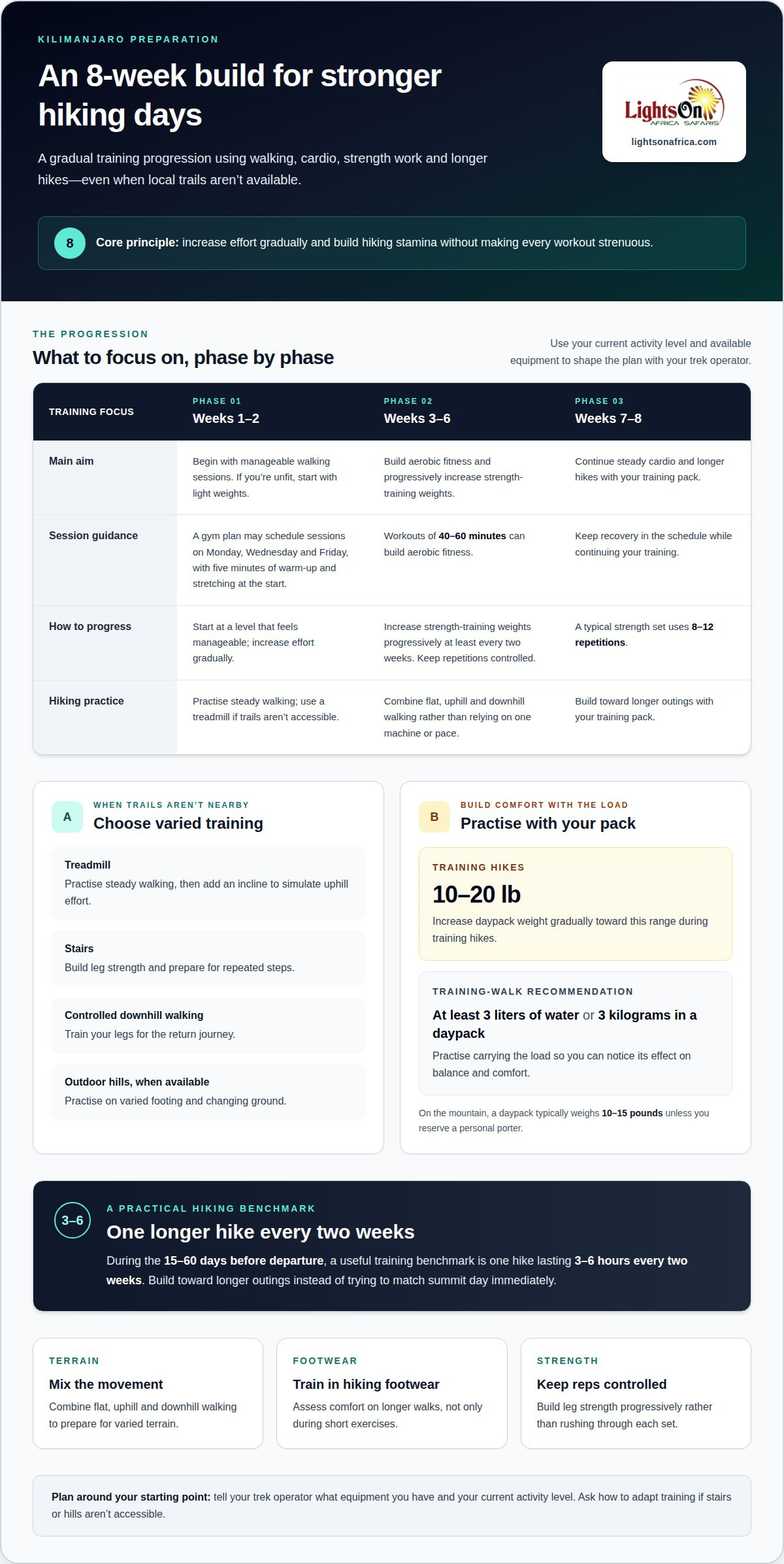
No nearby trail? A treadmill, stair machine, and strength sessions can still build fitness for hiking in Tanzania. An eight-week plan gives you time to increase effort gradually and prepare your legs for long days, uneven terrain, and the summit challenge. Share your available equipment and current activity level with your trek operator so your plan reflects your starting point.
Use a treadmill to practise steady walking, then add an incline to simulate uphill effort. Stair climbing builds leg strength and prepares you for repeated steps, while controlled downhill walking trains your legs for the return journey. If you have access to outdoor hills, include them to practise on varied footing. Combine flat, uphill, and downhill walking sessions instead of relying on a single machine or pace.
Build up with a daypack, increasing its weight gradually toward 10–20 pounds on training hikes. Practice carrying at least three liters of water or three kilograms in a daypack, as recommended for training walks. This helps you get used to the load and notice how it affects your balance and comfort. Uneven paths and stairs also help prepare your feet and legs for changing ground underfoot.
- Weeks 1–2: Start with light weights if you’re unfit, plus manageable walking sessions. A gym plan may schedule sessions on Monday, Wednesday, and Friday, with five minutes of warm-up and stretching at the start.
- Weeks 3–6: Build aerobic fitness with 40–60-minute workouts, and increase strength-training weights progressively at least every two weeks. Keep repetitions controlled, rather than rushing through each set.
- Weeks 7–8: Continue steady cardio and longer hikes with your training pack, while keeping recovery in the schedule. A typical strength set uses 8 to 12 repetitions.
Ask your operator how to adapt your training if stairs or hills aren’t accessible. Effective Kilimanjaro trek preparation builds hiking stamina and leg strength gradually, without making every workout strenuous.
2. How fast is the hiking pace on Kilimanjaro?
Kilimanjaro days are built around steady walking, not racing uphill. Trekkers may hike six to seven hours a day across multiple days, while a sample Western Approach itinerary averages five miles and five hours of hiking daily, with 2,100 feet of ascent. These figures show why endurance matters more than speed: the mountain asks you to keep moving comfortably across changing terrain.
Expect summit day to feel different. The trek from Barafu Camp to Uhuru Peak covers three miles and averages 8–10 hours of hiking, gaining 4,265 feet. Short, regular steps help you manage the climb and preserve energy. Your guide sets a suitable pace for the group and conditions, including weather and how trekkers are feeling.
Practise with the load you’ll carry. On the mountain, a daypack typically weighs 10–15 pounds unless you reserve a personal porter. Walking practice helps you get comfortable with that weight, while trekking poles can support balance and rhythm on uneven ground. Wear hiking footwear during training so you can assess comfort on longer walks, not just short exercises.
Build toward longer outings rather than trying to match summit day immediately. A useful training benchmark is one hike lasting 3–6 hours every two weeks during the 15–60 days before departure. Discuss your practice with your trek operator, including hills, pack weight, and how your footwear feels after several hours. Those details help shape preparation around your current fitness and the route’s demands.
Vaccinations and medicines depend on your health and travel plans, so discuss them with a travel-health clinician. Consider travel insurance that covers the activities and circumstances relevant to your trip. Insurance is separate from a trekking package.
3. Kilimanjaro altitude and acclimatization
Mount Kilimanjaro rises to 5,895 meters, where air pressure is roughly 46% of sea-level pressure. Acute altitude sickness can affect people above 2,500 meters, so physical fitness alone doesn’t prevent altitude-related illness. A slower ascent with time to adjust helps your body respond to thinner air. Your route’s schedule matters because the time available for acclimatization differs between itineraries.
Some itineraries include acclimatization hikes above camp. One approach climbs a few hundred feet, stays there for 30 to 45 minutes, then descends to sleep. This “climb higher, sleep lower” pattern gives you time at a higher elevation without spending the night there. Follow your guides’ pace and itinerary rather than adding extra climbing to prove your fitness.
Make reporting symptoms part of your daily routine. Tell your guides promptly about new or worsening symptoms rather than dismissing them as ordinary tiredness or carrying on silently. They can assess your condition and respond within the trek plan. Report pain early, too: changing how you walk can make an existing problem harder to manage on mountain terrain.
Mental preparation means accepting that progress may feel slower as altitude increases. Break the day into manageable stretches, focus on steady breathing, and take planned pauses instead of comparing yourself with another climber. Keep snacks accessible and drink regularly so basic needs don’t distract you during a demanding ascent. Rest at camp is part of the climb, not lost time.
Before departure, discuss the route’s acclimatization schedule and how guides respond to changes in a trekker’s condition. Altitude affects everyone differently on Mount Kilimanjaro, so communicate clearly and follow the group’s safety decisions. Staying calm and observant can help you notice changes early and make sound decisions as you climb.
4. Kilimanjaro routes and trek durations
Kilimanjaro, Africa’s highest mountain, has routes that differ in distance and time. Most summit treks take 6 to 9 days, depending on the route and acclimatization. That difference matters: a longer itinerary gives more time on the mountain, while a shorter one compresses the ascent into fewer days.
The best time of year depends on your travel dates and the weather conditions you prefer. Choose when to go alongside your route, since both shape your Kilimanjaro climb.
- Machame: 61 kilometers, typically 6 to 7 days.
- Marangu: 70 kilometers, typically 5 to 6 days.
- Lemosho: 67 kilometers, typically 7 to 8 days.
- Rongai: 74 kilometers, typically 6 to 7 days.
- Northern Circuit: 88 kilometers, typically 8 to 9 days.
- Shira: 58 kilometers, typically 6 to 8 days; Umbwe: 48 kilometers, typically 6 to 7 days.
For more time on the ascent, the Northern Circuit has the longest listed itinerary, at 8 to 9 days. It’s a strong option to consider when acclimatization time is a priority, though a route’s duration alone doesn’t determine how each trekker adjusts. Compare both the days and distance before choosing your adventure.
The total trek price depends on route duration, park fees, guide and crew arrangements, and tips; the price is provided after a quote request. These factors help explain why itineraries can differ in overall cost.
Choose a route that suits your schedule and the time you want for trekking. Explore Kilimanjaro trekking options and plan your approach to reaching the summit.
Lights on Africa Destinations & Safaris: Mount Kilimanjaro Trekking Packages
Lights on Africa Destinations & Safaris offers Mount Kilimanjaro Trekking Packages for travelers planning a guided ascent. When you’re ready, match your available time, preferred route, and preparation to a trek in Tanzania. The route comparison above can help you decide whether a shorter itinerary or extra days for acclimatization better suit your plans.
As you plan, consider the whole journey: training for long walking days, carrying your daypack comfortably, and allowing time for the climb. If you’d like to extend your Tanzania travels after the mountain, safari options include an 8-Day Luxury All Inclusive Tanzania Safari and an 8Days Tanzania Private Guided Family Safari.
For help planning your Kilimanjaro trek, contact Lights on Africa Destinations & Safaris.
Set your Kilimanjaro plans in motion
Think about the kind of experience you want beyond the climb. A thoughtful itinerary can make the trek the centerpiece of your Tanzania visit while leaving room for wildlife or time along the coast. Consider what you’d like to remember beyond reaching the summit, then shape your travel plans around that vision.
Lights on Africa Destinations & Safaris offers Mount Kilimanjaro Trekking Packages for the climb, alongside options for a broader trip. These include the 8-Day Luxury All Inclusive Tanzania Safari, the 8Days Tanzania Private Guided Family Safari, and 16 Days- The Great Migration Luxury Safari & Zanzibar Retreat. Each offers a different way to continue exploring after the mountain.
When you’re ready to discuss your plans, contact Lights on Africa Destinations & Safaris. Let your Kilimanjaro trek preparation lead into an adventure shaped around what matters most to you. Take the next step with confidence and look forward to the journey ahead.
Frequently Asked Questions
Can You Climb Kilimanjaro Without a Guide?
No. Trekkers on Mount Kilimanjaro must be accompanied by a registered and licensed guide, a requirement in place since 1991. A guided climb also gives you a local professional to lead the mountain journey and coordinate the trek. Plan for a guided route rather than an independent ascent, and consider how the itinerary, pace, and support fit your travel plans.
How can a Kilimanjaro trek operator help you prepare to reach the summit?
A Kilimanjaro operator can arrange a guided trekking package and coordinate key parts of the mountain experience. Lights on Africa Destinations & Safaris’ trekking expeditions include experienced local mountain guides, porters, comprehensive safety equipment, and camp management. Share your travel dates, route preferences, and current hiking experience to discuss how the planned climb fits your needs.
How fast is the hiking pace on Kilimanjaro?
The pace is generally slow and steady, helping you conserve energy during the multi-day ascent. Rather than trying to keep up with the fastest walker, take consistent steps and follow your guide’s direction. Steep sections, changing terrain, and how you feel can all affect your rhythm. A measured approach keeps your attention on the day’s walk instead of rushing toward camp.
How many hours a day do you hike on Kilimanjaro?
Plan for about six to seven hours of hiking on a typical trek day, with summit day taking longer. One estimate puts the summit ascent at roughly eight hours, followed by six to seven hours of descent. These are demanding stretches, so pace and rest periods matter. Ask how your chosen route distributes walking time across the itinerary.
How much weight do I carry on Kilimanjaro?
Trekkers typically carry a daypack weighing 10–15 pounds on the mountain unless they reserve a personal porter. That pack holds personal items you need during the day, while porters support the trek with other luggage. Practising with a pack helps you get used to its feel and fit. Keep the load manageable and consider how it affects your balance on uneven ground.
How can your Kilimanjaro trek operator advise you on training, and when should you start?
Start focused training 60–90 days before departure, and discuss your current activity level, available training options, and intended route with your operator. An eight-week preparation plan is another suggested timeframe. These details help frame a realistic training conversation around your schedule and the trek ahead. Include both walking endurance and strength work, and build up gradually rather than making a sudden jump in effort.
One thought on “Prepare for Kilimanjaro with training, pace and altitude tips”