
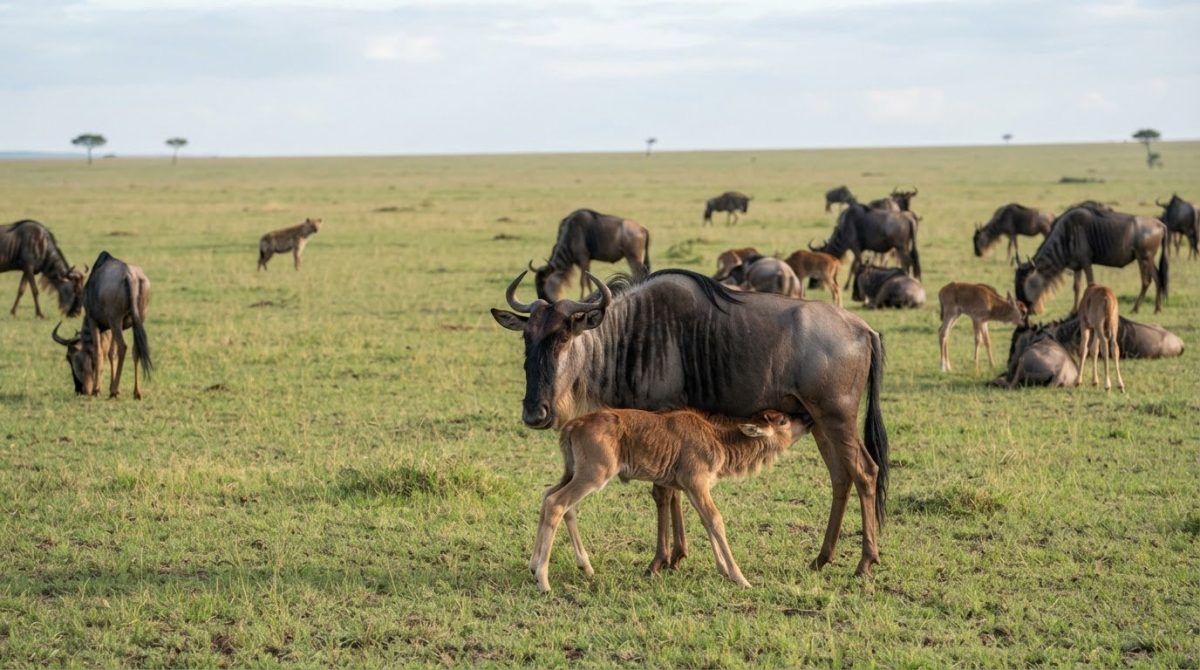
The best month for a Ndutu calving-season safari is February, especially if you want to see newborn wildebeest and predator activity around the herds. Calving peaks in early to mid-February, within a season that runs from late January through mid-March. This is a different wildlife experience from northern Serengeti river crossings, which mostly take place from July to October.
It makes sense to want one clear answer when planning around the Great Migration, but the right month depends on the wildlife spectacle you want to experience. During calving season, herds gather on Ndutu’s short-grass plains; northern Serengeti river crossings mostly take place from July to October. Here, you’ll learn when calves arrive, how the landscape and predators influence sightings, and how Ndutu compares with the northern crossings, so you can plan your Tanzania safari around the encounter that matters most to you.
Key Takeaways
- Choose your travel window around whether witnessing newborn calves or dramatic river crossings matters more to you.
- Understand how the arrival of young wildebeest draws predator activity into the calving grounds.
- Learn why Ndutu’s short-grass plains and surrounding habitats influence where herds and wildlife gather.
- Use the seasonal differences between Ndutu and the northern Serengeti to shape a safari route around your priorities.
1. What Is the Ndutu Calving Season?
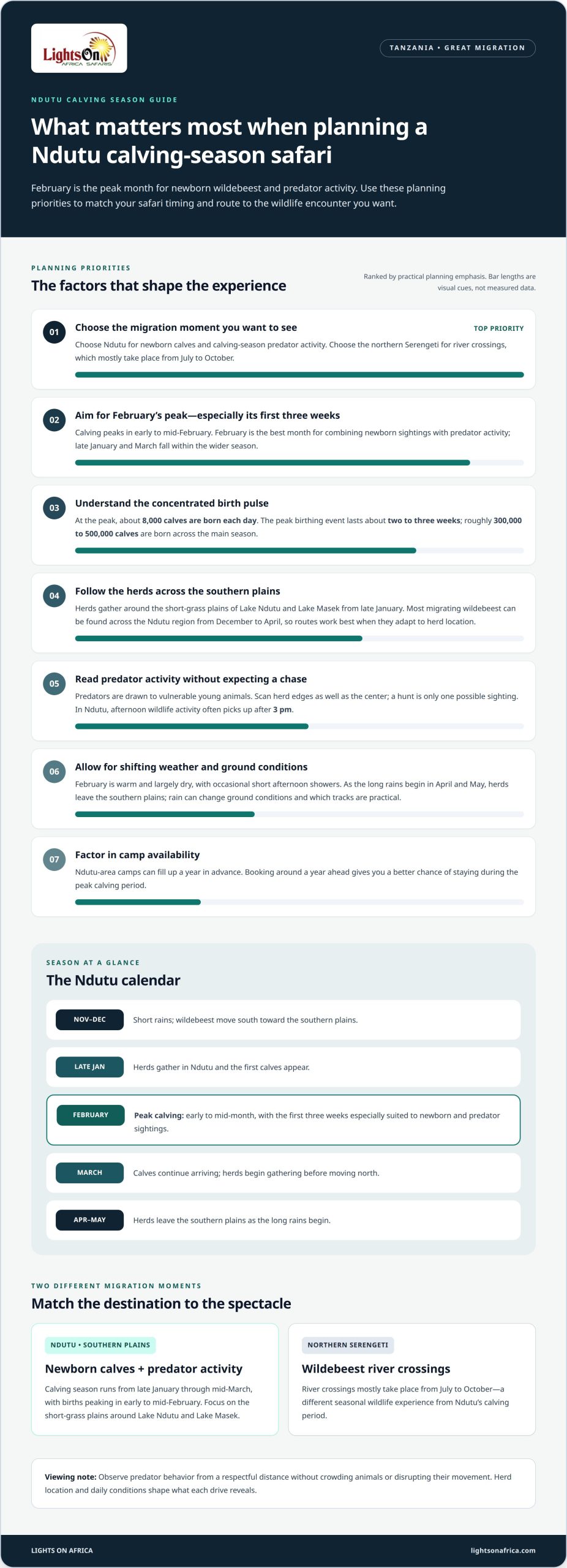
February is the best month for a Ndutu calving-season safari, especially during its first three weeks. The main calving period runs from late January through mid-March, with peak births in early to mid-February. January marks the season’s beginning, and wildebeest calves continue arriving into March.
The timing follows the Great Migration and the changing landscapes of the southern Serengeti. After the short rains in November and December, wildebeest move south toward the short-grass plains around Lake Ndutu and Lake Masek. Herds gather there from late January, when the first calves also appear. Most migrating wildebeest can be found across the Ndutu region from December to April.
Calving comes in a concentrated pulse rather than at one precise moment. The peak birthing event lasts about two to three weeks, and about 8,000 wildebeest calves are born each day on the Ndutu and southern Serengeti plains at its height. Across the main season, roughly 300,000 to 500,000 calves are born on these plains. Newborns can stand within minutes, helping them stay close to the herd.
February is warm and largely dry, with occasional short afternoon showers. In March, herds begin gathering before moving north; they leave the southern plains in April and May as the long rains begin. These seasonal shifts influence where wildlife gathers and how game-drive routes follow the migration. The open grasslands offer a striking setting for observing the cycle responsibly, with wildlife conservation and respectful viewing in mind.
For a February trip, plan well ahead: camps in the Ndutu area can fill up a year in advance. Booking around a year ahead gives you a better chance of staying during the peak calving period. If your dates are flexible, late January or March can still put you in the region during the wider season, although February is the peak.
2. Predator activity during calving season
February is the strongest month for pairing newborn wildebeest sightings with predator activity in Ndutu. The first three weeks are especially well suited to seeing both. Calving brings vulnerable young animals into the herds, drawing predators to the same plains. This creates opportunities to observe natural interactions, although a hunt is only one possible sighting.
Predator sightings depend on where herds gather and how they move across the open ground. Scan the edges of a herd as well as its center, since predators may be easier to spot away from the densest cluster. A guide can interpret animal movement, alertness, and spacing to explain what may be unfolding. These details can make a game drive rewarding even when no chase occurs.
January can bring the first calves and early-season predator encounters, while activity builds around the February calving peak. The wider Tanzania ecosystem is constantly changing, so sightings differ with herd location and daily conditions. In Ndutu, afternoon wildlife activity often picks up after 3 pm. That timing can add a useful focus to game drives, but the landscape and animal movement still shape each encounter.
Observe predator behavior without crowding the animals or disrupting their movement. Respectful distance supports wildlife conservation and gives the scene room to unfold naturally. The Ndutu plains form part of a broader landscape linked with the Ngorongoro Conservation Area and the Serengeti ecosystem, where herds and predators move through changing habitats. For travelers shaping a route around these encounters, a Tanzania wildlife safari itinerary can make calving-season viewing part of a wider journey.
3. Ndutu short-grass plains and habitats
For calving-season wildlife viewing, focus on the short-grass plains around Lake Ndutu and Lake Masek. Migrating wildebeest gather in these southern landscapes, and the herds’ location helps shape daily game-drive routes. Open grassland offers broad views across the plains, making it easier to scan for animals. Herds move around the area, so sightings depend on where they gather and settle.
Seasonal rain shapes the habitat and the timing of the herds’ movement. After the short rains in November and December, wildebeest travel south toward the plains around both lakes. Their arrival follows fresh grazing, and the short grass provides the setting for calving-season wildlife viewing. The landscape changes as the season progresses: in March, herds begin gathering before moving north as the southern plains dry.
A Tanzania safari in Ndutu benefits from a route that follows the herds rather than treating one viewpoint as the whole region. The southern plains around Lake Ndutu and Lake Masek are key areas, while nearby landscapes offer a different perspective as herds shift. A skilled guide can adapt the day’s drive to animal movement and ground conditions, allowing time for patient observation instead of rushing between distant areas.
Rain affects travel conditions differently across the season. February is warm and largely dry, although short afternoon showers sometimes fall. The long rains begin as herds leave the southern plains in April and May. During rainy periods, changing ground conditions can slow driving and affect which tracks are practical. Allow flexibility in the day’s route, since recent rain and herd location both influence access. Let local conditions shape the drive, while keeping the short-grass plains and surrounding lakes central to wildlife viewing.
4. Ndutu calving season versus northern Serengeti river crossings
Choose Ndutu for calving-season wildlife or the northern Serengeti for river crossings. The seasons differ: wildebeest calving peaks around February, while crossings in the northern Serengeti mostly take place from July to October. January to March often suits routes through Ndutu and Tanzania’s southern plains, where calving draws predator activity. The best destination depends on which migration moment you want to center your safari around.
Ndutu brings herds together on the southern plains during the early months of the year. By March, as the plains dry, herds begin consolidating and gradually moving north. This offers a changing picture of the migration, from calving activity to preparations for travel. A route focused on Ndutu suits travelers drawn to newborn wildebeest and the wildlife activity around the herds.
The northern Serengeti offers a different seasonal focus. After calving, herds reach the Grumeti in June and the Mara River from July; northern crossings mostly occur between July and October. A crossing-focused trip therefore calls for a different itinerary and travel window from a February visit to Ndutu. Plan your safari route for the season, rather than treating the two destinations as interchangeable.
For a single seasonal priority, match your dates to the wildlife event: choose Ndutu around February for calving, or the northern Serengeti from July to October for river crossings. A longer route can bring different migration landscapes into one journey, but each area’s timing should shape how the itinerary is arranged. To plan around the spectacle you most want to see, shape your Serengeti migration safari around the right season and destination.
Lights on Africa Destinations & Safaris: Best Tanzania & Kenya Safari Tours for Wildlife Lovers
Lights on Africa Destinations & Safaris helps you shape a wildlife journey around the season and migration experience you want. If Ndutu’s calving season is your priority, consider how it fits into a broader Tanzania safari and whether you’d like to include other destinations.
The Best Tanzania & Kenya Safari Tours for Wildlife Lovers can suit travelers weighing different East African wildlife experiences. For a longer migration-focused journey, the 16 Days- The Great Migration Luxury Safari & Zanzibar Retreat combines a Great Migration safari with a Zanzibar retreat. The 8-Day Luxury All Inclusive Tanzania Safari and 8Days Tanzania Private Guided Family Safari offer other Tanzania-focused options.
Share your preferred travel month, whether you’re interested in calving or river crossings, and the kind of safari experience you’re seeking. Contact Lights on Africa Destinations & Safaris to plan a tailor-made journey around those priorities.
Shape Your Safari Around the Encounter You Value
Let the wildlife experience you most want guide your next planning decision. If newborn wildlife is your priority, build your travel window around calving; if a river crossing matters more, let that seasonal spectacle shape your route. The best month for a Ndutu calving-season safari is a useful starting point, but also consider your pace, preferred landscapes, and how much time you want to spend in each destination.
Before planning your journey, consider what would make each day rewarding: patient wildlife viewing, a broader migration route, or a family safari experience. These priorities can give your itinerary a clear purpose and help connect each stop to the trip you want.
When you’re ready to turn those ideas into a Tanzania journey, contact Lights on Africa Destinations & Safaris to discuss the experience you have in mind. Take the next step at your own pace, and look forward to discovering the landscapes of East Africa.
Frequently Asked Questions
Is February a good time for a Tanzania safari?
Yes, February is a strong month for a Tanzania safari if calving and predator activity are your priorities. It aligns with Ndutu’s busiest birthing period, while northern Serengeti river crossings are a separate seasonal experience. Shape your route around the wildlife event you value most: February suits a focus on the southern plains rather than river crossings.
What Is the Ndutu Calving Season?
The Ndutu calving season is when migrating wildebeest gather on the southern plains to give birth. The season centers on the Lake Ndutu and Lake Masek area, where calves are born as herds use the grasslands. For travelers, this means wildlife viewing across shifting concentrations of animals, rather than a spectacle confined to one fixed viewpoint.
Can I see a wildebeest actually being born?
It’s possible to witness a birth, but wildebeest give birth naturally, not on a viewing schedule. A game drive might encounter a laboring animal or a calf taking its first steps. Newborn calves can stand within minutes and are normally strong enough to keep pace with the herd within three days, making those early moments remarkable to observe.
What Else Can You See in Ndutu?
Alongside newborn wildebeest, Ndutu’s migration landscape can include zebra and other ungulates, as well as predators drawn to calving activity. The open southern plains and lakeside surroundings offer varied wildlife-viewing scenes as animals move. What you see on a drive depends on where herds have gathered, so each outing can reveal a different part of the ecosystem.
What month is peak calving season in Ndutu?
February is the peak month, with the first three weeks especially suited to seeing newborn wildebeest and predator activity. Early to mid-February is the heart of the calving period. January is closer to the season’s beginning, while calves continue arriving into March. Your travel dates therefore shape whether the focus is early activity, peak births, or later-season movement.
When does the wildebeest calving season start and end in Ndutu?
The main Ndutu calving season runs from late January through mid-March, and wildebeest calves continue to be born into March. This wider window extends beyond the February peak. Dates near the season’s edges place your trip at a different stage of the herd’s movement, so consider whether you’re prioritizing peak calving or the broader migration experience.