
The best Uganda wildlife safari is built around the wildlife you most want to see, rather than trying to fit every destination into one trip. Dry seasons run from December to February and June to September. Gorilla trekking is possible year-round, with July to October and December to February often offering more comfortable conditions. A well-planned itinerary balances these seasonal patterns with time in the parks and on the water.
It’s natural to want a trip that combines memorable wildlife viewing with a smooth journey from start to finish. A safari professional can match destinations, travel pace and boat excursions to your interests, then plan around your chosen season.
Explore how Murchison Falls, Queen Elizabeth, Bwindi, Kibale and other destinations shape different experiences, including cruises on the Victoria Nile and Kazinga Channel. You’ll also learn what to consider when timing your visit and arranging gorilla or chimpanzee trekking, giving you a clearer picture of the journey ahead.
Key Takeaways
- Match park choices and game drives to the wildlife you most want to see, including Ishasha’s tree-climbing lions.
- Compare the Kazinga Channel and Victoria Nile cruises by duration and the landscapes each adds to your itinerary.
- Build a route around Uganda’s distinct forest, savannah and wetland ecosystems, rather than treating every park as interchangeable.
- Consider the green season from November to April for birdwatching, and let your wildlife priorities guide the timing of your trip.
1. How Can a Safari Professional Plan the Best 2026–2027 Wildlife Safari in Uganda?
Uganda combines savannah game drives with forest encounters, including gorilla trekking. Kenya and Tanzania are especially known for savannah wildlife experiences, so the best fit depends on whether you prefer varied habitats, primates or classic open-country game viewing. A safari professional can turn those preferences into a route that balances park visits, travel between regions and time for each activity.
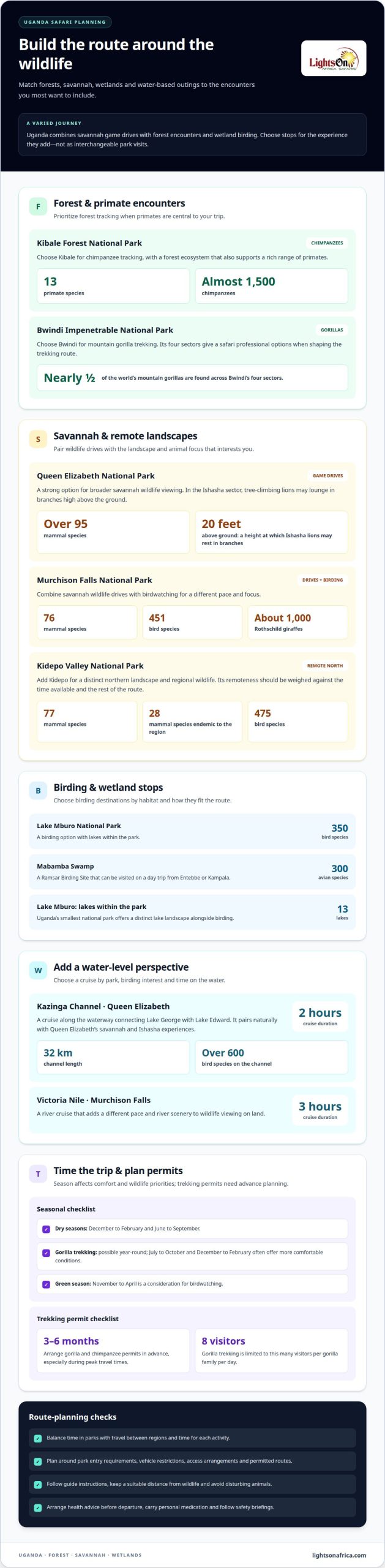
In Murchison Falls National Park, game drives can focus on the savannah wildlife while birding adds a different pace. The park has 76 mammal species and 451 bird species, as well as about 1,000 Rothschild giraffes. A professional can plan time in suitable habitats for wildlife viewing and pair a drive with birdwatching, rather than treating each activity as an afterthought.
Queen Elizabeth National Park brings game drives and the Ishasha sector’s tree-climbing lions into the itinerary. The lions may lounge in branches 20 feet above the ground, so a guide’s knowledge of the area helps shape the drive and lookout points. The park supports over 95 mammal species, making it a strong choice for travelers who want more than one wildlife focus.
For a more remote experience, Kidepo Valley National Park offers game drives across a distinct northern landscape. It is home to 77 mammal species, including 28 endemic to the region. A safari professional weighs that remoteness against the time available and the traveler’s priorities, then plans park transfers to make the route practical. Across Uganda’s national parks, guided drives also help visitors focus on animal behavior and conservation.
Park entry requirements and vehicle restrictions should inform your itinerary. A professional plans around access arrangements, follows permitted routes and briefs guests to respect guide instructions, keep a suitable distance from wildlife and avoid disturbing animals.
For travel between parks, the operator plans transfers around the route and activity schedule; a guided safari is especially worthwhile for multi-park journeys or wildlife-focused drives. Visitors should arrange health advice before departure, carry personal medication, and follow safety briefings. Gorilla and chimpanzee permits are best arranged 3-6 months in advance, especially during peak travel times; gorilla trekking is limited to eight visitors per gorilla family per day.
2. Boat safaris on the Kazinga Channel and Victoria Nile
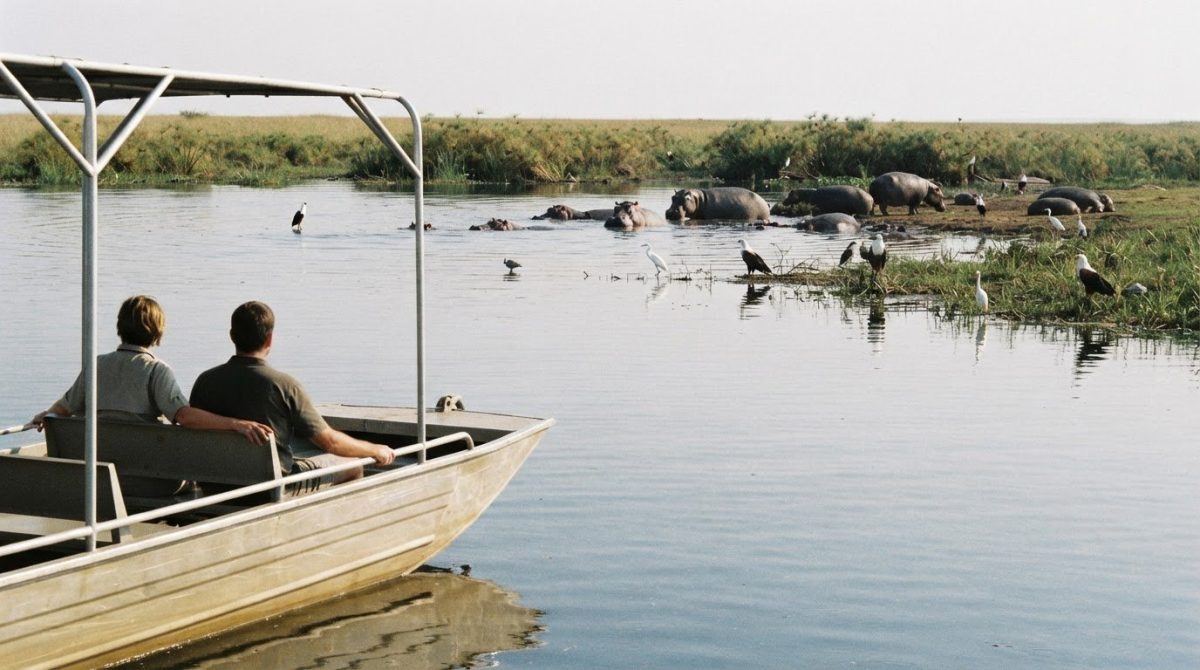
A boat safari adds a water-level perspective to game drives in Queen Elizabeth and Murchison Falls national parks. On Queen Elizabeth’s Kazinga Channel, cruises last two hours and travel along a waterway connecting Lake George with Lake Edward. The channel is 32 kilometers long, giving a boat trip room to become a wildlife and birding experience, not simply a transfer between activities.
The Kazinga Channel has over 600 bird species, making the cruise especially rewarding for birders. From the water, travelers can watch the shoreline and scan for birds and other animals without covering the same ground as a vehicle drive. A professional can place the two-hour outing beside a game drive, allowing time to enjoy both perspectives without making the day feel rushed.
A Victoria Nile boat cruise in Murchison Falls National Park lasts three hours. It offers a different pace from a Kazinga Channel trip and can fit around wildlife viewing on land. A guide helps guests take in the river scenery and wildlife activity, while the itinerary allows time to reach the departure point and return to other safari activities.
Choose between the cruises by considering the parks already on your route, your interest in birding, and how much time you want on the water. A Kazinga trip pairs naturally with Queen Elizabeth’s savannah and Ishasha, while the Victoria Nile adds a river experience in Murchison Falls. Travelers also planning forest encounters, such as chimpanzee trekking or mountain gorillas near Mgahinga, can use a boat outing to vary the pace. Golden monkeys in the Virunga region are listed as endangered, adding another distinctive wildlife focus to a broader itinerary. To bring these contrasting experiences together, shape a tailored East African journey around the parks and activities that matter most to you.
3. Uganda’s wildlife destinations and ecosystems
The best national parks depend on the encounters you want to include. Choose Kibale Forest National Park for chimpanzee tracking, Bwindi Impenetrable National Park for gorilla trekking, or Queen Elizabeth National Park for savannah wildlife. For a remote northern landscape, Kidepo Valley offers a different setting. These destinations show why Uganda stands apart in East Africa: one journey can include forest, open country and wetlands.
For primates, Kibale is home to 13 primate species and almost 1,500 chimpanzees. Bwindi holds nearly half of the world’s mountain gorillas across four sectors, giving a safari professional options to shape the trekking route around the trip. For broader wildlife viewing, Queen Elizabeth National Park supports over 95 mammal species. Kidepo adds regional variety, with 28 mammal species endemic to the area.
Birdwatchers can add destinations according to habitat and route. Kidepo has sightings of 475 bird species, while Lake Mburo National Park has 350. Mabamba Swamp, a Ramsar Birding Site, offers sightings of 300 avian species and can be visited on a day trip from Entebbe or Kampala. These choices let a professional balance forest tracking, birding, and game viewing without treating every stop as the same experience.
Lake and island destinations bring a quieter dimension to an Africa itinerary. Lake Victoria is the world’s second-largest lake by surface area, and its Ssese Islands form an archipelago of 84 islands. Lake Mburo, Uganda’s smallest national park, includes 13 lakes, some entirely within its borders. A safari professional can pair these water settings with wildlife parks according to your interests and travel pace, creating a route that moves from primate encounters to bird species and lakeside scenery.
4. Dry- and green-season wildlife viewing
Uganda’s dry seasons fall from December to February and June to September. These windows can help shape priorities, from game drives in Queen Elizabeth National Park to primate trekking in Bwindi. The calendar is a planning guide, not a guarantee of particular sightings. A thoughtful itinerary also considers your main interests, time available and preferred combination of destinations.
Gorilla trekking in Bwindi is possible year-round, while July to October and December to February often bring more comfortable trekking conditions. These periods may suit travelers who put mountain gorillas first, but the itinerary should also allow for the forest trek and other destinations. A professional can build the route around the trekking experience instead of squeezing Bwindi between distant stops.
Birdwatching follows a different seasonal rhythm: Uganda’s green season for birding runs from November to April. This timing can make bird species a stronger focus alongside the parks and habitats on your route. For example, a professional can balance time in Kibale’s forest with savannah viewing at Queen Elizabeth National Park, matching the trip’s emphasis to the season without promising a particular animal encounter.
The season also helps determine which experiences take priority. Travelers interested in climbing lions in Queen Elizabeth National Park can combine Ishasha with other park activities, while primate-focused guests may put Bwindi or Kibale at the heart of their journey. A safari professional weighs these preferences against the dry- and green-season windows, then builds a route with a realistic pace and enough time for each destination.
Share your preferred travel window and wildlife priorities to start shaping a seasonal safari itinerary around Uganda’s parks and trekking experiences.
Lights on Africa Destinations & Safaris
Lights on Africa Destinations & Safaris helps travelers plan a Uganda journey around their wildlife priorities, preferred parks, boat trips and travel season. Turn to the team to bring those choices together in a tailored itinerary, whether your focus is primate trekking, savannah game viewing, birding or a mix of experiences. Your preferred dates, interests and pace help shape the route around the journey you have in mind. If you’re also considering other East African destinations, the itinerary can include a wider regional safari experience.
To discuss your plans, contact Lights on Africa Destinations & Safaris.
Shape Your Safari Around the Encounters That Matter
Start planning by deciding which experiences should anchor your Uganda wildlife safari: primate encounters, time in the savannah, birding or a blend of landscapes. Then share your preferred travel window, pace and priorities with a safari professional. These choices turn a list of destinations into a journey with a clear focus, while leaving room for the quiet moments that often become lasting memories.
If you’re also considering a separate Tanzania trip, Lights on Africa Destinations & Safaris offers the 16 Days- The Great Migration Luxury Safari & Zanzibar Retreat, the 8-Day Luxury All Inclusive Tanzania Safari, and the 8Days Tanzania Private Guided Family Safari. Each offers a different starting point for exploring Tanzania, rather than a substitute for planning your Uganda itinerary.
Bring your ideas and preferred travel dates together, and take the next step toward a safari shaped around what you hope to experience. Contact Lights on Africa Destinations & Safaris to begin the conversation and move closer to your East African adventure.
Frequently Asked Questions
How Can a Safari Professional Plan the Best 2026–2027 Wildlife Safari in Uganda?
A safari professional starts with your priorities, then builds a route around the experiences that matter most. For example, travelers interested in primates can combine Kibale chimpanzee tracking with a gorilla trek, while birders may want dedicated time in varied habitats. A Kibale chimpanzee trek typically takes around 2 to 3 hours to locate the assigned family, so the day’s schedule should leave room for the experience.
Why Uganda is Africa’s Hidden Treasure for Wildlife Lovers?
Uganda brings together remarkable wildlife variety and distinct habitats in a compact destination. The country has 10 national parks and over 350 mammal species, offering travelers choices that range from forest primates to savannah wildlife and wetland birding. That mix is especially appealing if you want a journey with several kinds of encounters, rather than a trip focused on one landscape or animal group.
When is the best time of year for a Uganda wildlife safari?
The best timing depends on your priorities: dry-season wildlife viewing falls in December to February and June to September, while Uganda’s birdwatching green season runs from November to April. Gorilla trekking is available year-round, with July to October and December to February often offering more comfortable conditions. Choose the season that best matches your main activity, then use it to guide the itinerary.
One thought on “Uganda Wildlife Safari: Choose parks, boat trips and seasons”