
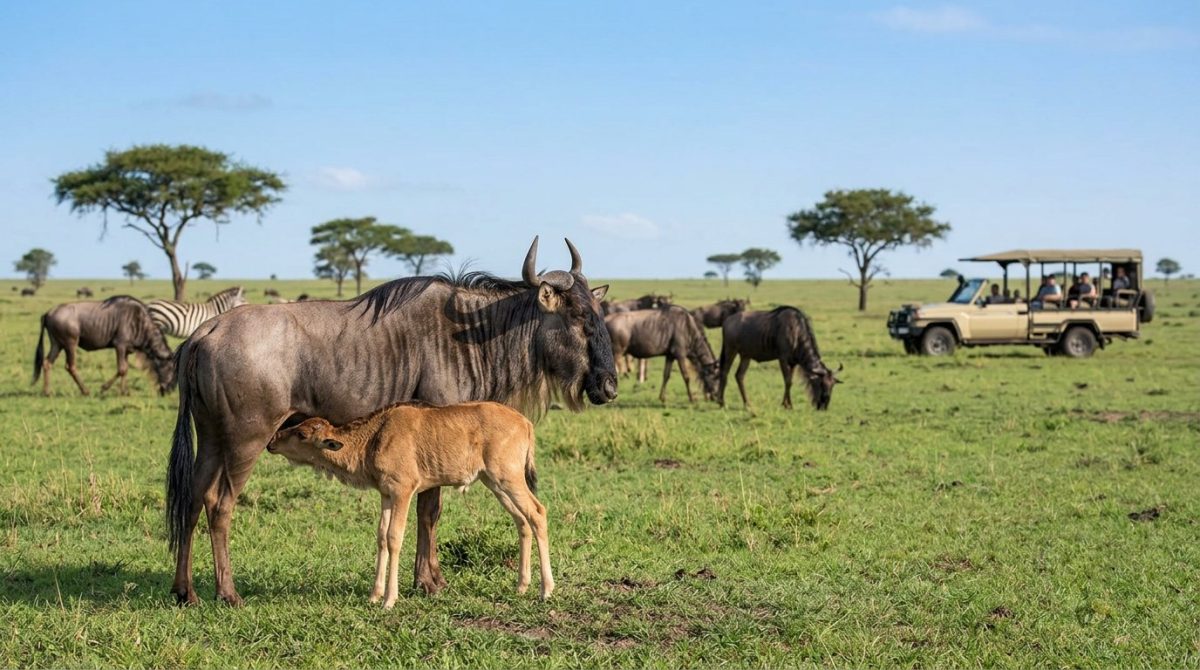
The best time for a Serengeti migration safari depends on what you hope to see: focus on the southern Serengeti and Ndutu from December through May for calving, or the northern Serengeti from July to September for the dramatic river-crossing season. Herds follow the rains, so their location can vary from year to year. A river crossing is never guaranteed on a particular date.
It’s natural to want a clear month to book, especially when planning a trip around one of Africa’s great wildlife spectacles. Match your travel dates to the migration’s seasonal pattern, then allow time to explore the region where the herds are likely to be.
Here, you’ll learn how calving season and river crossings shape the calendar, what to expect from a 13-day Tanzania itinerary, and how the Serengeti fits into a wider safari. Use these details to choose the experience that matters most to you, from newborn calves on the southern plains to vast herds moving through the north.
Key Takeaways
- Match your travel season to the sight you most hope to experience, whether that’s calving on the southern plains or herds gathering in the north.
- Use the short-grass plains around Ndutu to plan for calving season, and learn why the timing of newborn calves draws wildlife-watchers south.
- Understand how the Mara River crossing season shapes a northern Serengeti stay, while allowing flexibility in your plans.
- Compare mobile tented camps with permanent lodges to decide whether following the herds or settling into a consistent base best suits your itinerary.
What is the best time to witness the Great Migration in the Serengeti?
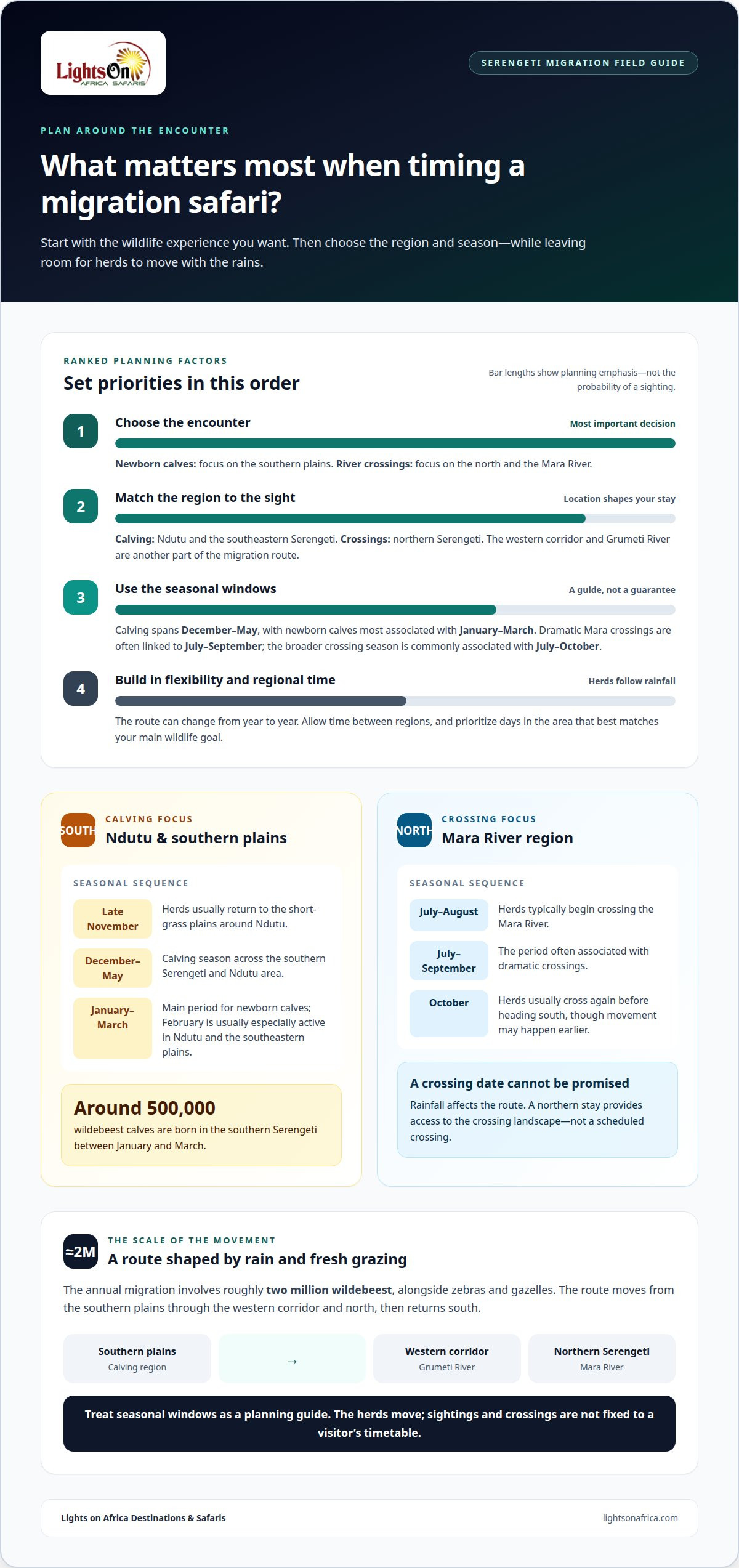
Choose your season based on the wildlife encounter you most want. The southeastern Serengeti and Ndutu are areas to consider for calving, though the best location can vary. For dramatic river crossings, consider the northern Serengeti from July to September. The herds follow rainfall and fresh grazing, so their route changes through the year.
The Great Migration is an annual movement through the Serengeti ecosystem, involving roughly two million wildebeest alongside zebras and gazelles. The route runs from the southern plains through the western corridor and north, then back south. From May to July, the Western Corridor is one area to consider. From December through June, migrating herds may be found in the Serengeti, depending on their location.
Choose Tanzania Great Migration safari packages and tours by season and region, not just by a headline sighting. A southern itinerary suits travelers drawn to calving and open plains; a northern stay focuses on the Mara River crossing area. Ngorongoro Crater can add a contrasting landscape and wildlife experience to a broader Tanzania route, rather than serving as the migration’s main gathering point. Allow for travel time between regions when planning a two week Tanzania safari itinerary.
What Tanzania park fees and safari rules apply in the Serengeti? Fees depend on the parks visited, time spent there, and permits included in the itinerary. Follow park instructions and your guide’s directions when viewing wildlife.
How do I get to the Serengeti, and do I need a visa or vaccinations? Travelers visit the park as part of a Tanzania itinerary. Entry requirements depend on passport nationality, while vaccination advice depends on personal health and travel plans.
What should I pack for a Serengeti migration safari? Bring light layers, sun protection, comfortable walking shoes, and a rain jacket suited to the season.
What health, safety, and weather risks should safari travelers prepare for? Weather varies by season, so pack layers and rain protection. Stay with your guide, follow vehicle instructions, and keep a safe distance from wildlife.
Calving season in the southern Serengeti and Ndutu
During calving season, herds gather on the southern plains, where rainfall and their changing location shape the best itinerary. Focus on Ndutu and the southeastern Serengeti, and let the route follow the seasonal movement.
Southern Serengeti and Ndutu Locations
The main calving grounds stretch across the southeastern Serengeti toward Ndutu. These open plains are key areas for a trip focused on newborn wildebeest. February is usually a particularly active calving month in Ndutu and the southeastern plains. Choose accommodation and daily drives with these locations in mind, since camps do not all offer the same access.
Calving is a seasonal wildlife event, not a single gathering at one fixed point. The southern Serengeti and Ndutu offer a broader area to explore as herds move across the grasslands. Around half a million wildebeest calves are born in the southern Serengeti between January and March. For a luxury itinerary, prioritize time in this region over distant stops that would reduce time near the calving grounds.
Seasonal Timing and Routes
Short rains in November and December prompt movement toward the southeastern Serengeti and Ndutu. Wildebeest usually return to the short-grass plains around Ndutu in late November and remain in the area until the long rains end in late April or early May. Calving season spans December to May, with January to March as the main period for newborn calves.
Use the seasonal sequence to plan: look to late November for the herds’ return, then focus on the southern plains during the calving months. By October, the herds have not yet made their usual late-November return to Ndutu. If your Tanzania plans also include Arusha, weigh that stop against the time needed in the south. Rainfall influences movement, so shape your itinerary around the season rather than treating the migration route as fixed.
Northern Serengeti and Mara River crossings
The northern Serengeti is the focus for travelers hoping to see herds approach the Mara River. The crossing season is commonly associated with July to October, while dramatic crossings are often linked to July through September. This timing helps determine where to stay and how much of your Tanzania itinerary to devote to the north. River crossings happen as part of the migration, not on a visitor’s timetable.
Before reaching the Mara, herds move through the western corridor, where the Grumeti River is another important obstacle. Wildebeest may gather on its southern bank for up to two weeks before crossing. That pause can make the Grumeti area worthwhile for wildlife viewing, even if the herd has not crossed yet. Allow time for this part of the journey instead of treating the river as a brief stop between distant regions.
At the Mara River, herds typically begin crossing in July or August. In October, they usually cross again before heading south, although movement may happen earlier. Rainfall influences the route: rain north of the river can draw the herd onward, while changing conditions affect where it travels next. A northern stay gives you access to the crossing landscape, not a set crossing date.
Plan your route around regional priorities. A northern Serengeti stay keeps the focus on the Mara River, while the western corridor gives the Grumeti crossing its own place in the itinerary. Combining the north with the southern Serengeti or Ngorongoro adds contrasting landscapes, but means dividing time between regions. For a trip centered on river crossings, prioritize days in the north and discuss the seasonal route while shaping your Tanzania safari.
Should I choose a mobile tented camp or a permanent lodge for a migration safari?
Choose a mobile tented camp if you want to stay close to a migration area as herds shift. Its location can change with the seasonal route, making it a possible fit for a trip focused on following wildlife. A permanent lodge stays in one place, giving your itinerary a consistent base. Neither option can determine where animals will be on a particular day.
For a mobile camp, consider its planned location during your travel season and how the itinerary handles transfers between regions. If your focus is the northern Serengeti and Mara River, prioritize a base in the north during the crossing season. For Ndutu calving, a southern base better matches the area you want to explore. Moving camp can help align your stay with the route, but each relocation takes planning time.
A permanent lodge can work well if you prefer not to change accommodation during your itinerary. Consider the distance from the lodge to your priority wildlife areas and whether daily drives fit your preferred pace. For example, a lodge-based stay in the southern Serengeti may support time around Ndutu, while a northern location suits Mara River viewing. The location matters more than the label “lodge.”
Some itineraries combine accommodation styles. One Tanzania itinerary includes four nights in private camps in Serengeti National Park, showing how a camp-based stay can anchor a longer journey. Compare the number of location changes, travel between regions, and time available for game viewing before deciding. If your dates span both southern and northern areas, a mixed plan may balance proximity with a settled base.
Choose the setup that supports your main wildlife priority and preferred pace. For help shaping a migration itinerary around camp locations and seasonal areas, plan your Tanzania safari.
Lights on Africa Destinations & Safaris: 16 Days- The Great Migration Luxury Safari & Zanzibar Retreat
Lights on Africa Destinations & Safaris offers the 16 Days- The Great Migration Luxury Safari & Zanzibar Retreat for travelers who want to pair a migration-focused journey with time in Zanzibar. It brings together two distinct parts of a Tanzania trip: wildlife viewing and a coastal retreat.
Choose this itinerary if you want both experiences within one planned journey. For a Tanzania safari without the Zanzibar extension, the 8-Day Luxury All Inclusive Tanzania Safari is another option. The Serengeti Migration Safari is a closer fit if your central priority is the herds and their seasonal movement.
Share your preferred travel season and the wildlife experience you most want to shape your plans. Contact Lights on Africa Destinations & Safaris or visit lightsonafrica.com to explore the next step.
Shape your journey around the experience you value most
Let your preferred wildlife experience shape your Tanzania journey. A Serengeti migration safari can balance time in the landscape, a comfortable pace between regions, and the type of stay that suits you. These choices make the itinerary personal, rather than a checklist of destinations.
As you plan, decide what you want each day to include: patient wildlife viewing, changing scenery, or a quiet pause between game drives. Share those priorities and your preferred travel season when discussing your plans. The route and accommodation can then support the experience you have in mind.
For families, Lights on Africa Destinations & Safaris also offers the 8Days Tanzania Private Guided Family Safari. Choose the journey that best fits your travel companions and the memories you hope to bring home.
Contact Lights on Africa Destinations & Safaris to begin shaping your Tanzania plans. Your adventure can start with one thoughtful decision.
Frequently Asked Questions
Why do wildebeest migrate?
Wildebeest migrate in search of fresh grazing and water as rainfall changes across the Serengeti ecosystem. Their journey also includes zebras and gazelles, which travel alongside the herds. A Serengeti migration safari gives travelers the chance to observe how changing conditions shape the herds’ route and gathering places throughout the season.
Can guests combine Serengeti safaris with Ngorongoro Crater and Zanzibar?
Yes, a Tanzania itinerary can combine Serengeti wildlife viewing with Ngorongoro Crater and time in Zanzibar. The mainland safari and island stay offer distinct experiences, so allow for transfers between them. Lights on Africa Destinations & Safaris offers a Great Migration safari and Zanzibar retreat, a combination for travelers seeking both wildlife encounters and a coastal stay in one holiday.
How do I find the Great Migration in Africa?
Plan around the migration’s changing location rather than treating it as one fixed destination. The herds move through Tanzania’s Serengeti ecosystem and into Kenya’s Maasai Mara, so your travel dates and preferred wildlife experience help determine where to focus. For a Serengeti migration safari, share your priorities with your guide, then use daily game drives to explore the relevant area and observe how the herds are moving.
How do travellers reach Serengeti National Park from Arusha?
Travellers can fly from Arusha Airport to airstrips serving different Serengeti regions. Flights typically take 1 to 2 hours, and destination airstrips can include Seronera, Grumeti, or Kogatende. Choose the arrival point based on the region your itinerary explores, since the Serengeti is extensive. This helps align your arrival with your planned safari area instead of adding unnecessary travel between regions.
How to book a Serengeti Migration Safari tour in 2026/2027?
Start by choosing your preferred travel period, the wildlife experience you value most, and the accommodation style that suits your trip. Then contact Lights on Africa Destinations & Safaris to discuss a 2026/2027 tour. Share your travel priorities and any plans to combine the safari with other destinations. Those details give the itinerary planning a clear starting point.
What’s included?
Inclusions depend on the itinerary you choose. Lights on Africa Destinations & Safaris offers guided, multi-day safaris and tailors routes, accommodation, and optional activities to travelers’ preferences. Review the proposed itinerary for the services included in your chosen trip and any optional activities. This helps you understand how each part of the journey fits together before making plans.
One thought on “Serengeti Migration Safari Timing and Tanzania Itinerary”